Skeptics falsely claim age of glacier-covered trees disproves Earth warming
- Published on April 22, 2026 at 17:36
- Updated on April 23, 2026 at 18:33
- 4 min read
- By Manon JACOB, AFP USA
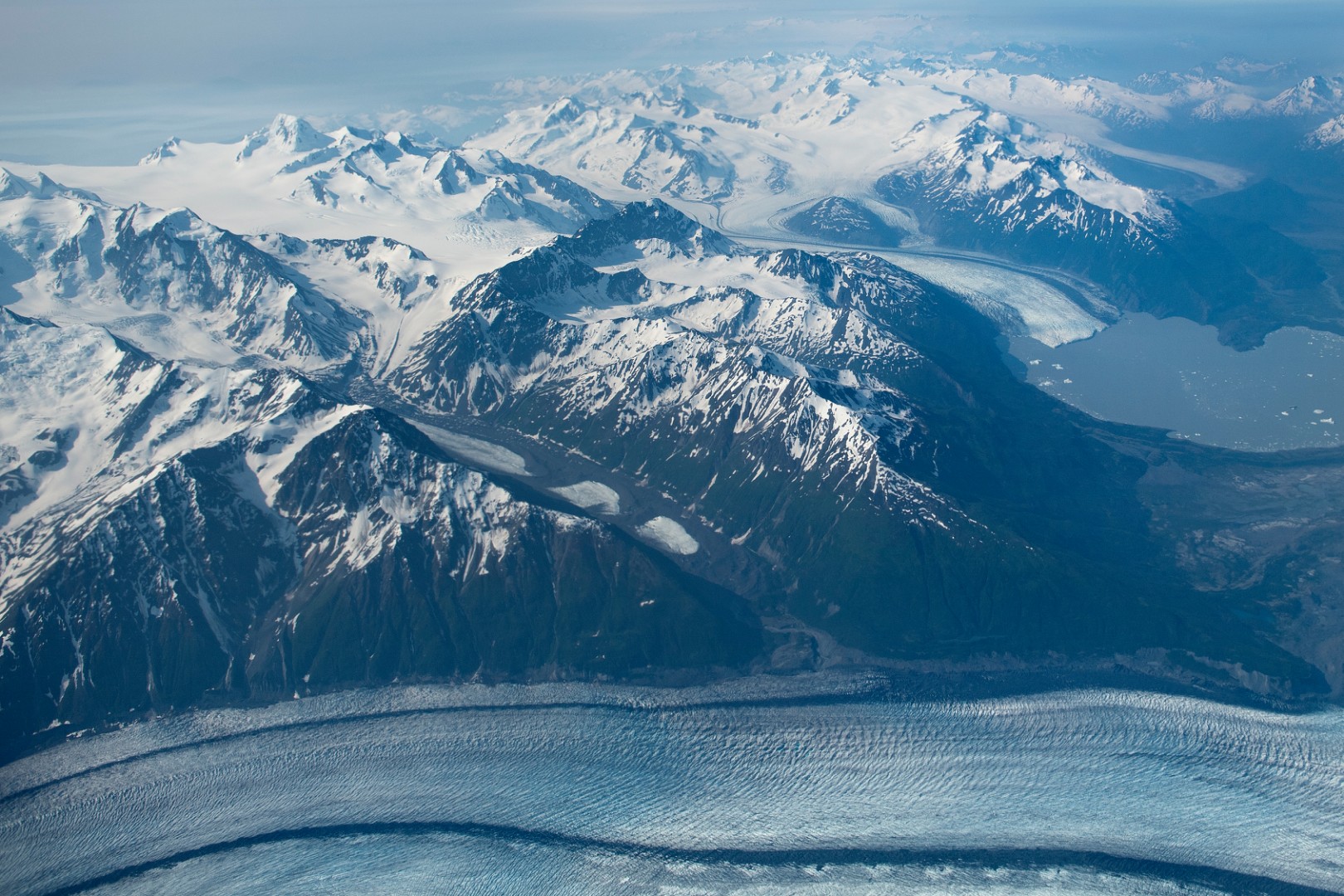
Climate-denying social media posts are claiming the age of trees photographed where glaciers have receded in Southeast Alaska disproves the idea that humans are driving changes to polar ecosystems. But scientists, including the researcher who made the observations in the region, said the Arctic shows clear signs of climate change accelerated by the burning of fossil fuels.
"#Climate Fun Facts: The receding Mendenhall Glacier in Alaska has uncovered tree stumps carbon dated to be 1,000 to 2,000 years old," says an April 9, 2026 post shared to a climate-doubting Facebook group.
"This means of course that it was warmer there before the glacier formed. And this was long before anthropogenic #CO2 could have played a role."
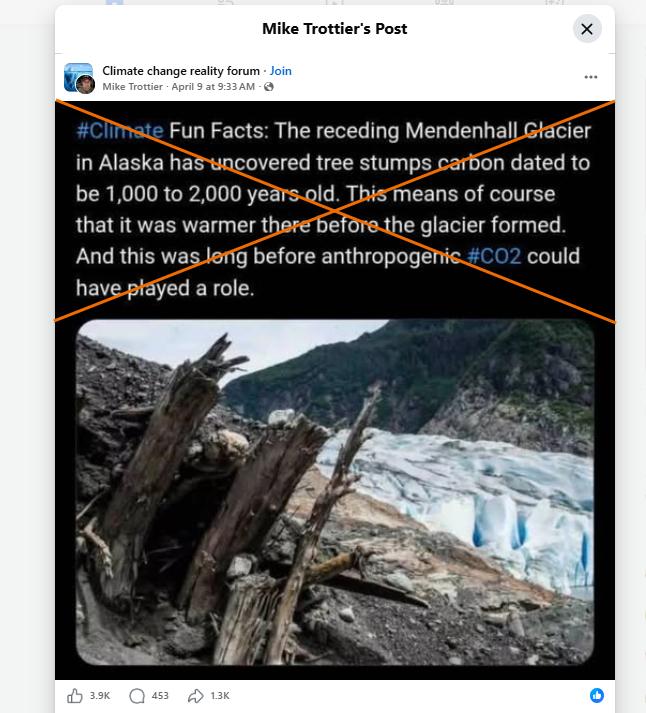
The same text and accompanying image of a tree stump has spread across Facebook, X and Instagram.
But the posts misrepresent research on trees once covered by glaciers.
Ancient forests
Reverse image searches surfaced the same photo in a 2019 guide to tree-ring research, which credits photographer Jesse Wiles.
Further investigation found the picture attached to a 2013 article from the Juneau Empire discussing research that Cathy Connor, then a geology professor at the University of Alaska Southeast, was conducting on ancient forests unveiled as the Mendenhall Glacier in Juneau receded (archived here, here and here).
The research was attempting to determine the age of the trees. Like fossils, trees that have been preserved for hundreds of years under glaciers can help scientists understand environmental patterns and characteristics, such as humidity, that existed in their ancient lifetimes (archived here and here).
But Connor rejected the idea that the trees under Alaska's glaciers disproved human-induced warming.
Glaciers move slowly over time as they flow and deform due to gravity, and they have advanced and retreated repeatedly over thousands of years as Earth has moved naturally in and out of ice ages because of changes in orbit and other factors (archived here).
"Glaciers have advanced over forests and melted back, revealing them, throughout the Little Ice Age, well before the Industrial Revolution," Connor told AFP on April 11, referring to the period associated with the start of anthropogenic, or human-induced, climate change (archived here).
Most of southeastern portion of Alaska was covered by the Cordilleran Ice Sheet until around 15,000 years ago, said Paul Robbins, public affairs staff officer at the US Forest Service for Tongass National Forest, which includes the Mendenhall Glacier (archived here, here and here.)
After that, the ice sheet receded, allowing vegetation and then forests to progressively form, Robbins explained.
Bethan Davies, a professor of glaciology at Newcastle University in the United Kingdom, said many Alaskan glaciers were even farther retreated in the middle of the Holocene Epoch, which covers the last 11,700 years of Earth's history and started at the end of the last major Ice Age (archived here and here).
"Temperatures in Alaska were likely warmest around 6000 years ago," due to solar radiation, Davies told AFP on April 16.
She said the 2,000-year-old trees found under the glaciers are "not a direct measurement of temperature."
Scientists have long established that the Earth has been both warmer and colder at earlier times in history, due to natural climate cycles.
But these temperature changes do not disprove the impact of human activities, which have led to carbon dioxide levels put in the atmosphere at a record pace.
Davies said that while "Earth's current orbital position would currently favor long term cooling," the glaciers are instead nearing their Holocene minimums (archived here).
'Surprising' changes
Scientists have observed clear signs of accelerated warming across the Arctic for decades, with the poles warming at a faster rate than the rest of the planet -- four times the global average in the Arctic.
"The result of eight billion humans burning fossil fuels is blocking our planet's natural cycle that would have returned us to cooler, advancing glacier times in 2026," said Connor, now a professor emerita at the University of Alaska Southeast.
Climate trends are better observed within decade-established, large geographical contexts, scientists said -- and cannot be extrapolated from the snapshot of time captured by the photo of trees.
"If you want a climatic signal, you need something that is regional," Daniel Fortier, a geography professor at the University of Montreal, told AFP on April 16 (archived here).
Scientists monitor warming trends in different ways, including via weather stations across the Arctic, Fortier said (archived here).
He said more "powerful" signals are seen by monitoring landscape changes through permafrost degradation or thawing, which show large areas of the Arctic "under attack" (archived here).
Aleksandra Osika, a glaciologist at the University of Silesia in Poland, agreed: "What we see in the rapid recession of glaciers around the world, and the rate of change is surprising even for researchers who have been working on them for decades" (archived here).
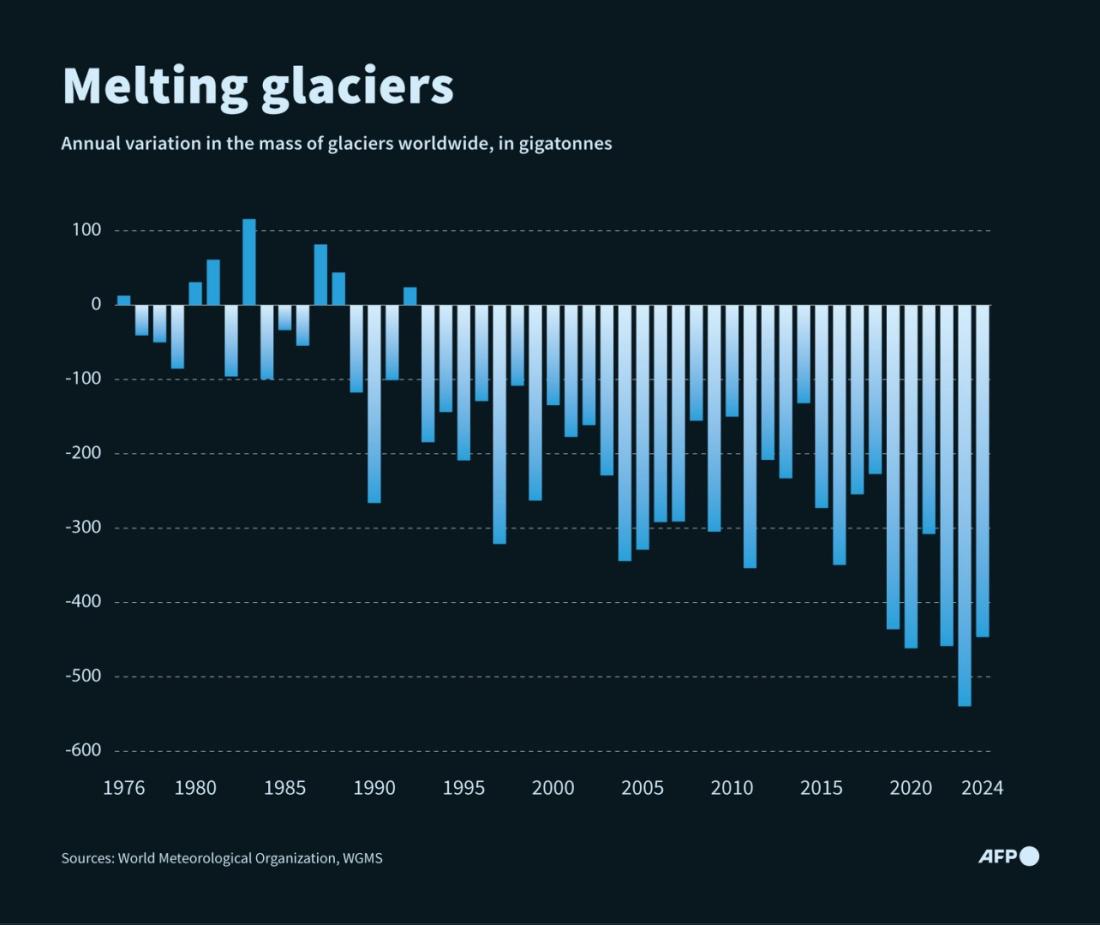
Ice loss at Mendenhall Glacier, specifically, is observable from satellite imagery, as shown in data presented by NASA (archived here).
"When climate models remove human influence on the climate system, they can't reproduce the warming we see today," said Nicole Davi, a tree ring scientist at Columbia's Lamont-Doherty Earth Observatory and William Paterson University (archived here).
"It only shows up when human emissions are included."
AFP has debunked other myths about humans' contribution to climate change.
This story was updated to add an institution to Nicole Davi's title.April 23, 2026 This story was updated to add an institution to Nicole Davi's title.
Copyright © AFP 2017-2026. Any commercial use of this content requires a subscription. Click here to find out more.
Is there content that you would like AFP to fact-check? Get in touch.
Contact us