Old videos falsely linked to 7.7-magnitude tremor that rattled northern Japan
- Published on April 22, 2026 at 10:40
- 4 min read
- By Ei SAN, Livia LIU, Grace MOON, AFP Thailand, AFP Hong Kong, AFP South Korea
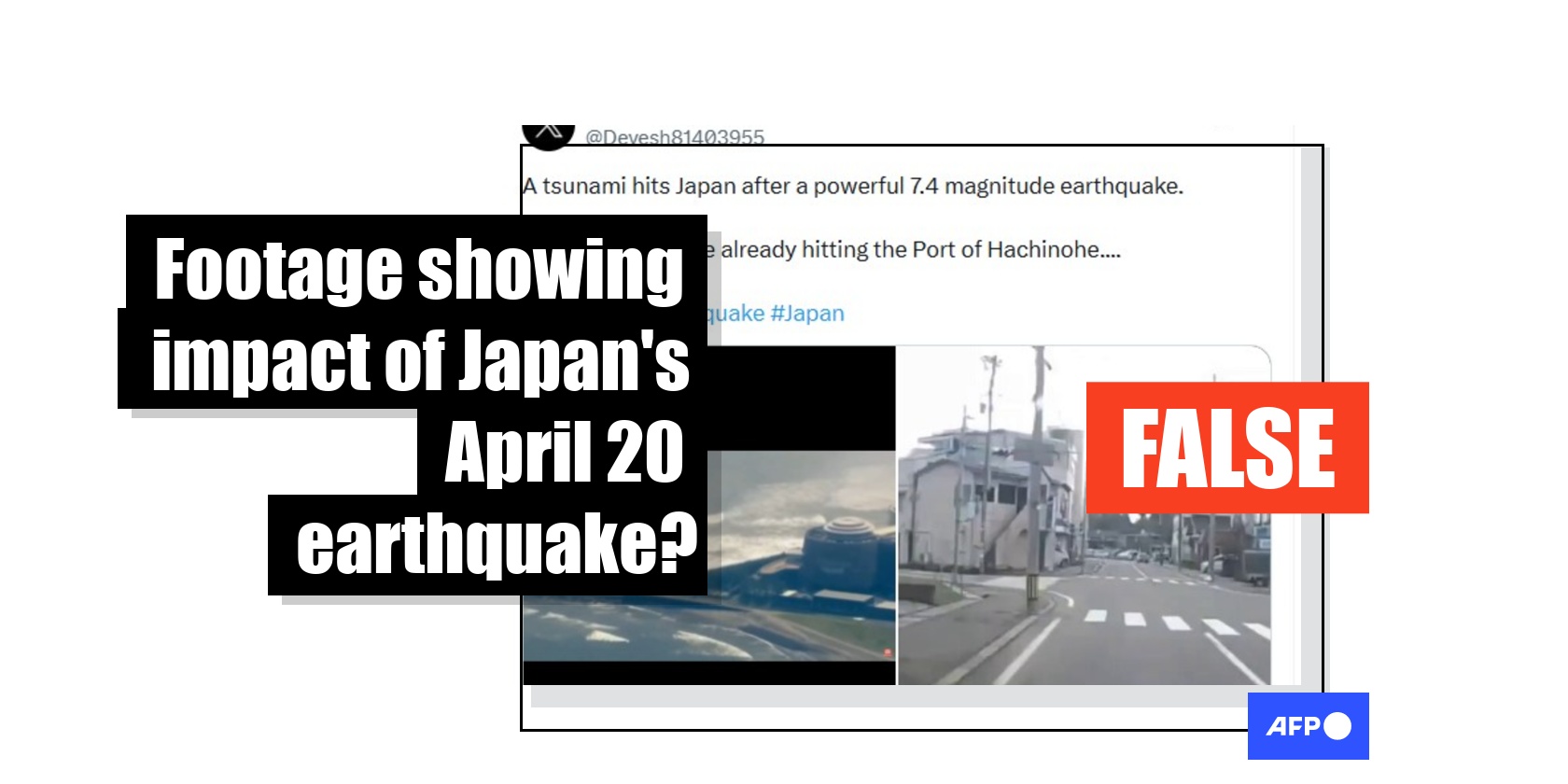
After a magnitude 7.7 earthquake struck off the northeastern coast of Japan on April 20, a wave of videos purportedly showing the impact of the tremor was falsely shared on social media. The clips in fact show earthquakes that predate the April temblor. They depict the moment a tsunami hit eastern Japan in 2025, the aftermath of a quake that rattled a prefecture in western Japan on New Year's Day in 2024, and the devastating earthquake and tsunami that struck in March 2011.
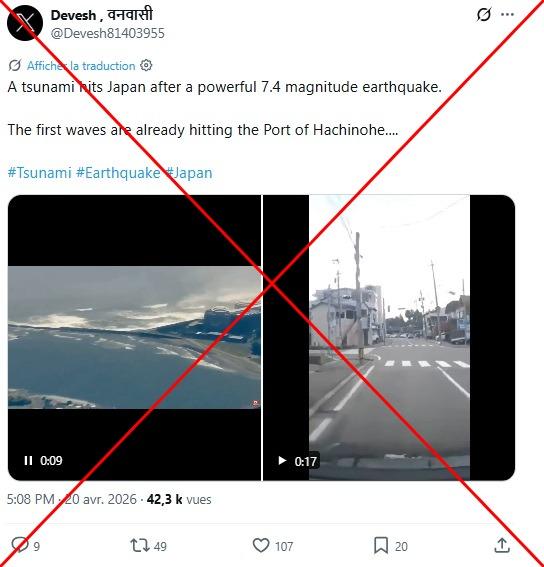
"A tsunami hits Japan after a powerful 7.4 magnitude earthquake," reads part of the caption to two videos shared on X on April 20, 2026.
"The first waves are already hitting the Port of Hachinohe..." it adds, referring to a city on the northeast coast of Japan's main Honshu island.
Viewed over 42,000 times, the videos show massive waves hitting coastal areas and an earthquake violently shaking buildings and electricity poles.
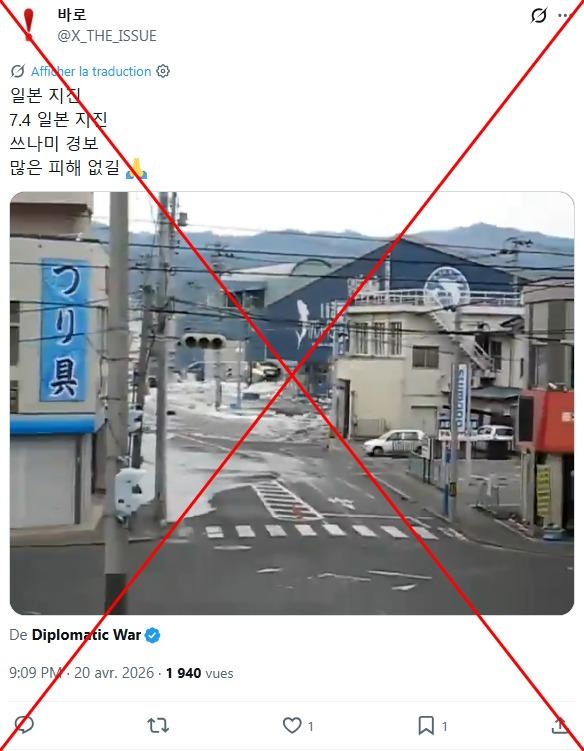
A similar video appearing to show tsunami waves engulfing a city street was shared in an X post on April 20.
"Magnitude 7.4 earthquake in Japan, tsunami warning," reads the video's Korean-language caption. "Hope there isn't too much damage."
The videos were also shared in similar social media posts in several languages, including Chinese, English, Japanese and Thai.
They circulated after Japan -- home to around 125 million people and one of the world's most seismically active countries -- was struck by a magnitude 7.7 earthquake on April 20 (archived link).
The quake rattled northern Japan and triggered tsunami waves of up to 80 centimetres (31 inches) at a port in Kuji in Iwate prefecture.
But the videos circulating online do not show the impact of the April 20 tremor, which did not appear to cause any major damage (archived link).
2025 tsunami waves
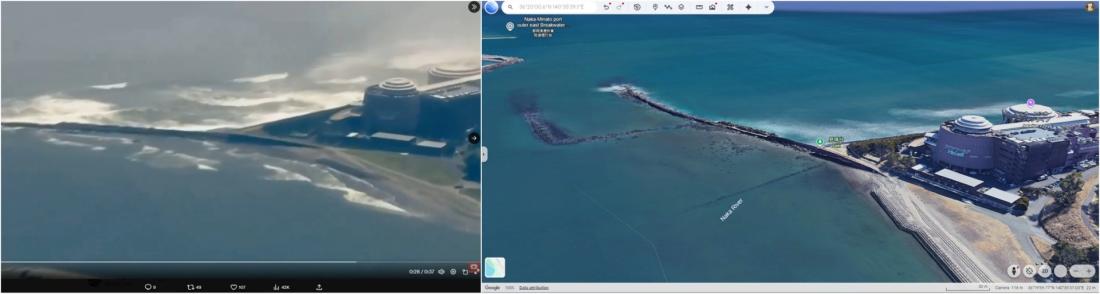
A reverse image search on Google using keyframes from the video of breaking waves led to the same clip posted on Facebook on July 30, 2025 (archived link).
Its caption says the video shows tsunami waves caused by an earthquake in Russia.
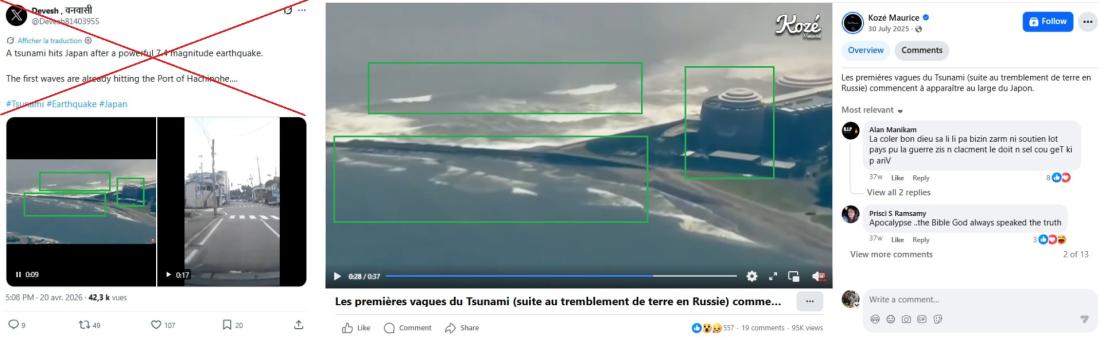
A similar clip was published by the AP news agency on the same day, with the accompanying caption saying an 8.8-magnitude earthquake that struck Russia's Far East had triggered tsunami waves in Japan and prompted Pacific-wide warnings (archived link). Text on the clip says it was captured in Japan's Ibaraki Prefecture.
AFP reported that almost two million people were ordered to higher ground with the biggest wave recorded at 1.3 metres (4.3 feet) (archived link).
The video corresponds to Google Earth satellite imagery of the town of Oarai in Ibaraki Prefecture, around 450 kilometres (279 miles) south of Kuji -- where the 80-centimetre tsunami wave was recorded on April 20, 2026 (archived link).
2024 Noto earthquake
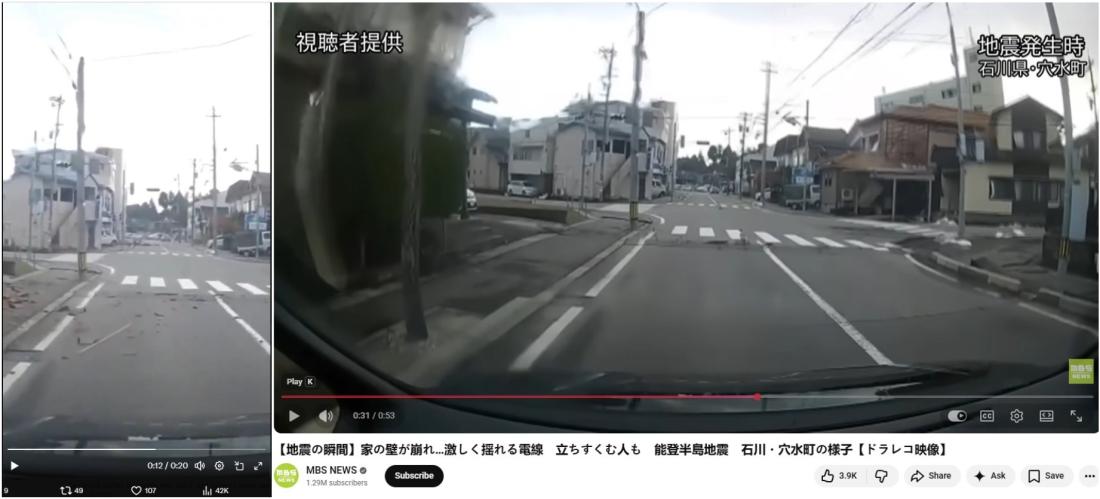
A separate reverse image search on Google using keyframes from the video of a city street shaking led to a longer, uncropped version shared on YouTube by Japan's MBS News on January 11, 2024 (archived link).
The Japanese-language video description says it was filmed during the Noto Peninsula earthquake on New Year's Day (archived link). The 7.5-magnitude earthquake was Japan's deadliest in over a decade, claiming nearly 470 lives.
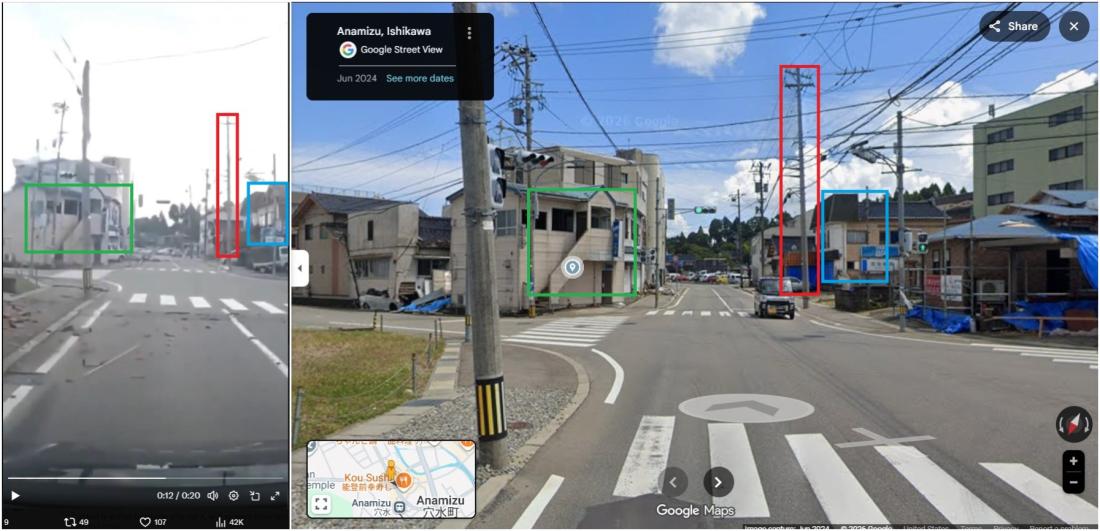
A subsequent keyword search on Google found the same clip had been shared on January 6, 2024, by an X user detailing her experience of evacuating with her family during the earthquake (archived link).
The footage matches Google Street View imagery of an intersection in Anamizu, a town in Ishikawa prefecture on Japan's western coast (archived link).
2011 Japan quake and tsunami
A reverse image search on Google using keyframes from the video of a street being inundated by tsunami waves led to the same footage shared by Japan's All-Nippon News Network on YouTube on January 17, 2020 (archived link).
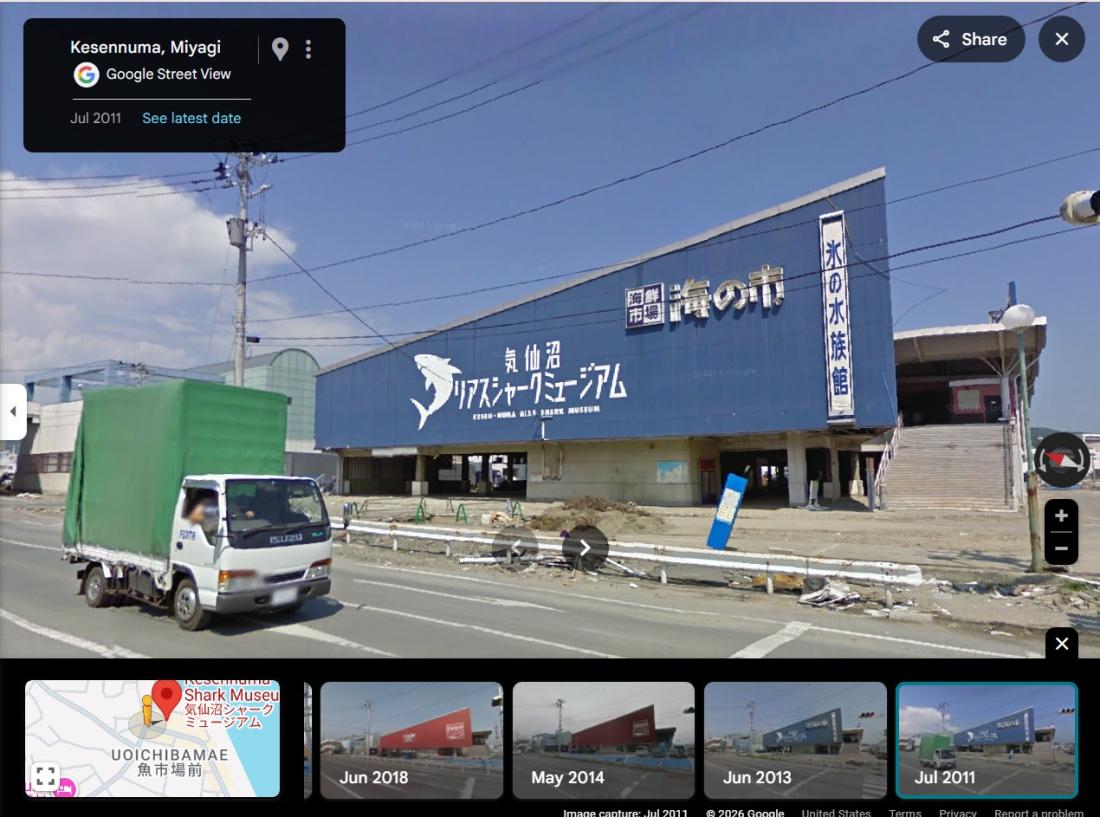
The footage is described as showing how a tsunami affected the city of Kesennuma on March 11, 2011. The 9.0-magnitude quake that triggered the tsunami was one of the deadliest natural disasters in Japan's history, resulting in over 18,000 deaths (archived here and here).
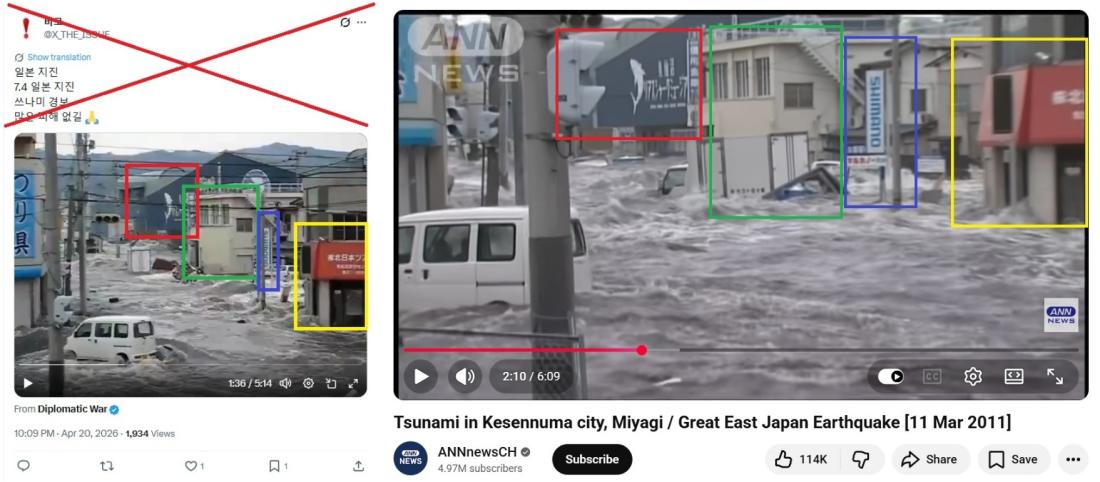
The video corresponds to Google Street View imagery from Kesennuma taken in July 2011 (archived link). The city is about 140 kilometres (86 miles) south of Kuji.
Old footage often resurfaces in misleading social media posts during natural disasters, and AFP previously debunked false claims that misrepresented the video in 2024.
Copyright © AFP 2017-2026. Any commercial use of this content requires a subscription. Click here to find out more.
Is there content that you would like AFP to fact-check? Get in touch.
Contact us