Indonesia dengue vaccine prototype revives mRNA misinformation
- Published on August 5, 2026 at 12:16
- 5 min read
- By Ramadani SAPUTRA, AFP Indonesia
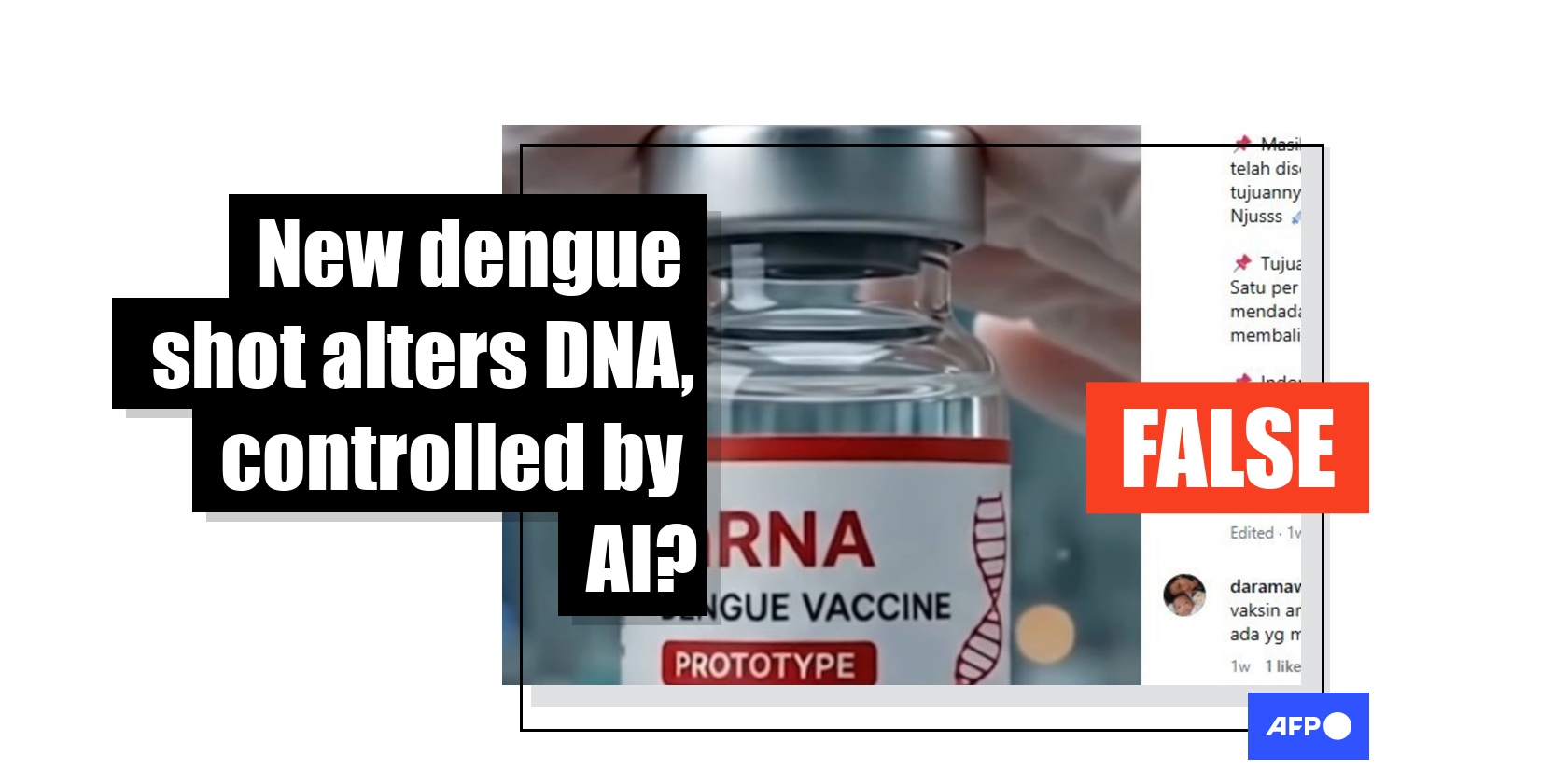
Experts say messenger RNA (mRNA) vaccines do not alter DNA, contrary to social media posts that resurfaced the long-debunked Covid-era conspiracy theory after Indonesian researchers developed a dengue shot prototype. The new jab is also not controlled by artificial intelligence, as the online rumours allege; the Indonesian Health Ministry told AFP that while AI will be used to predict future virus mutations, it is not a component of the vaccine itself.
"Indonesia launches dengue vaccine prototype based on mRNA technology which will be controlled by AI and will alter DNA given from God, breaking the spirituality signal to God," reads part of an Indonesian-language Instagram post shared on July 14, 2026.
"The purpose of the vaccine is population shrinking".
The post, which has been viewed more than 16,000 times, shares footage of anti-vaccine comments from former health minister Siti Fadilah Supari and local politician Dharma Pongrekun, whom AFP has previously fact-checked for spreading misinformation about hantavirus.
"Health has become a very convenient tool to accuse and control nations around the world," Supari says in one of the clips.
"For example, we have all experienced what is called Covid. How could people all over the world be deceived about Covid? How could the entire world be vaccinated without knowing what was being put into their bodies?"
The post caption goes on to echo another conspiracy theory, previously debunked by AFP, about Indonesia's plan to release mosquitoes infected with the Wolbachia bacteria to help prevent the spread of viruses such as dengue.
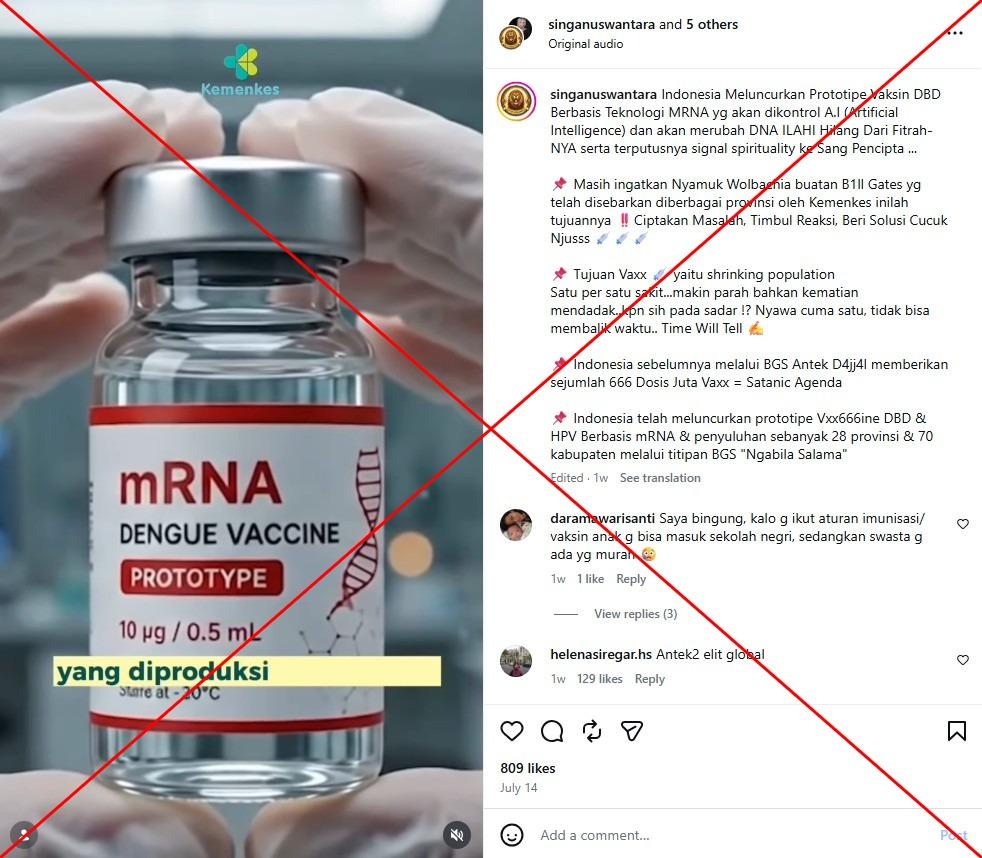
Similar claims have also circulated on Facebook.
The University of Indonesia, along with Tsinghua University, successfully developed an mRNA-based dengue vaccine prototype on July 8, saying it has the potential to become the first such jab to reach preclinical trials (archived link).
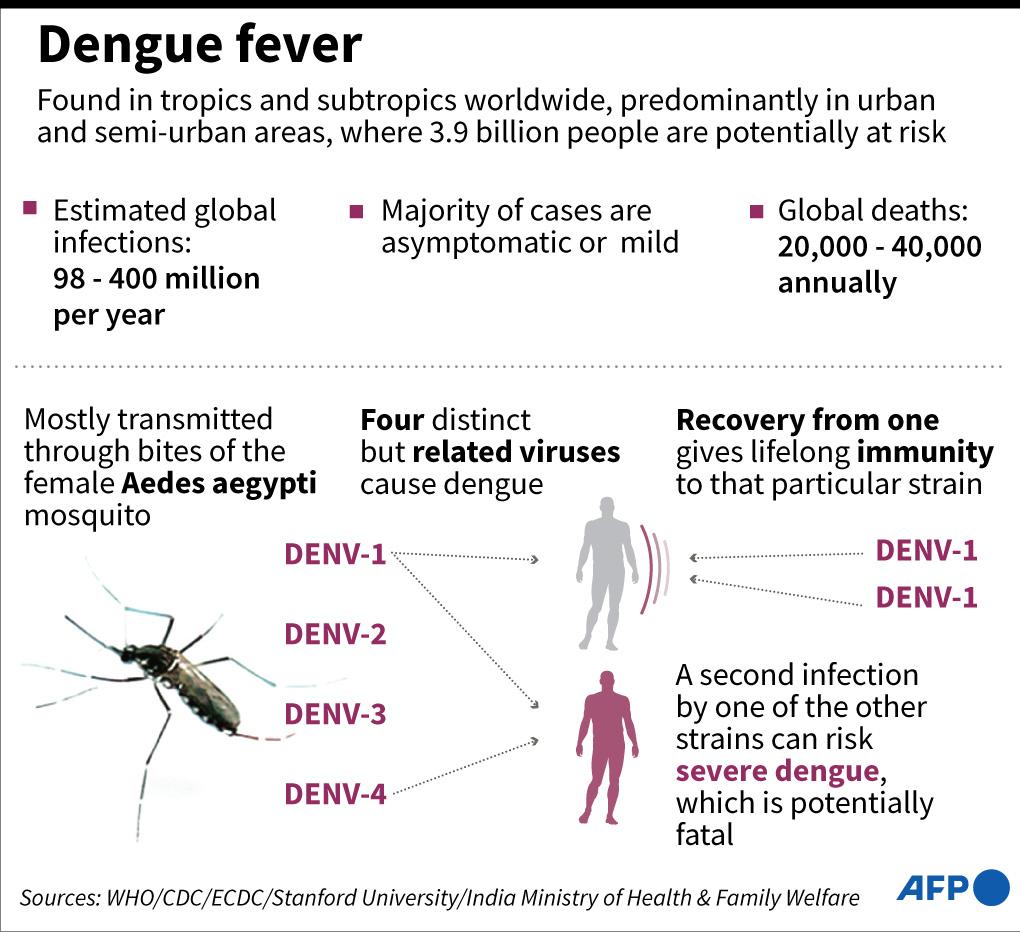
Data from the Health Ministry show Indonesia records around 151,000 dengue cases every year -- making it among the country's top diseases with high burden or impacts, alongside tuberculosis, HIV and malaria (archived link).
Dengue, which spreads through bites from infected mosquitoes and causes severe flu-like symptoms, has exploded globally, fuelled by rising temperatures and densely populated cities (archived link).
According to the World Health Organization (WHO), nearly half the world's population is at risk, with an estimated 100 million to 400 million infections each year.
While dengue vaccines already exist, mRNA shots allow production to be scaled up more quickly since a virus need not be grown in a lab -- and they are generally safer than traditional jabs because they do not contain live pathogens (archived link).
However, mRNA has become a regular target of conspiracy theories since the Covid-19 pandemic, fuelling baseless claims that such shots cause cancer or alter recipients' DNA.
The latest from Indonesia are similarly false.
"mRNA vaccines do not alter human DNA and are not controlled by AI," a Health Ministry spokesperson told AFP on July 27.
"The mRNA components only carry temporary instructions to form an immune response and then naturally break down".
How mRNA works
Two live-attenuated vaccines are approved for dengue in Indonesia: Qdenga and Dengvaxia (archived link).
The former is recommended for patients aged 6-16 in high transmission areas who have not been previously infected with the virus, according to the WHO. The latter jab is being phased out of production (archived links here and here).
Unlike those vaccines, which contain weakened viruses to train the body's immune response, mRNA shots contain genetic materials that instruct human cells to create proteins matching those of the target pathogen (archived link).
Pfizer-BioNTech and Moderna used the technology in their Covid-19 vaccines developed during the pandemic.
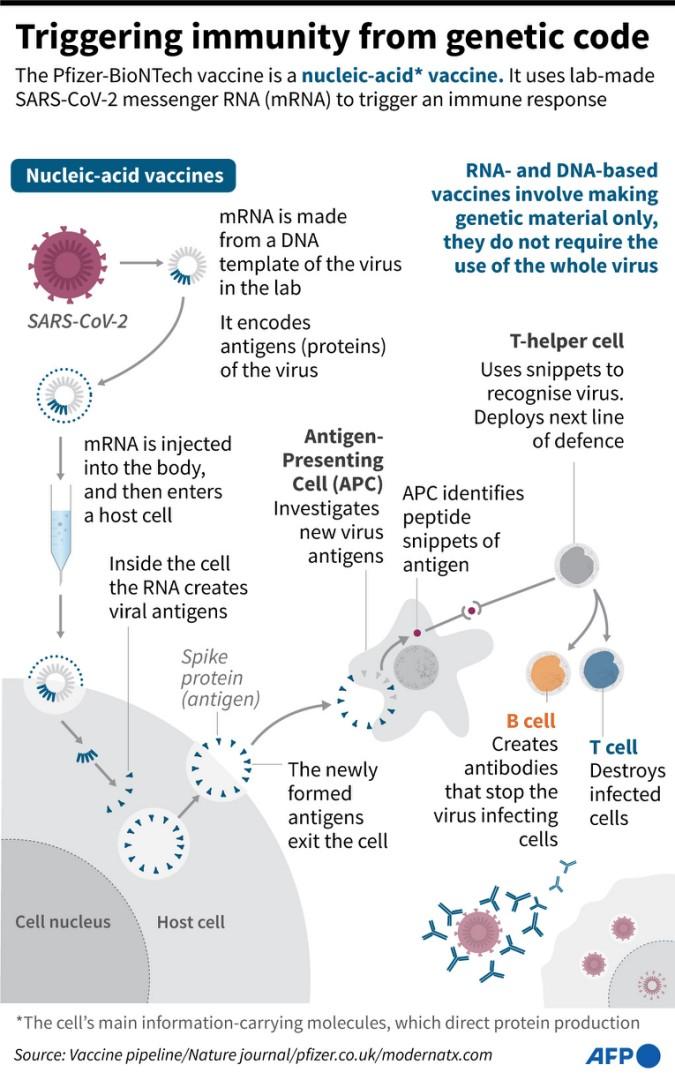
Thomas Preiss, a professor at Australia's John Curtin School of Medical Research, said that, contrary to the claims swirling online, mRNA vaccines do not "last very long in the body" (archived link).
"When injected into a person, the mRNA gets into cells mainly around the injection site, and these cells make a tiny amount of a protein that looks like a part of the pathogen you want to achieve protection against," he told AFP in a July 28 email.
"The body’s immune system detects this and produces a lasting immune response, just like with other vaccines. So while the mRNA vaccine is long gone, the immune system’s cells will 'remember' how to respond should a real pathogen enter the body".
Manufacturers are developing mRNA vaccines to protect against other diseases, including influenza and HIV (archived link).
'No plausible rationale'
Preiss said there is "no plausible rationale nor credible scientific evidence" that Indonesia's mRNA vaccine prototype can "alter the DNA of cells" -- a view shared by other experts contacted by AFP.
Lukas Gerstweiler, a senior lecturer at the School of Chemical Engineering at Adelaide University, said the mRNA does not contain the specialised enzymes required to copy RNA into DNA and insert it into a chromosome (archived link).
"Therefore, an mRNA vaccine cannot alter a person’s DNA in the manner claimed in the social media post," he told AFP on July 27.
Mitch Ganley, a research officer at the Department of Microbiology and Immunology at the University of Melbourne, added that mRNA is a common molecule that is "found in almost every cell in the body and is essential for the body to function" (archived link).
"mRNA vaccines are no more likely to alter the DNA of the individual receiving the vaccine than their own RNA that is much more ubiquitous and abundant," he said on July 27.
The Indonesian Health Ministry told AFP that the vaccine is still in the development stage, and "it must undergo a series of preclinical research stages, clinical trials and very strict evaluations" supervised by public health authorities before it is made available to the public.
AFP has for years debunked claims that mRNA vaccines alter one's DNA.
AI modelling for mutations
Gerstweiler of Adelaide University also said AI cannot control an mRNA vaccine, as it consists only of biological molecules -- normally mRNA, lipids and other ingredients (archived link).
"It does not contain a computer processor, software, communications equipment, sensors or an energy source. It cannot receive commands, monitor a person or make decisions inside the body," he said.
"Describing a vaccine as being 'controlled by AI' confuses the use of AI during its design with the physical properties of the finished vaccine".
The Indonesian Health Ministry confirmed AI is not a component of the dengue vaccine prototype.
"The use of AI in dengue vaccines is to predict possible changes or potential mutations of the virus in the future," a spokesperson said.
"The hope is that, through AI modelling, this dengue vaccine will not only be effective against the strains currently circulating, but will also have the potential to provide protection against dengue strains that may emerge in the future".
Copyright © AFP 2017-2026. Any commercial use of this content requires a subscription. Click here to find out more.
Is there content that you would like AFP to fact-check? Get in touch.
Contact us