Nebraska fires spark baseless theories about data center 'land grabs'
- Published on April 2, 2026 at 18:12
- Updated on April 2, 2026 at 22:24
- 4 min read
- By Manon JACOB, AFP USA
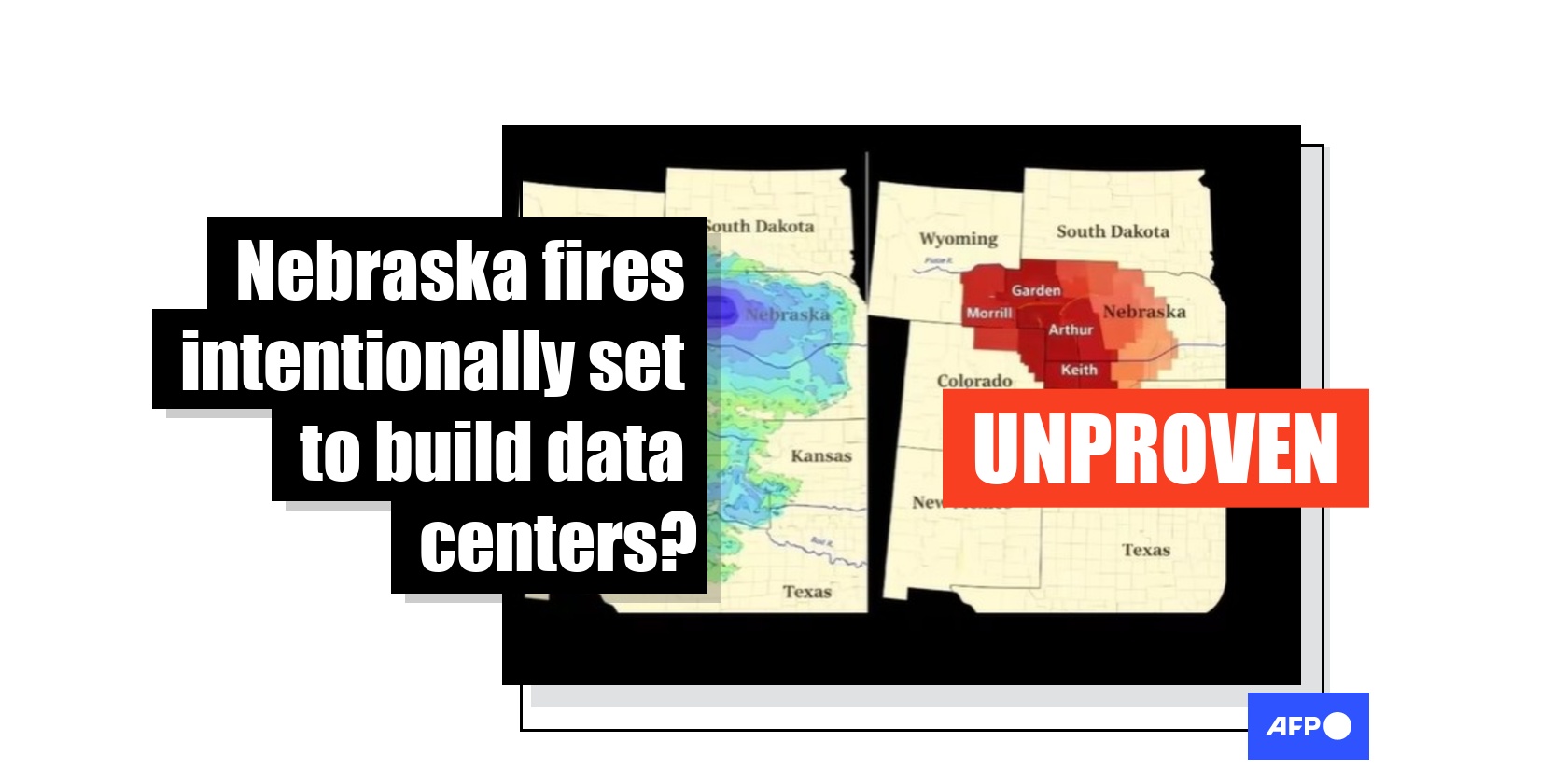
The largest wildfires in Nebraska's history have fueled conspiracy theories claiming the March 2026 blazes were intentionally set to make room for new data centers near a key water source. This is baseless, and experts said the infernos' spread was driven by unusually high temperatures and dry conditions, as well as high winds in the fire-affected region.
"New information on the Nebraska wildfires they just so happened to burn almost exclusively right over the Ogallala Aquifer the largest Aquiefer (sic) in the country," says a March 20, 2026 post on Facebook, shared hundreds of times.
"There are currently 36 data center in Nebraska that are already using over 10 million gallons a day," it continues. "Now we see things like this start to happen the largest fire in Nebraska's history right over the countries (sic) largest Aquifer."
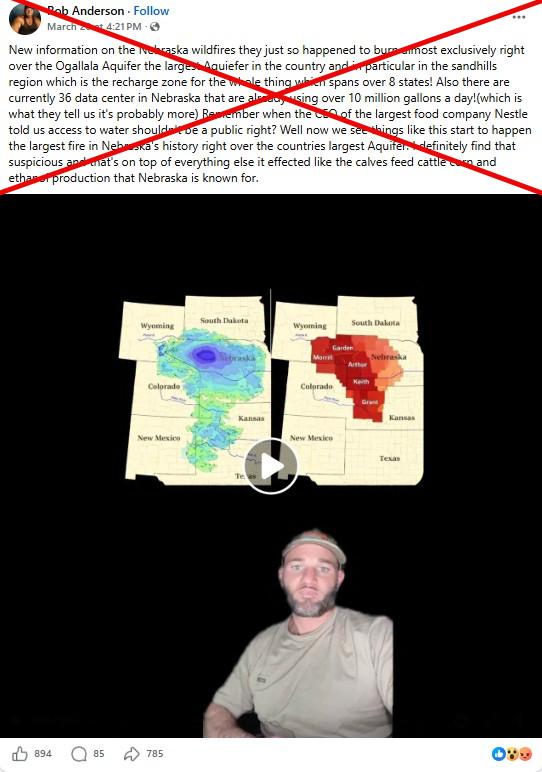
The post comes from Rob Anderson, a self-described "digital creator" who has shared other baseless theories on "weather warfare."
Similar "land grab" claims traveled across Facebook, X and TikTok after historic blazes ravaged ranch and pasture lands, destroyed barns, wounded and killed cattle and grassland species, and left one person dead.
Conspiratorial narratives describing natural disasters as ploys to steal residents' land have often followed natural disasters, including the deadly 2023 Hawaii wildfires.
But while new data center development projects have been discussed in Nebraska, there is no evidence the March fires were intentionally set to make room for them.
Wildfire and climate experts told AFP the state's weather conditions likely contributed to the scale of the blazes.
Seasonal high start
While the state is still investigating the origins of the March fires as of time of publication, Governor Jim Pillen said March 14 that Morrill County's fire -- the largest blaze spanning more than 600,000 acres -- is believed to have been "electrical in nature, with the wind popping wires and sparks from it" (archived here and here).
The US National Park Service reports that some 85 percent of wildfires in the country are caused by humans' interaction with nature (archived here).
Human origins, however, do not mean criminal intent. Wildlife experts say they are often accidental.
"Be that utility wires coming down, people tossing cigarette butts out the window, and everything in between," Terry Baker, CEO of the Society of American Foresters, told AFP on March 28 (archived here).
Baker said the Nebraska fires were fueled by extended hot and dry weather patterns in addition to dry-lightning storms -- thunderstorms that build with little-to-no moisture in the air -- making them hard for emergency responders to contain (archived here, here and here).
"In the world of fire management, grasses are referred to as 'one-hour fuels' meaning they can be ready to burn in an hour. Even if the land is soaking wet, within an hour, you could start a fire," he told AFP on March 28.
"So, you can have these extreme wind events that if there's a fire that starts, it just takes off and there's very little you could do about it, because it's moving so quickly."
Human-induced climate change has also amplified North America's wildland fire activity and shifted its seasonality, research has shown (archived here, here, here and here).
"Fires in this region typically peak in June," said Climate Central's senior research associate Kaitlyn Trudeau and vice president for science Kristina Dahl in a joint March 19 statement to AFP (archived here and here).
They said the High Plains experienced its "second warmest winter on record" and this left the landscape "especially dry" in early 2026 (archived here).
The National Interagency Fire Center reported that more than 1.5 million acres of land had burned nationwide by the end of March, a 127 percent increase of acreage burned compared to the decadal average at the same point (archived here).
Baker dismissed claims of nefarous intent behind the fires, but said future potential shifts in regional agrobusiness activities are a "valid concern."
Farmers and other landowners in the area will confront the increased risk of wildfires and other extreme weather due to Earth's warming when making decisions about whether to continue on or sell to outside interests, he said.
AFP reached out to the governor's office for additional comment, but no response was forthcoming.
Nebraska data centers
The conspiratorial posts appear to be referencing plans for a new, large Google data center in Nebraska.
Environmental news outlets, citing internal documents not yet made public, have reported on the proposal, which also includes building a privately owned natural gas plant (archived here, here and here).
The project is estimated to consume more than three times the amount of power than Nebraska's capitol city Lincoln.
But Kenneth Gillingham, a Yale University environmental and energy economics professor, said "there is no need to have a fire if they want to build a data center" (archived here).
Google already operates data centers in Lincoln, Omaha, and Papillion (archived here). The company did not reply to AFP's request for comment.
The posts are valid in pointing out that such projects do put a strain on water resources (archived here).
Scientists say the United States is approaching a water-scarcity problem that the expansion of data centers needed to accommodate artificial intelligence developments is projected to heighten (archived here, here, here and here).
The Ogallala aquifer -- the country's largest reservoir -- is crucial to Nebraska, Texas and other states (archived here).
AFP has debunked other misinformation about wildfires here.
This article was updated to add metadata.April 2, 2026 This article was updated to add metadata.
Copyright © AFP 2017-2026. Any commercial use of this content requires a subscription. Click here to find out more.
Is there content that you would like AFP to fact-check? Get in touch.
Contact us