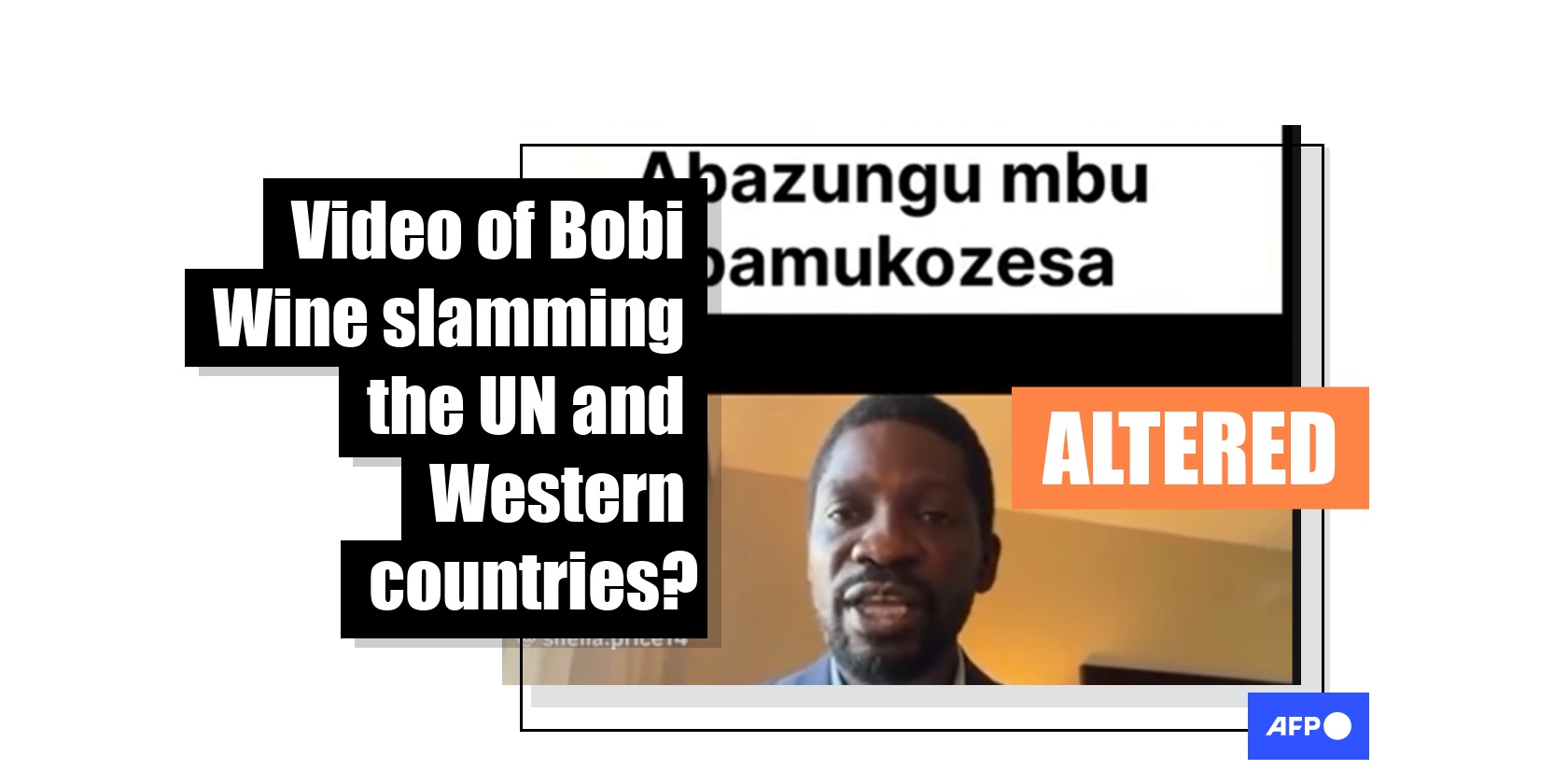
AI audio falsely portrays Ugandan opposition leader lashing out at the West
- Published on April 29, 2026 at 15:03
- 3 min read
- By Mike YAMBO, AFP Kenya
After spending nearly two months in hiding following January's disputed Ugandan presidential election, opposition leader Bobi Wine resurfaced in Washington in late March 2026. In an interview with France 24, Wine announced his intention to return to Uganda. Following his interview, a clip circulated on TikTok purportedly showing him accusing the United Nations and the West of abandoning him. This is false; the original footage from the interview was edited with AI-generated audio.
“Bobi Wine charges at the West for using him,” reads text overlaid in Luganda on a TikTok video published on March 29, 2026.
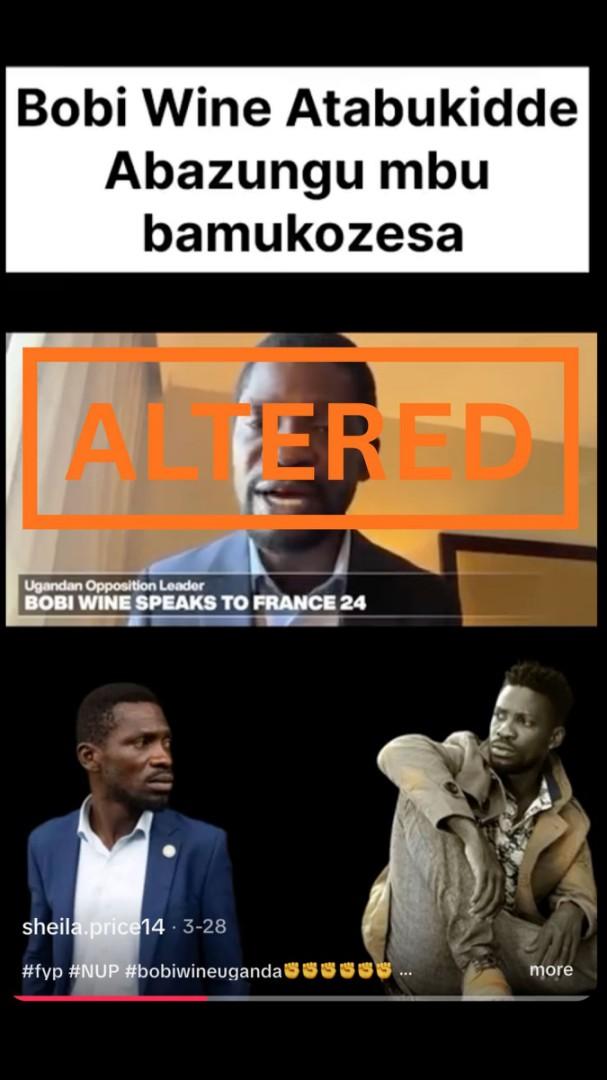
Shared more than 780 times, the 30-second clip shows Wine, whose real name is Robert Kyagulanyi, speaking to international news outlet France 24.
“I am very disappointed and I feel used. For years, we were told that institutions like the UN stood for fairness. Abandoned is too soft of a word. The West left me alone in this struggle. My party, the NUP, after elections has no real accountability or no feasible plans,” he purportedly says.
“The West is only encouraging me to go back home where I escaped and hold talks with the president and his son to legitimise our party NUP, so it seems like we are just hitting a rock,” Wine seems to add.
Similar claims were shared elsewhere on TikTok here, here, and here, as well as on X.
Uganda election aftermath
Wine, a former singer turned politician, ran against Museveni in the January 2026 presidential election. Museveni was declared the winner, extending his 40-year rule by another five years (archived here).
Wine’s National Unity Platform (NUP) party rejected the results, alleging irregularities including ballot stuffing, intimidation, and the blocking of party agents from polling stations (archived here).
Hours after polls closed, security forces raided his home in Magere, forcing him into hiding. He eventually fled the country, resurfacing in Washington in March (archived here and here).
However, the clip claiming to show Wine criticising the West is doctored.
Altered video
AFP Fact Check conducted reverse image searches on keyframes from the footage, which led to an 11-minute interview published by France 24 on YouTube on March 24, 2026 (archived here).
“'I intend to go back to my country': Exiled Ugandan opposition leader Bobi Wine,” reads the video’s title.
In the original footage, Wine states his intention to return to Uganda, but warns that he remains under threat.
“I intend to go back to my country. My fight is in Uganda. My work is in Uganda,” he says. “I am still under threat, I’m aware that I’m being followed, and Ugandan history shows many dissidents have been followed and harmed or even killed far away from home.”
When asked whether the United States had a role in his escape, he declined to name those who assisted him, saying that “the most important thing is that I am out of Uganda”.
Rather than criticising the international community, Wine calls for stronger action against the Ugandan government.
“We are calling for sanctions against those that violate human rights, most importantly, Museveni, his son [Muhoozi Kainerugaba], and all the officials that subvert democracy and the rule of law and abuse rights,” he says.
At no point in the interview does he accuse the UN or Western governments of abandoning him.
Similar features, including the onscreen headline, Wine’s attire, and the background, can be seen in both videos.
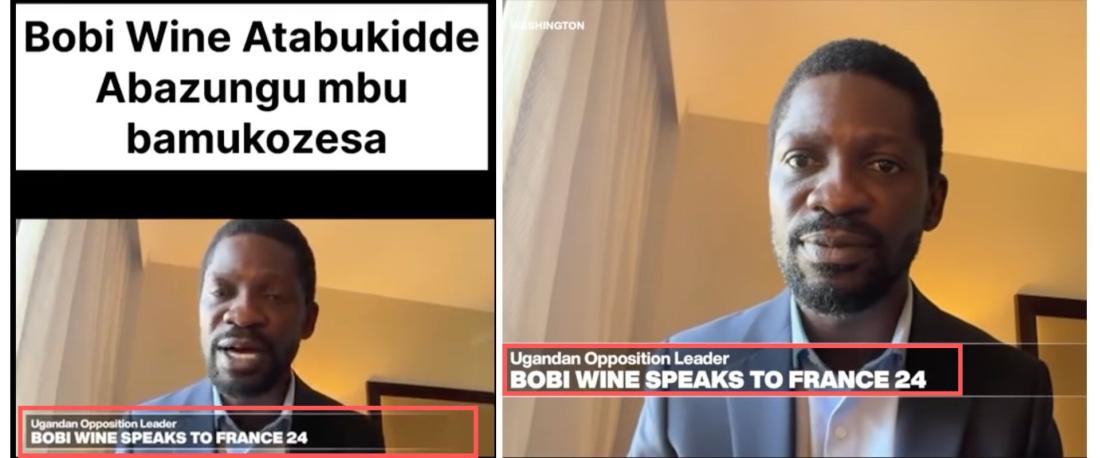
However, the audio is entirely different and bears the hallmarks of AI-generated audio, including robotic delivery, unnatural lip movements, and odd pacing and pauses.
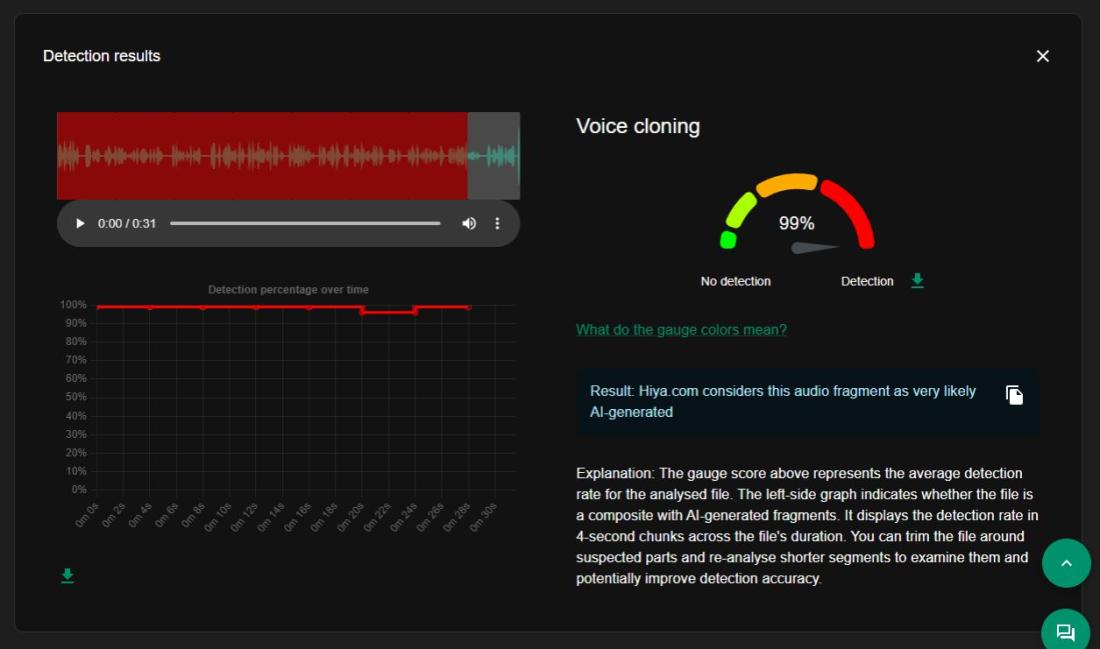
Analysis of the audio using InVID-WeVerify's audio detection tool, a verification tool co-created by AFP, suggested a 99 percent probability of voice cloning.
AFP Fact Check has previously debunked claims linked to Bobi Wine here and here.
Copyright © AFP 2017-2026. Any commercial use of this content requires a subscription. Click here to find out more.
Is there content that you would like AFP to fact-check? Get in touch.
Contact us