AI-generated visuals falsely depict destruction from deadly floods in Kenya
- Published on March 19, 2026 at 17:38
- 6 min read
- By Tendai DUBE, AFP South Africa
At least 70 people have been killed in Nairobi following torrential rains in the Kenyan capital in March 2026. However, several videos and images circulating online purporting to show the devastation were generated using artificial intelligence (AI) tools.
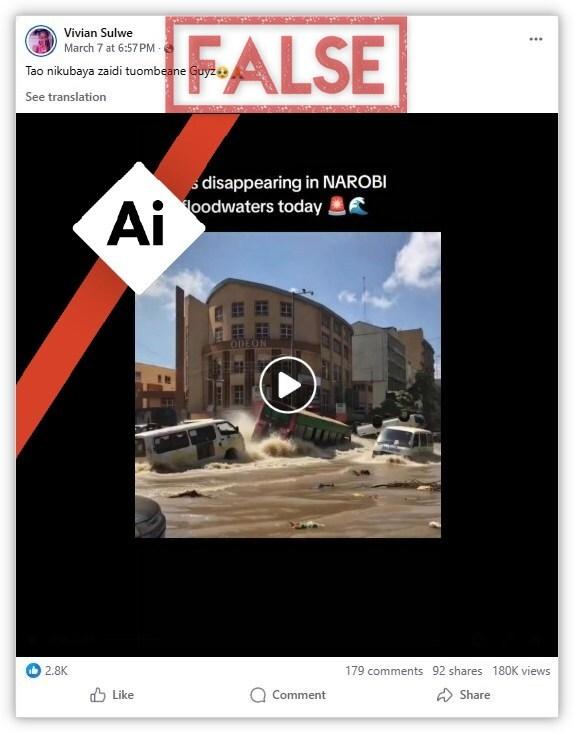
“The CBD is very bad, let us pray for each other guys,” reads the Swahili-language caption of one such video published on March 7, 2026, and shared more than 90 times on Facebook.
Text overlaid on the video reads: “Cars disappearing in NAROBI floodwaters today (sic).”
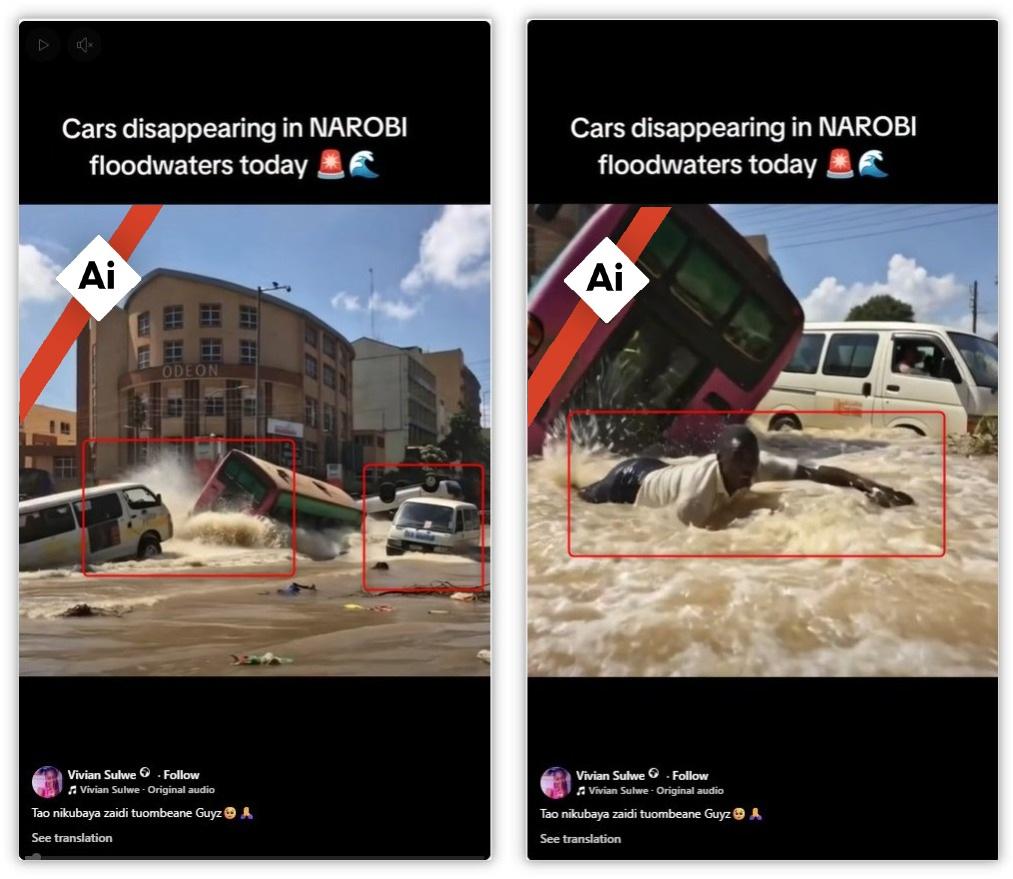
The clip shows buses and minibuses being carried along by murky water in front of a building labelled “Odeon”, a historic cinema and landmark in Nairobi's Central Business District (CBD). A man is also seen suddenly swimming across the frame.
Heavy rains have battered Kenya’s capital city since March 6, 2026, flooding thousands of homes and businesses (archived here).
As of March 17, 2026, Kenyan police said that 71 people had died as a result of the floods, with thousands of others displaced (archived here).

However, many of the videos and images circulating as evidence of the destruction are fabrications.
AI-generated visuals
The video shared on Facebook contains typical signs of artificially-generated content.
The vehicles movement is unnatural, appearing to float rather than sink. The flooded streets beneath the blue skies and fluctuating water levels also point to synthetic content.
The scale of the cars relative to the building is also distorted, with a bus appearing to be the same size as smaller vehicles in some frames.
The video’s perspective as the man swims into the frame also raises the question of where the footage was filmed from.
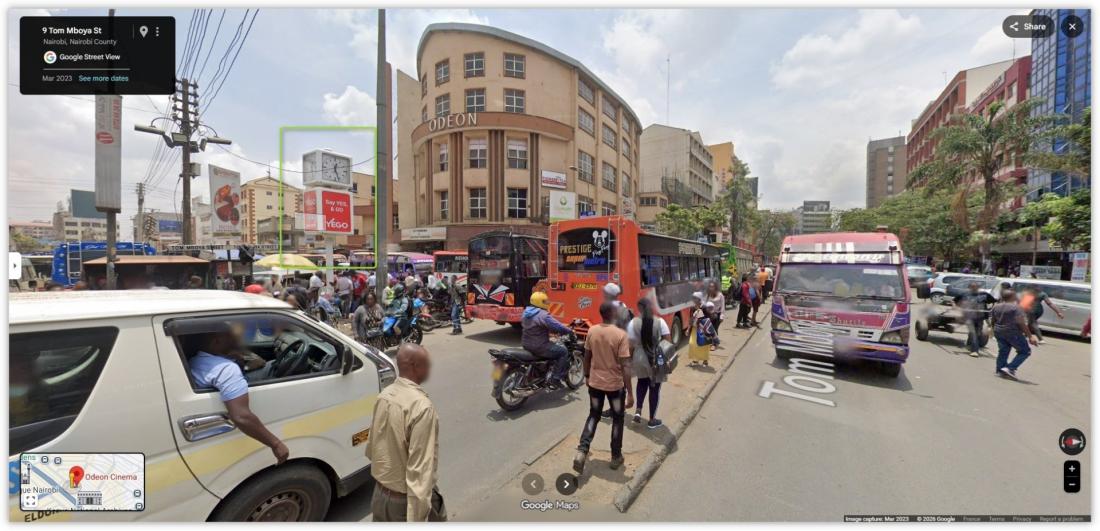
AFP Fact Check geolocated the site on Google Street View and found key features missing from the AI video: a ledge above the entrance to the Odeon cinema and a square clock in front of the old building (archived here).
Another video circulated on Threads on March 8, 2026, claimed to show cars being swept away by water under a bridge in Nairobi.
But as the vehicles submerge, their outlines blur and merge with the surrounding water and surfaces rather than colliding.
Furthermore, the bridge and background do not match any location in the Kenyan city.
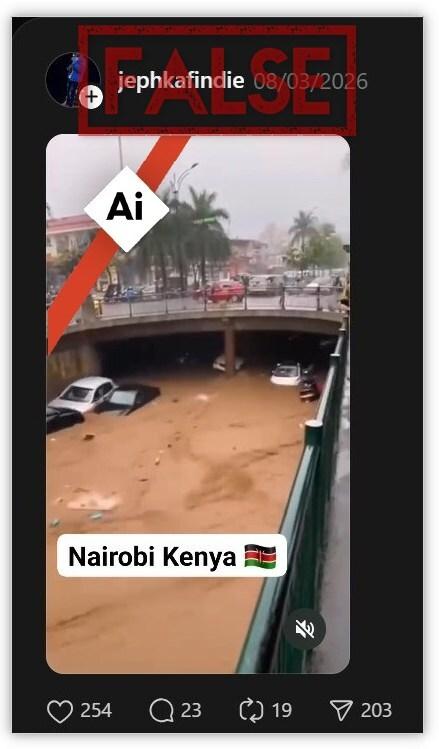
A reverse image search shows it was originally published on March 7, 2026, by a Facebook account called “Disaster Strucks”, a page that clearly states on its profile that it posts AI videos for “entertainment purposes only”.
"Seconds Before Moment the Cars Swept Into Flooded Tunnel as Violent Flood Strikes (sic)," the post reads.
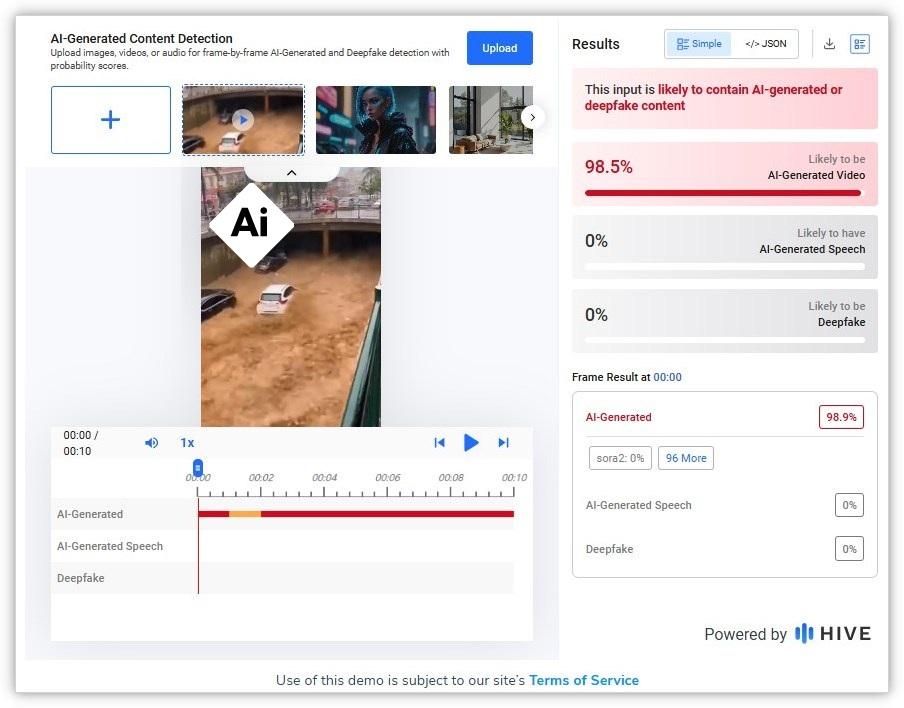
An analysis of the video using Hive Moderation, an AI detection tool, confirmed it was 98.5 percent likely to have been generated by AI.
Similar results were found for another video published on March 9, 2026, also purporting to show the Nairobi floods.
"Floods in Nairobi More than 50 deads confirmed (sic)," reads the text overlaid on the clip.
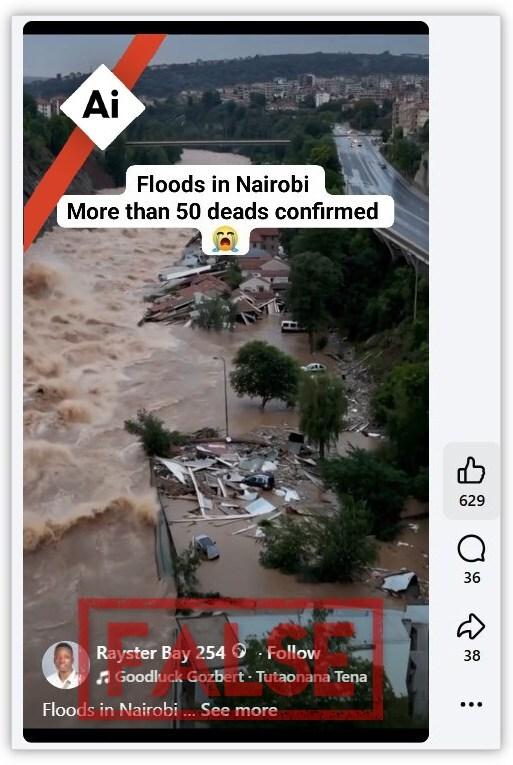
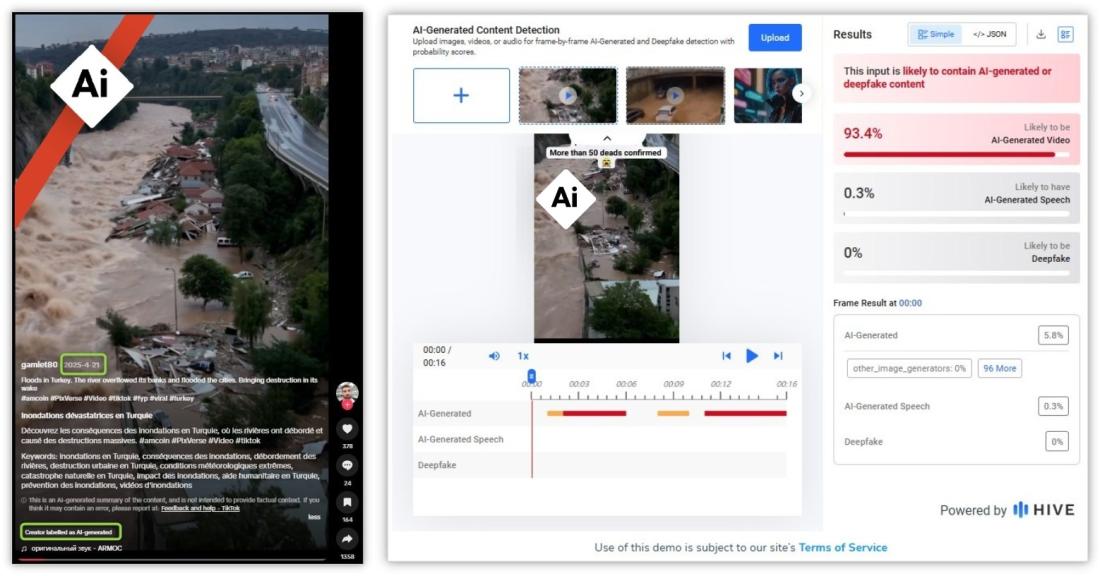
A reverse image search shows the video was circulating on TikTok as early as April 21, 2025, in a post about flooding in Turkey, that the creator labelled as a product of AI.
Hive Moderation analysis also found a 93 percent probability that the clip was AI-generated.
Other footage circulated on X claimed to show informal houses being washed away in the Nairobi floods.
"Scenes here in Nairobi South C and Jogoo Road ..Sakaja is still sleeping (sic)," reads the post, partly in Swahili.
The post references Nairobi Governor Johnson Sakaja, who has faced widespread criticism over the county's response to the floods (archived here).
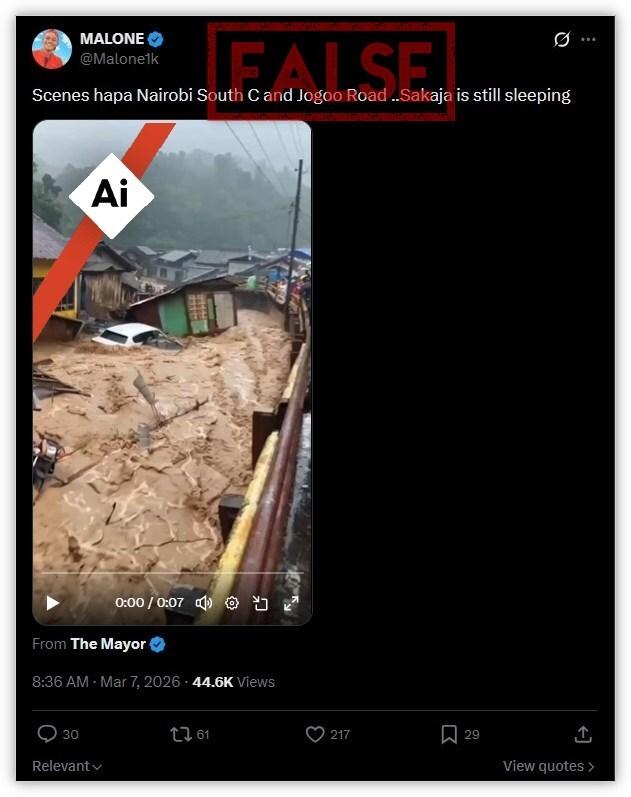
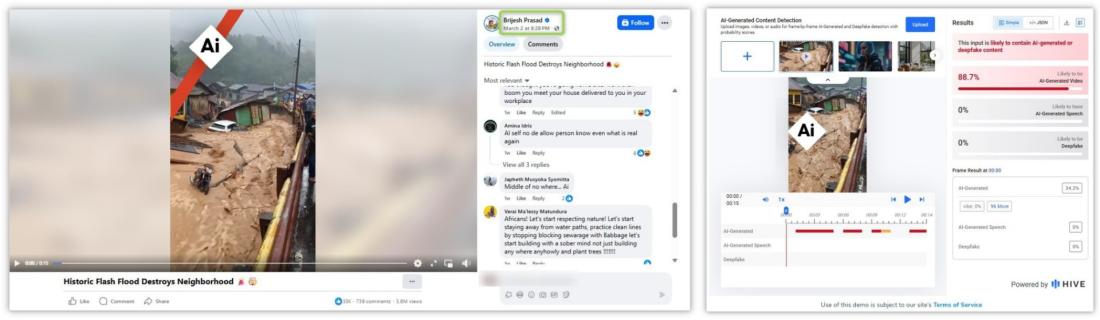
However, a reverse image search found it was published by an Indian-based Facebook user by the username "Brijesh Prasad" on March 2, 2026, days before the fatal Kenyan floods.
The account primarily publishes AI-generated content about natural disasters, a pattern corroborated by AI detection tools in their analysis of the video shared on X.
On March 7, 2026, Kenyan politician Phelix Odiwuor also shared an image purportedly showing the flooding in Nairobi on Instagram.
"Last night’s floods exposed serious weaknesses in Nairobi’s infrastructure. The systems we currently have can no longer support the city’s rapidly growing population," the post reads in part.
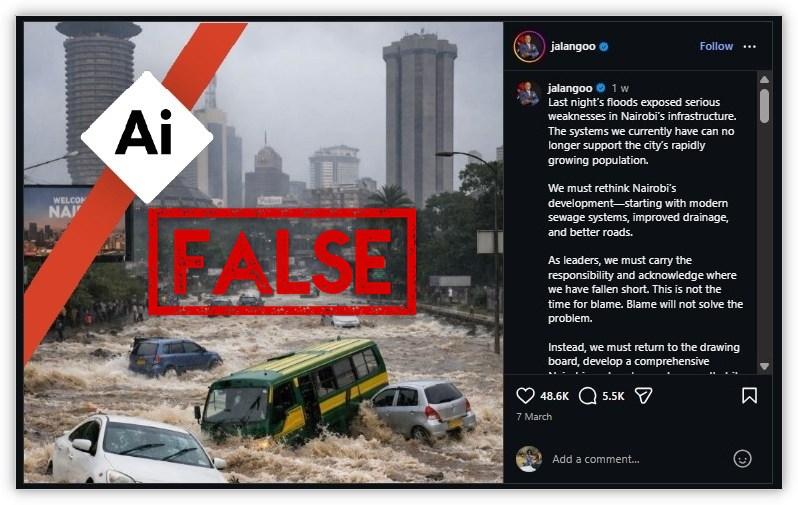
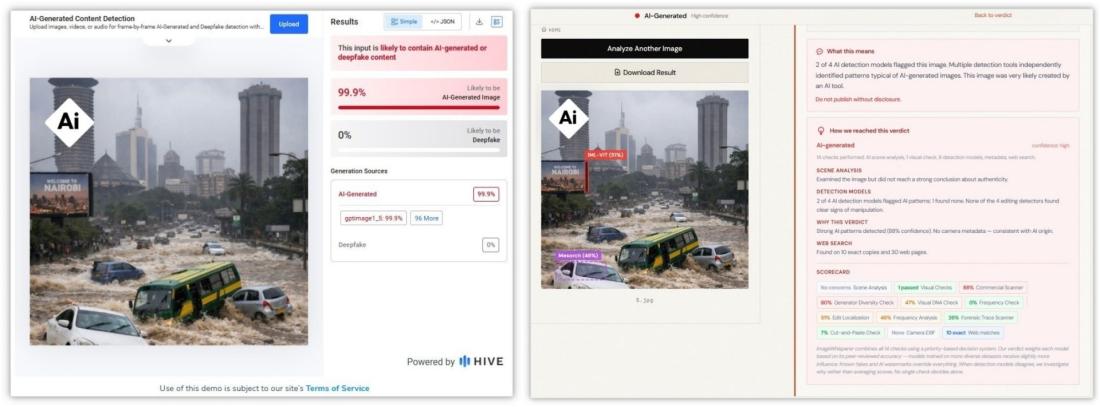
But the image also bears signs of AI-generation -- it shows pedestrians walking on a pavement that should be underwater, contradicting the surrounding flooded road. The license plates on the submerged vehicles are also blurry, and do not seem to follow the standard Kenyan format.
Analyses using Hive Moderation and Image Whisperer AI detectors found an 88-99 percent likelihood that the image was artificially generated.
Read here for more AFP Fact Check articles based on AI-generated claims.
Copyright © AFP 2017-2026. Any commercial use of this content requires a subscription. Click here to find out more.
Is there content that you would like AFP to fact-check? Get in touch.
Contact us