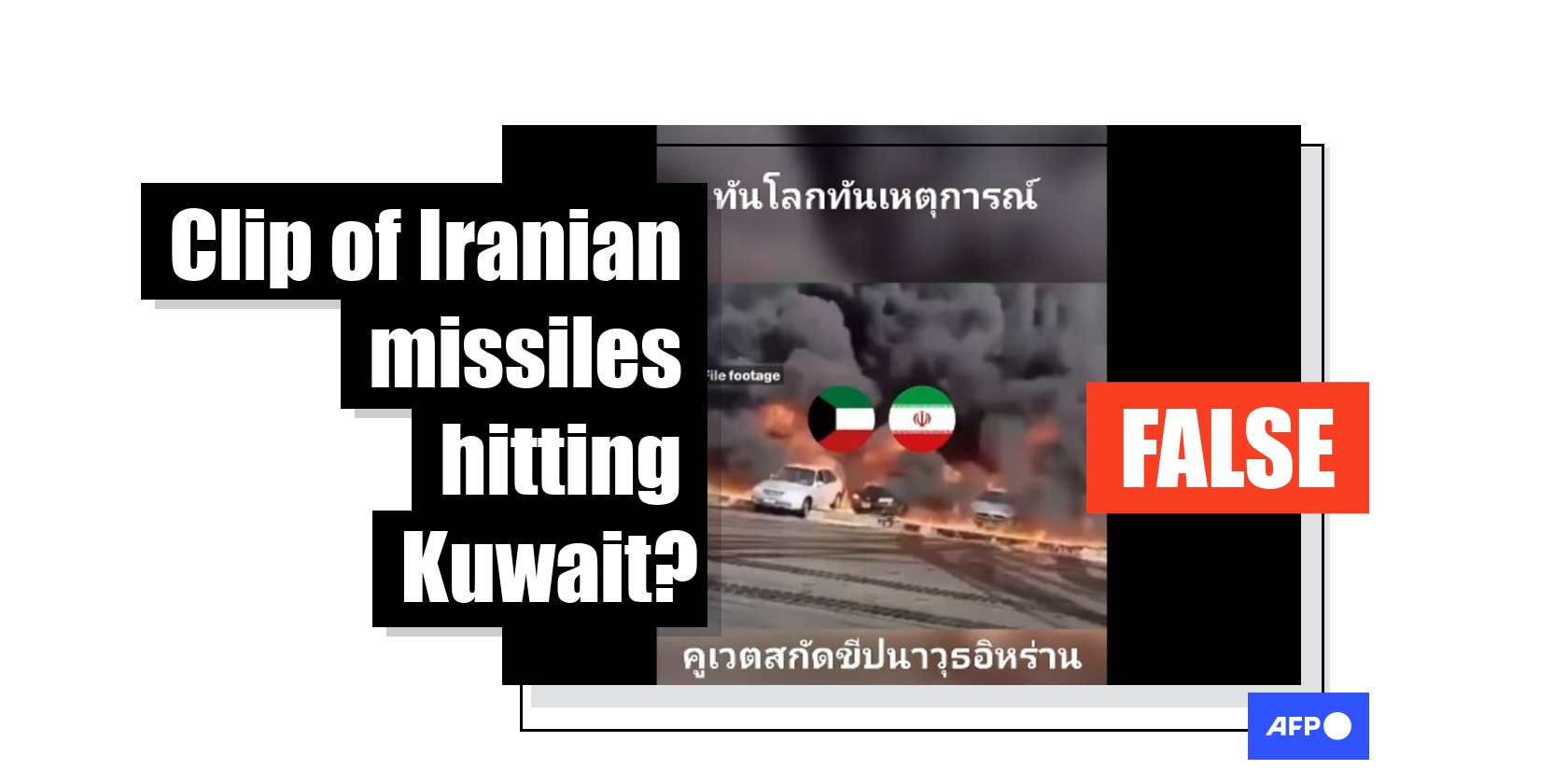
Old footage of Egypt pipeline explosion falsely linked to Middle East war
- Published on June 16, 2026 at 10:18
- 3 min read
- By Chayanit ITTHIPONGMAETEE, AFP Thailand
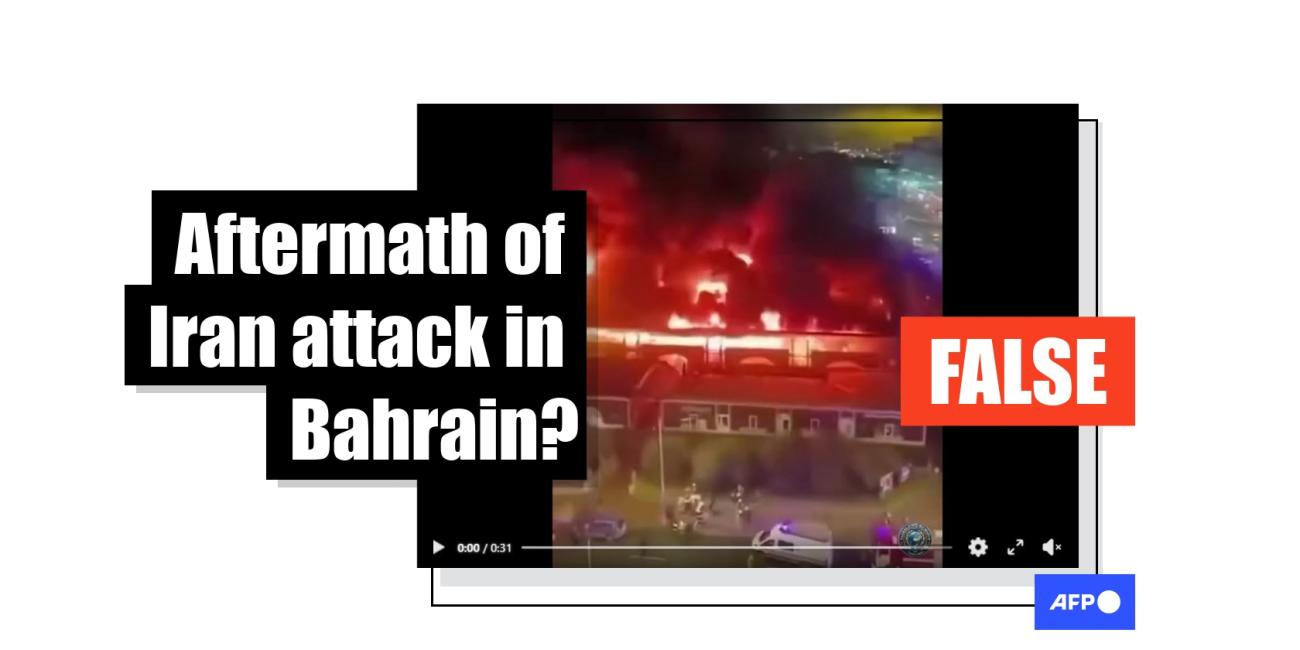
Iran launched missiles at Kuwait in retaliation for US strikes in early June 2026, but video of a huge inferno circulating on social media does not show the impact of the Iranian salvoes as posts claim. The video, which surfaced before Tehran and Washington agreed a deal to end the Middle East war, in fact shows a massive fire caused by an oil pipeline explosion near to a motorway in Egypt in July 2020.
"Kuwait intercepted seven Iranian missiles targeting its capital!" says part of the Thai-language caption of a Facebook video shared on June 6, 2026.
The short video, shared by an account with 116,000 followers, shows cars ablaze in front of a thick wall of black smoke.
The caption continues: "Kuwaiti authorities issued an urgent statement saying they successfully shot down missiles over their airspace -- a narrow escape -- but debris still scattered into residential areas. Very frightening!"
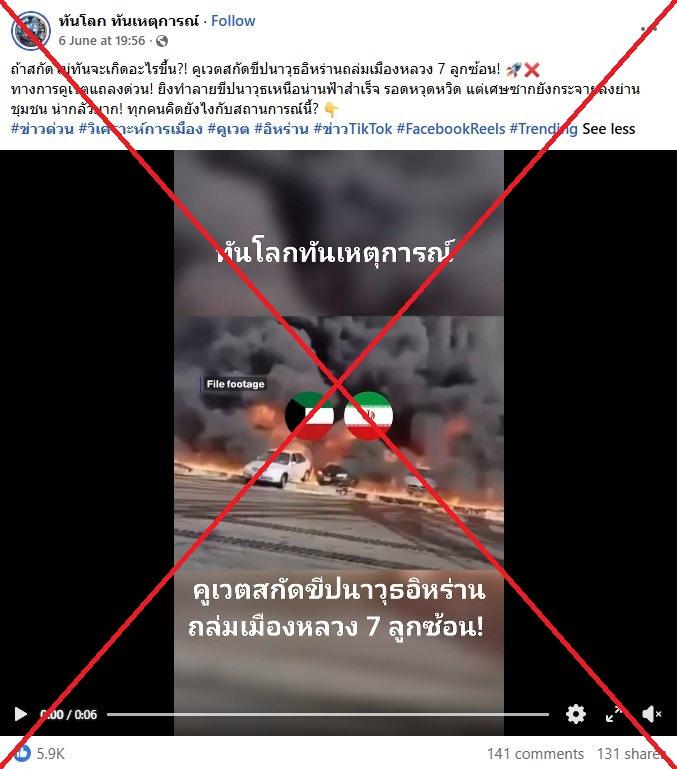
The same video was also shared in similar posts after Iran targeted Kuwait and Bahrain with ballistic missiles on June 6, following US attacks on radar installations on Iran's southern coast (archived link).
US Central Command (CENTCOM) said six of the missiles fired towards Kuwait and Bahrain were downed, while the seventh "did not reach its intended target".
Kuwait condemned the attacks, saying they were a "direct threat" to the "lives of citizens and residents" and represented a "dangerous escalation... at a time when the international community is making unremitting efforts to stop combat operations". Its military said some interceptions over residential areas caused falling debris which "resulted in material damage but no casualties".
The latest flare-up in violence came days before Washington and Tehran said they had reached a deal to end the Middle East war on all fronts including Lebanon, and reopen the vital Strait of Hormuz (archived link).
A signing ceremony was set to take place in Switzerland on June 19, bringing an end to three months of conflict that has sent energy prices soaring and revived fears of another inflation spike.
The circulating video, however, does not show the impact of an Iranian missile in Kuwait. It in fact shows a fire caused by an oil pipeline explosion in Egypt in July 2020.
AFP has previously debunked posts falsely claiming the video shows an explosion in Dubai and a Hamas attack on Israel.
Oil pipeline fire
A reverse image search using keyframes from the falsely shared video led to the same footage used in a Sky News report published on July 15, 2020 (archived link).
The report's headline reads, "Egypt: Seventeen people injured in oil pipeline explosion on Cairo motorway".
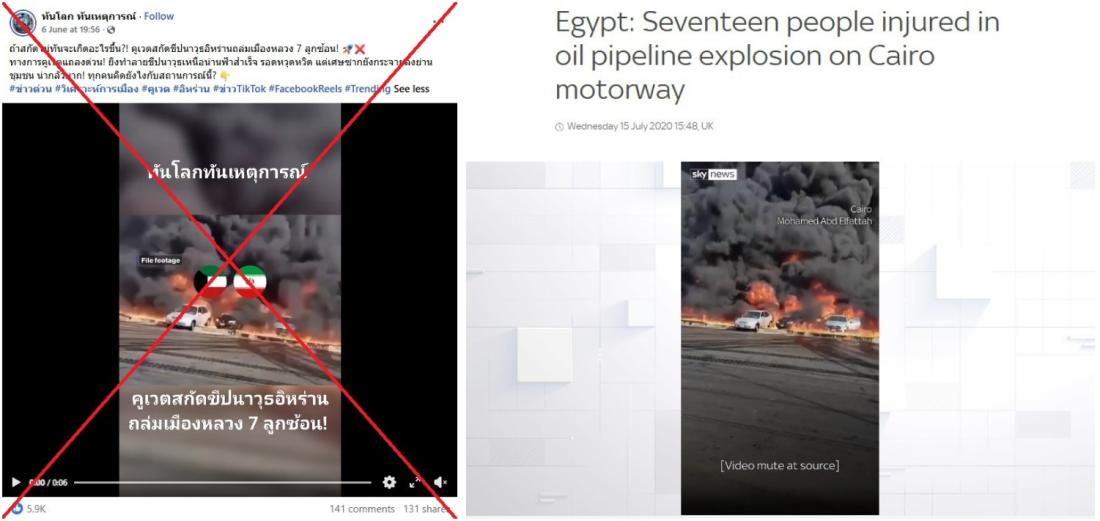
According to a Middle East Monitor article, Egypt's petroleum ministry said the fire on the Cairo-Ismailia desert highway was caused by a spark from a passing car igniting crude oil that was leaking from a pipeline that runs from the Red Sea port of Shuqair to Mostorod refinery complex in Greater Cairo (archived link).
The Egypt Today outlet reported the fire burned 37 cars, three motorcycles and collapsing parts of a concrete tunnel structure (archived link).
A longer version of the same video was published by Canadian outlet Global News on July 15, 2020 (archived link).
At its 46-second mark, a road sign can be seen with directions to "Cairo Airport" written in Arabic and English.
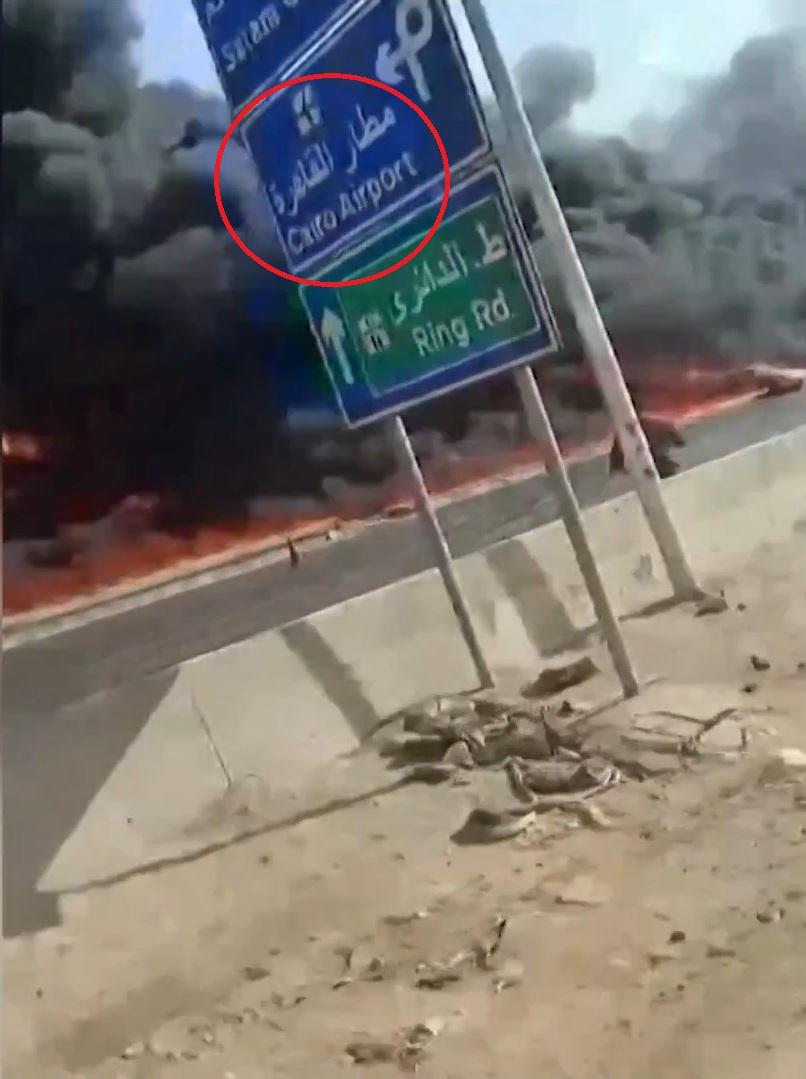
Street-level images of the Cairo-Ismailia desert road available from open source Mapillary platform show similarly designed pillars and signage to that seen in the Global News footage (archived link).
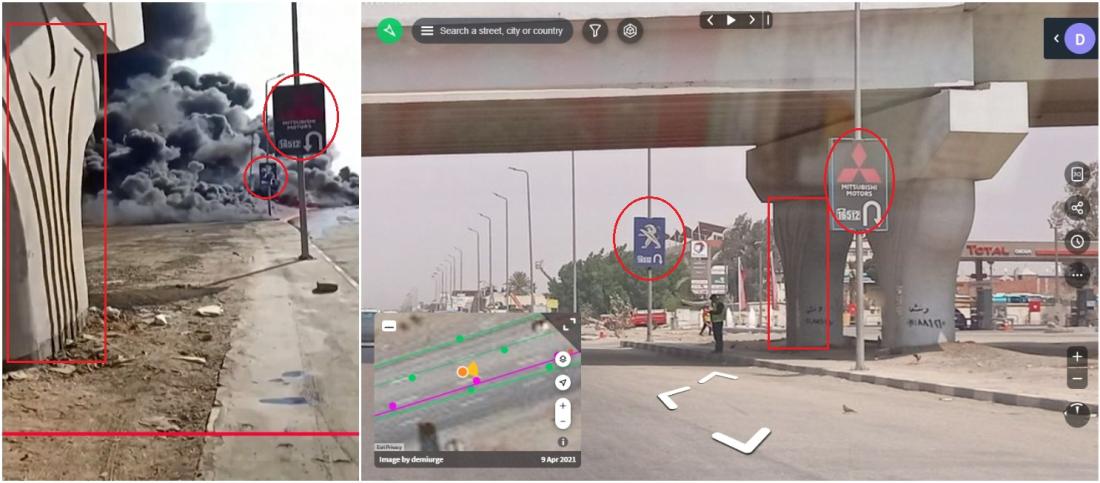
A day after the blaze, a screenshot from the news footage was used in an article posted on an official Egyptian government website about maintenance and repair work at the pipeline involved in the explosion (archived link).
AFP has debunked misinformation related to the Middle East war in 2026.
Copyright © AFP 2017-2026. Any commercial use of this content requires a subscription. Click here to find out more.
Is there content that you would like AFP to fact-check? Get in touch.
Contact us