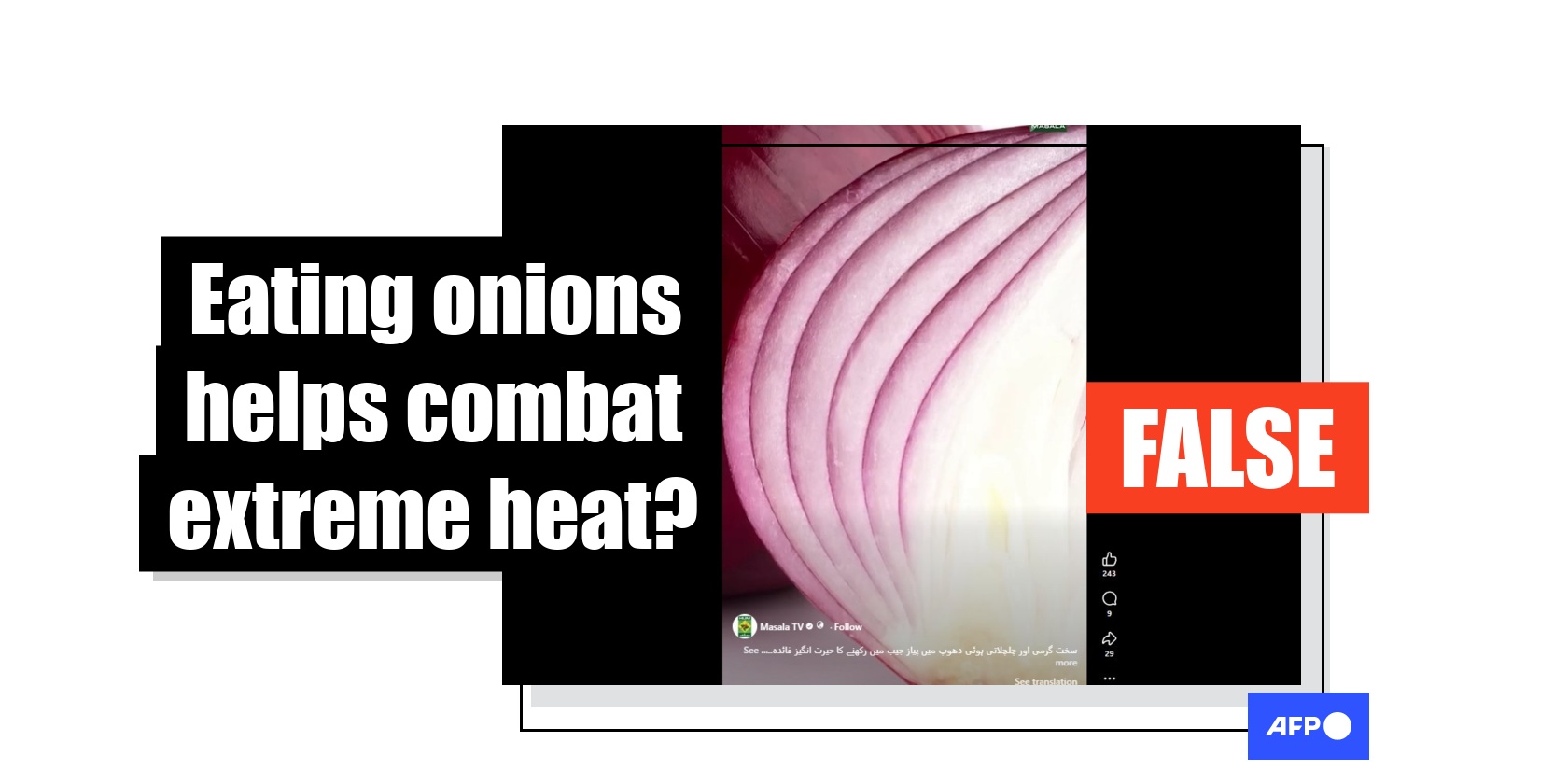
Experts refute dangerous advice that onions prevent heatstroke
- Published on June 15, 2026 at 06:26
- Updated on June 15, 2026 at 06:37
- 3 min read
- By Yusra JABEEN, AFP Pakistan
Consuming onions does not shield people from heatstroke, doctors told AFP, refuting advice that spread widely online as extreme heat gripped parts of India and Pakistan. Medical experts warned the popular folk remedy -- amplified by news reports and an Indian official -- is dangerous as it risks replacing proven protective measures against heat-related hazards, which could be fatal.
"Our ancestors used to say, when you step outside in the heat, during a heatwave, then keep an onion with you," says the host of a cooking programme in a video shared on the Facebook account of Pakistan's Masala TV on June 8, 2026.
"They used to say, use onions, eat as many onions as you can, and in addition to that, keep a small onion with you at all times. When you keep a small onion with you, you will stay safe from a heatstroke," she goes on to say.
"Many people dismiss the remedy by saying it is archaic, but this is absolutely true and based in reality."
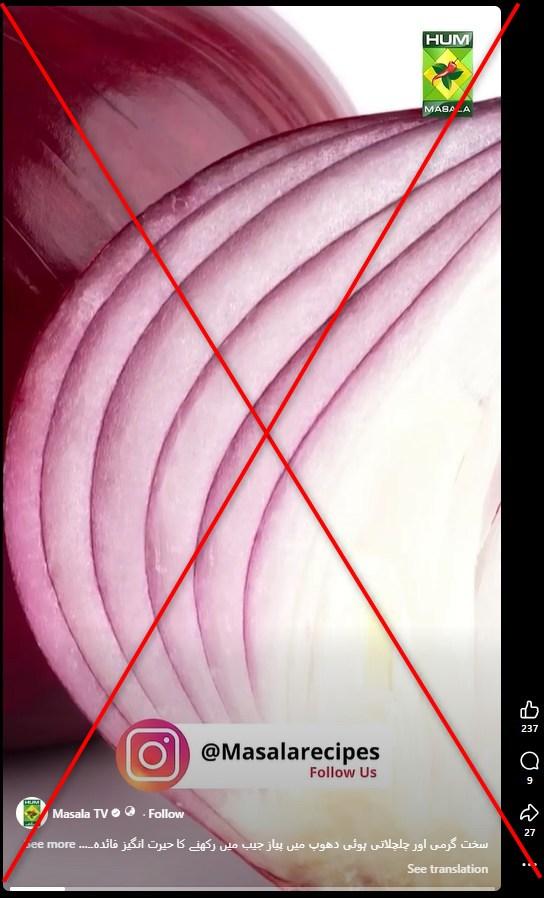
Similar claims appeared in reports published by other news organisations, including Aaj News, Daily Express and Daily Jang.
In neighbouring India, communications minister Jyotiraditya Scindia earlier touted onions as a remedy for extreme heat.
"Keep an onion in your pocket. Nothing will happen to you," said Scindia in an X video on April 26, adding he does not use air conditioning before proceeding to take out an onion from his pocket.
"We shouldn't forget these traditional remedies."
AFP reached out to Scindia for comment, but a response was not forthcoming.
His remarks spread widely among social media users in India and Pakistan as temperatures soared in vast swathes of South Asia, hovering above 45C in some places (archived here and here).
Both nations are no strangers to scorching summers, but years of scientific research have found climate change is causing heatwaves to become longer, more frequent and more intense (archived link).
Multiple experts refuted the supposed protective benefits of onions against extreme heat, highlighting potential dangers.
'Health misinformation'
"There is no scientific evidence that eating or carrying onions prevents heatstroke or reduces core body temperature under heat stress," Dr Nadeem Ullah Khan, professor and chair of emergency medicine at the Aga Khan University Hospital in Karachi, told AFP on June 3 (archived link).
He explained that while onions have anti‑inflammatory properties and a mild cooling effect, the danger with the circulating advice is "substitution behaviour replacing proven protective measures with an ineffective remedy".
"Individuals who believe carrying or consuming an onion provides protection may reduce fluid intake," he said.
They may also "extend outdoor exposure during peak heat hours (11:00–16:00) with a false sense of safety, and forgo lightweight protective clothing, sun avoidance, and shade‑seeking behaviour."
A representative for the World Health Organization (WHO) office in Pakistan described the circulating advice as a "myth" and "health misinformation".
Heatstroke is a life‑threatening emergency caused by the body's failure to regulate temperature, underscoring the need for early prevention and rapid action during extreme heat, the representative said.
"The rate of heat-related deaths has surged by 23% since the 1990s, to reach 546,000 lives lost every year," they told AFP on June 3.
"Heat-related mortality among people over 65 has increased by around 85% in recent decades, underlining the urgency of accurate public health messaging."
According to the global agency, the harmful effects of extreme heat are largely preventable through steps such as staying indoors during the hottest hours, avoiding heavy activity and keeping homes cool (archived link).
It also advised wearing light and loose clothing, using a cap outdoors, taking cool showers and drinking water regularly while avoiding sugary, alcoholic or caffeinated drinks.
The agency urged people to follow official heat alerts and call an ambulance immediately if someone has hot and dry skin, is delirious or experiencing convulsions, or is unconscious.
AFP has previously debunked other posts promoting unproven remedies.
Updated story to slightly tweak text in header imageJune 15, 2026 Updated story to slightly tweak text in header image
Copyright © AFP 2017-2026. Any commercial use of this content requires a subscription. Click here to find out more.
Is there content that you would like AFP to fact-check? Get in touch.
Contact us