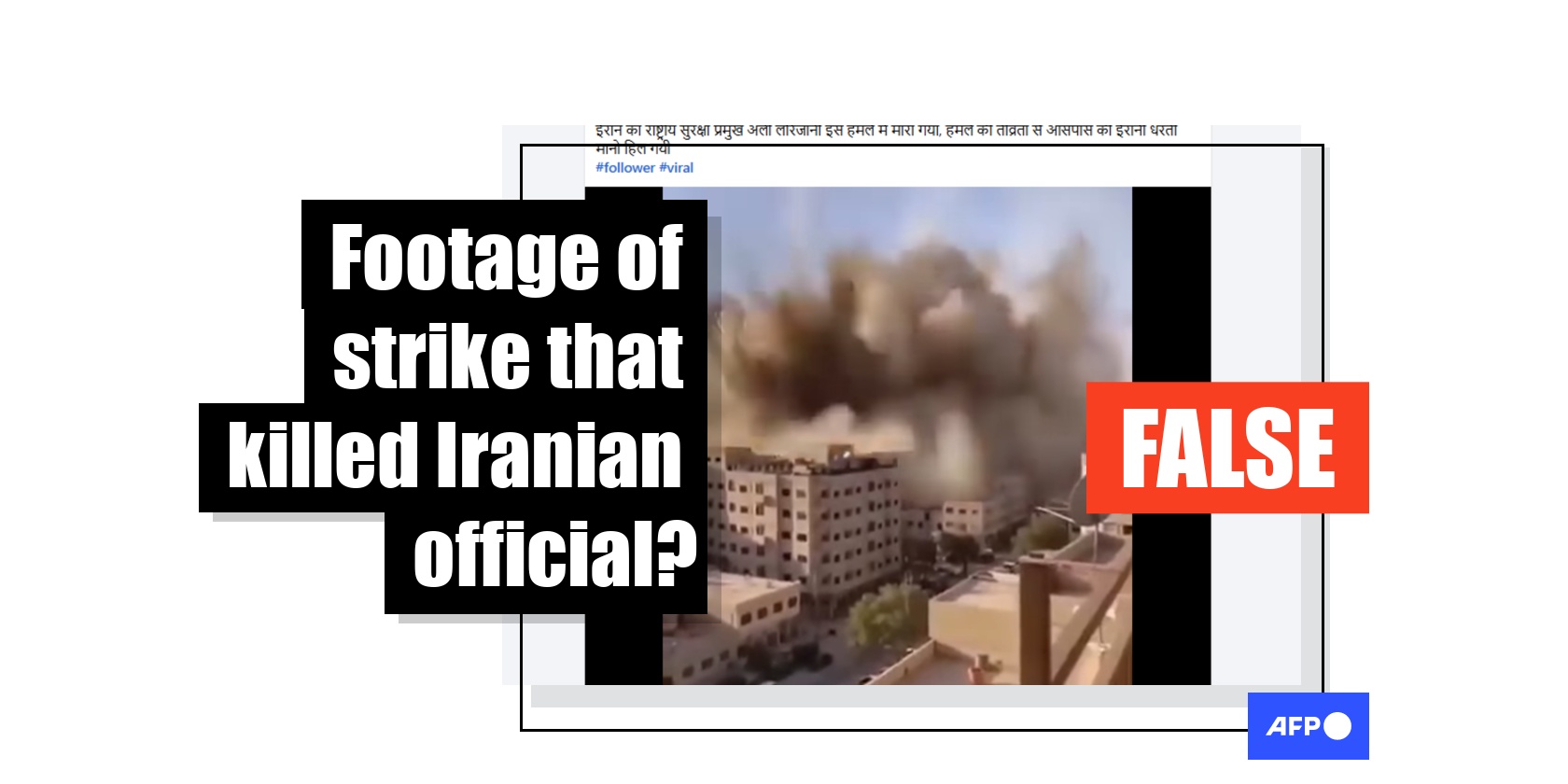
AI-generated video falsely shared in posts about Iran security chief killing
- Published on April 7, 2026 at 10:30
- 3 min read
- By Devesh MISHRA, AFP India
Iran's security chief Ali Larijani was killed in an Israeli strike on March 17, but a video circulating online that supposedly showed the attack is in fact AI-generated. The clip was posted by an account that primarily posts synthetically created visuals of the joint US-Israeli war on Iran that began on February 28.
"Iran is on its last legs. Because Israel is selectively killing. This attack will surely terrify you! Iran's National Security Chief, Ali Larijani, was killed in this attack. The intensity of the attack shook the surrounding Iranian soil," reads the Hindi-language caption of a Facebook video shared on March 31, 2026.
The video appears to show a series of airstrikes hitting a building.
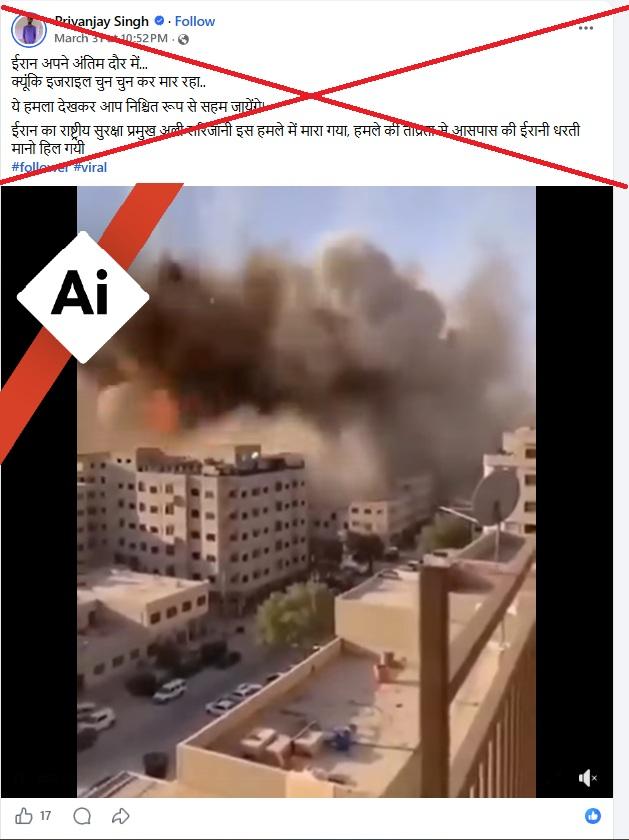
The video also circulated in similar Facebook and X posts as several countries acted as mediators to try to halt more than five weeks of fighting sparked by US-Israeli strikes on Iran, which responded by effectively closing the strategic Strait of Hormuz and striking targets across the Gulf (archived link). Iran rejected a proposed truce with the United States and Israel on April 7.
Since the start of the war, US-Israeli strikes on Iran have killed its supreme leader Ayatollah Ali Khamenei as well as a whole echelon of the political and military elite in the Islamic Republic (archived link).
Iran's Supreme National Security Council confirmed the death of its chief, Ali Larijani, on March 17, after Israel said it had killed him in an airstrike (archived link).
But the circulating clip does not show the airstrike.
A reverse image search on Google using keyframes from the falsely shared video led to the same clip posted several weeks earlier on Instagram (archived link).
The March 10 video was also shared with a disclaimer that it was AI-generated.
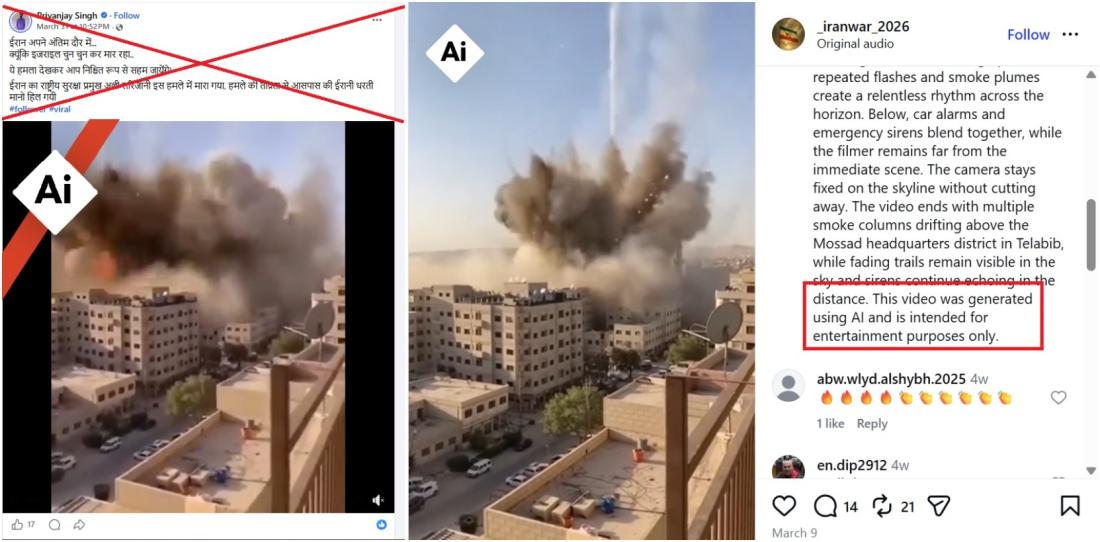
The video was shared by an account that regularly posts AI-generated visuals of the war in the Middle East.
The user behind the account, who declined to give their name, told AFP on April 3 the post's lengthy caption describing the scene is the AI prompt used to generate the video in Open AI's now-shut Sora 2 video-generation tool (archived link).
The user also said their intention was "not to spread fake news, but rather to share it for entertainment".
A closer analysis of the video found it contains visual inconsistencies that are tell-tale signs of synthetic content.
Despite repeatedly being struck by missiles, the surrounding buildings seen in the clip do not shake or suffer any damage. A person can also be seen calmly walking down the street without any signs of panic despite the explosions.
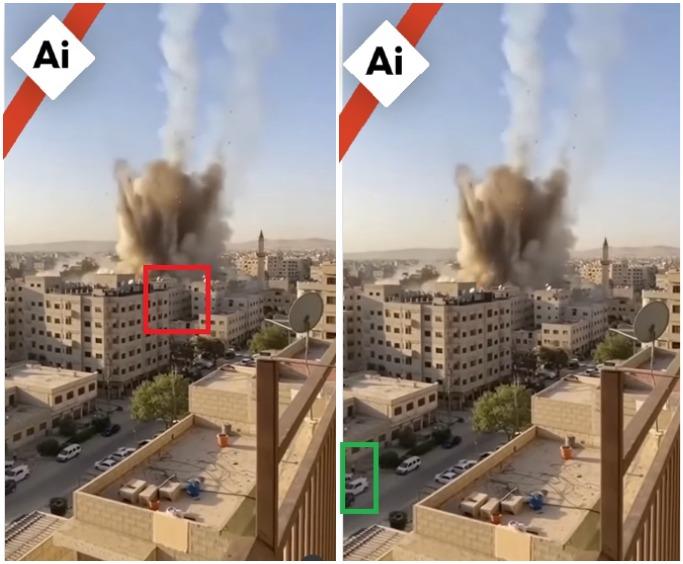
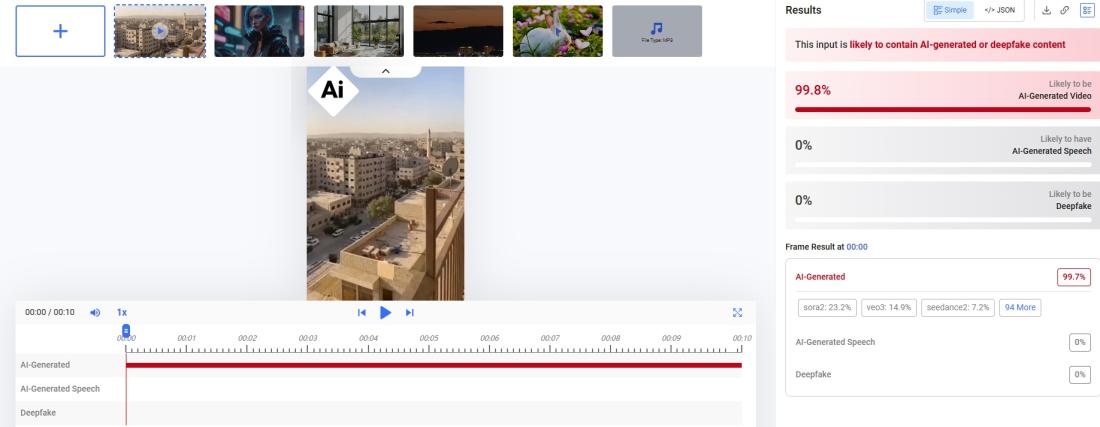
Moreover, an analysis by the Hive Moderation AI detection tool found the video was "likely to contain AI-generated or deepfake content" (archived link).
AFP has debunked other misleading claims surrounding the war in the Middle East here.

Copyright © AFP 2017-2026. Any commercial use of this content requires a subscription. Click here to find out more.
Is there content that you would like AFP to fact-check? Get in touch.
Contact us