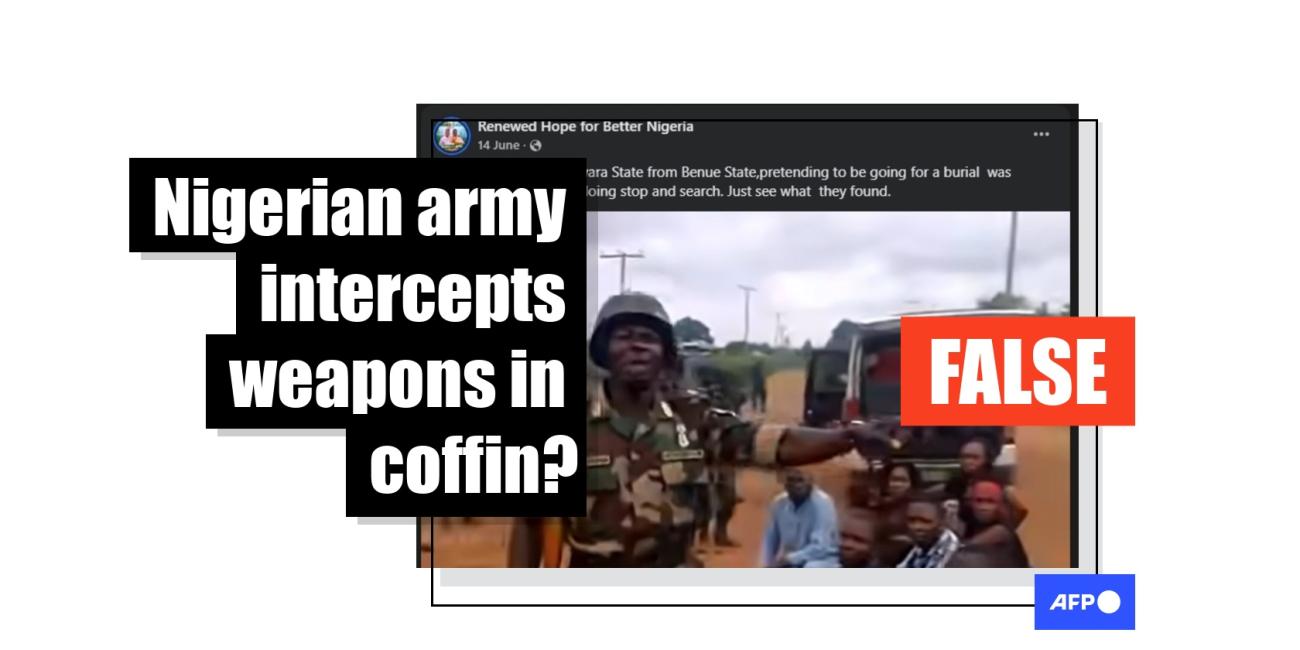
AI videos in support of political parties dominate social media ahead of Bangladesh election
- Published on February 3, 2026 at 09:10
- 3 min read
- By Rasheek MUJIB, AFP Bangladesh
As Bangladesh prepares for its first election since the overthrow of Sheikh Hasina, social media posts are sharing AI-generated clips of people explaining why they will vote for the South Asian nation's biggest Islamist party. The videos were fabricated using Google's AI tools and come from an account that regularly publishes manipulated content in support of Jamaat-e-Islami.
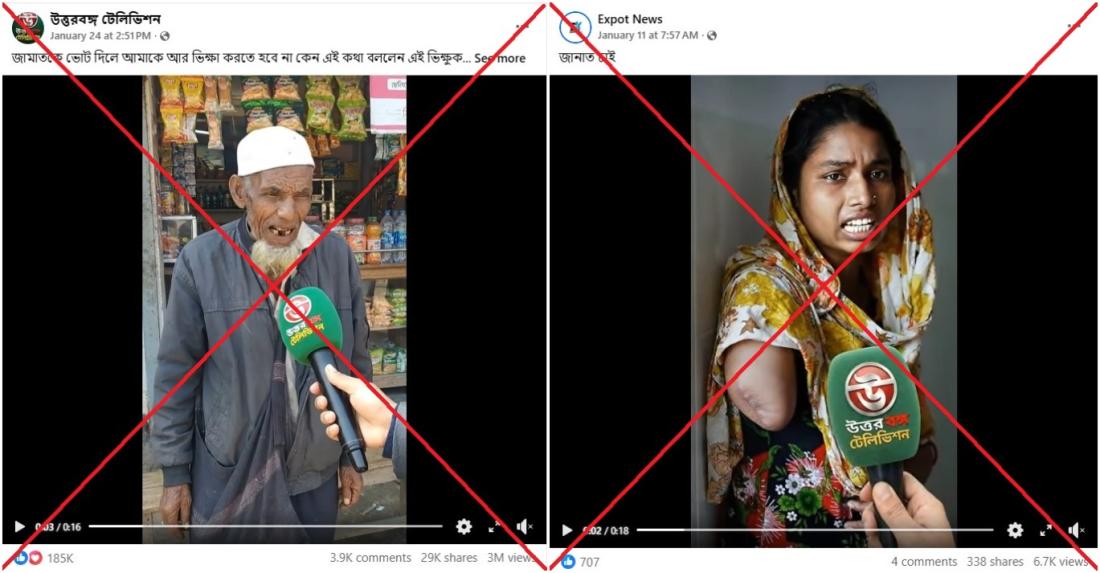
"Why did this beggar say that if he votes for Jamaat, he will no longer have to beg?" reads a Bengali-language Facebook post shared 29,000 times since January 24, 2026.
The post features a clip of an old man who says he will vote for Jamaat-e-Islami, the largest Islamist party in the Muslim-majority nation of 170 million that has gained significant momentum since the ousting of Prime Minister Sheikh Hasina in a popular uprising in 2024 (archived here and here).
Another video that spread on January 11 shows a woman with an amputated arm.
"I won't vote for this bribe-taking BNP, if I vote, it would be for scale," she said.
BNP refers to the Bangladesh Nationalist Party, one of the contenders of the election while "scale" refers to the official symbol of Jamaat-e-Islami (archived link).
Bangladesh Nationalist Party (BNP) and Jamaat-e-Islami along with a 10-party alliance are the biggest contenders of the highly anticipated national election scheduled on February 12, 2026 (archived link).
The BNP is widely seen as an election frontrunner, with Tarique Rahman, the party chairman expected to be put forward as prime minister if his party wins a majority.
Rahman recently returned to Bangladesh in December 2025 after 17 years of exile in London, soon after Khaleda Zia, the first female Prime Minister of Bangladesh and Rahman's mother died on December 30, 2025 (archived here and here).
Jamaat-e-Islami began its campaign in the capital Dhaka, after being crushed during Hasina's 15 years in power (archived link).
Both posts were shared elsewhere on Facebook and Instagram.
But the videos were made with AI.
AI-generated
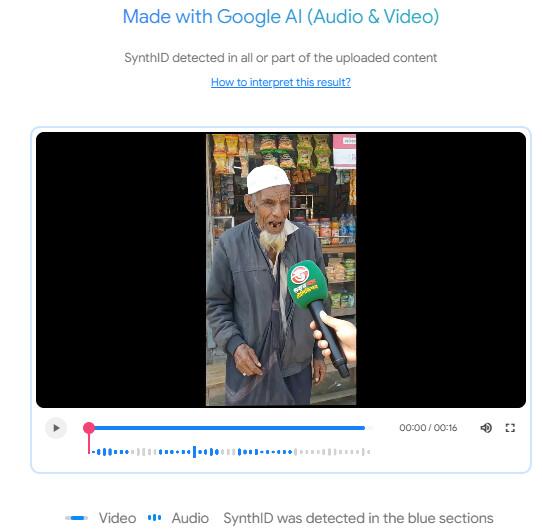
An analysis of the circulating image using SynthID -- a detector launched by Google to identify AI-generated content -- showed the first clip was created with the help of Google's AI tools (archived link).
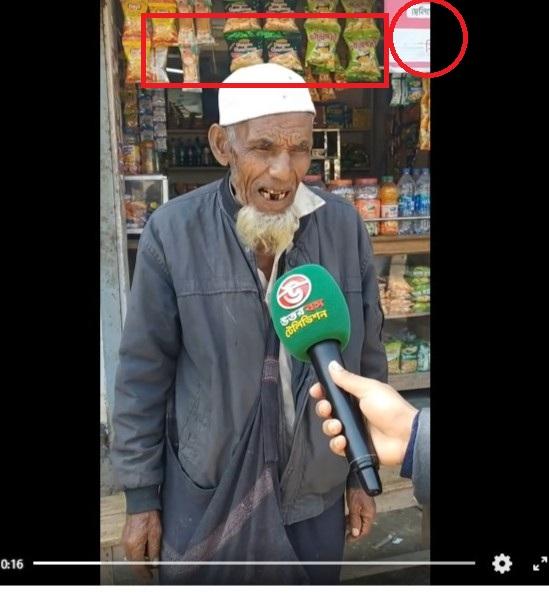
It also contains multiple visual inconsistencies indicative of content generated with AI.
The labels and names on the food items in the shop seen in the background are all garbled and unintelligible.
A reverse image search on Google using keyframes from the second video led to an NBC news report featuring the same woman in a photo published on June 21, 2013 (archived link).
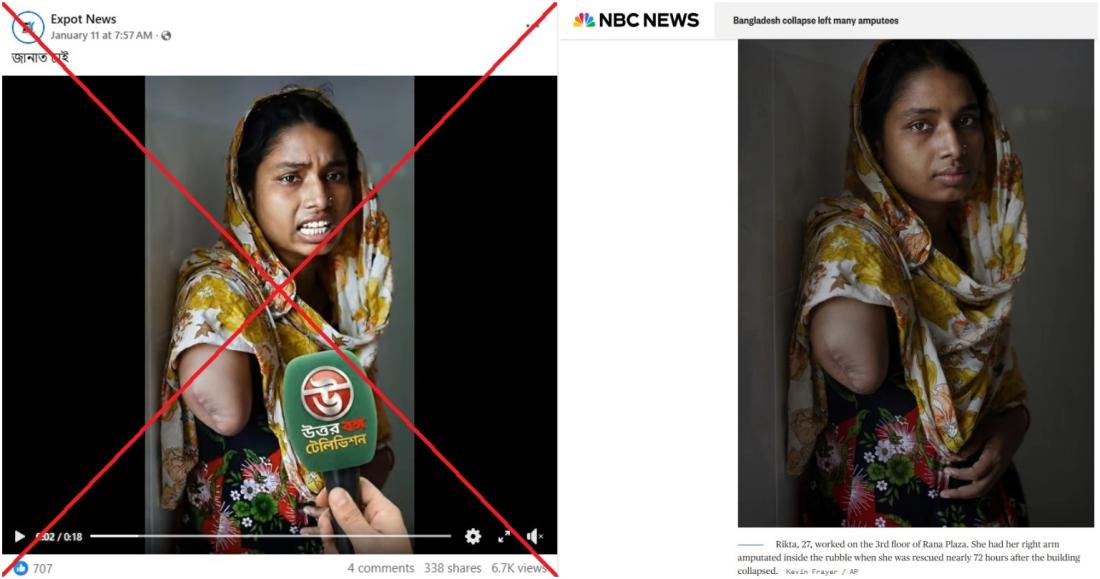
The photo report, titled, "Bangladesh collapse left many amputees," reports on the Rana Plaza factory building collapse in April 2013, one of the worst structural disasters of the modern world, which killed 1,129 people in a factory in Savar, Bangladesh (archived link).
The AP photo by Kevin Frayer features Rikta, who had her right arm amputated inside the rubble when she was rescued nearly 72 hours after the building collapsed (archived link).
Another SynthID analysis for this clip flagged it was "made with Google AI" as well.
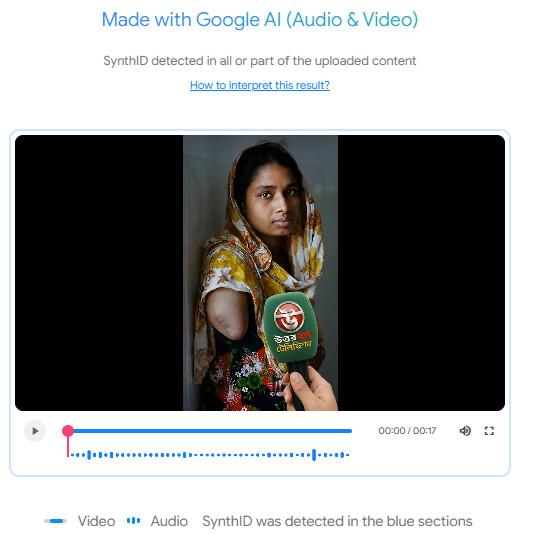
Both videos have a microphone with 'Uttorbongo Television's' logo in them, a page that has many similar contents made with AI, in support of Jamaat-e-Islami (archived link).
Uttorbongo Television confirmed to AFP on February 3 that the videos were generated with AI.
AFP has previously debunked misinformation about political unrest in Bangladesh.
Copyright © AFP 2017-2026. Any commercial use of this content requires a subscription. Click here to find out more.
Is there content that you would like AFP to fact-check? Get in touch.
Contact us