Trump shares Israel photo to attack US wind turbines for eagle deaths
- Published on January 2, 2026 at 20:04
- 3 min read
- By Bill MCCARTHY, Manon JACOB, AFP USA
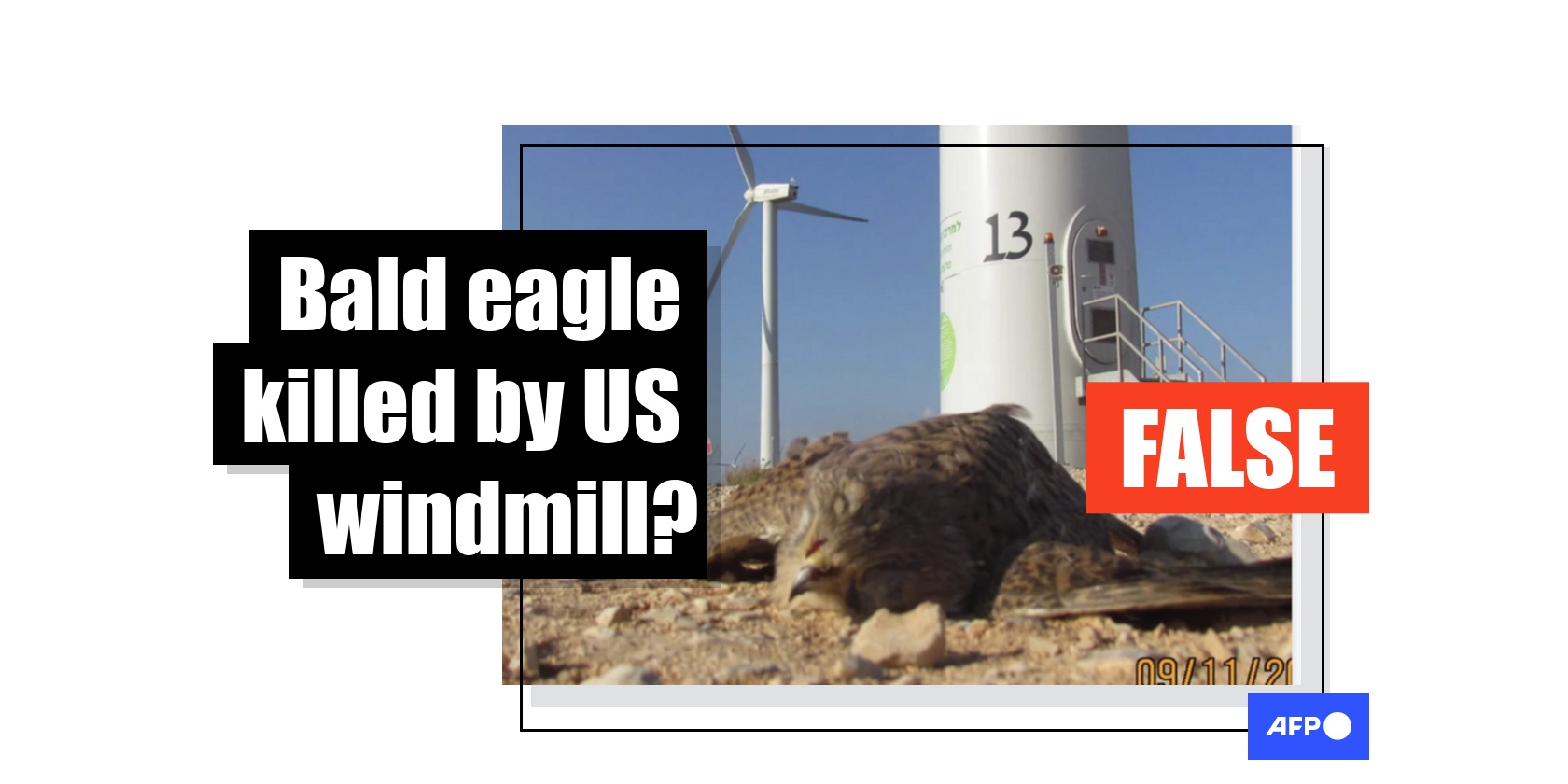
US President Donald Trump shared a photo of a bird beneath a windmill and suggested it was a bald eagle killed in the United States by one of the power-generating turbines he has long criticized. But the image posted by the US president was captured in Israel in 2017, and it shows an animal that two experts told AFP is not an eagle, but more likely a Eurasian kestrel.
"Windmills are killing all of our beautiful Bald Eagles!" Trump said in his December 30, 2025 post on his Truth Social platform.
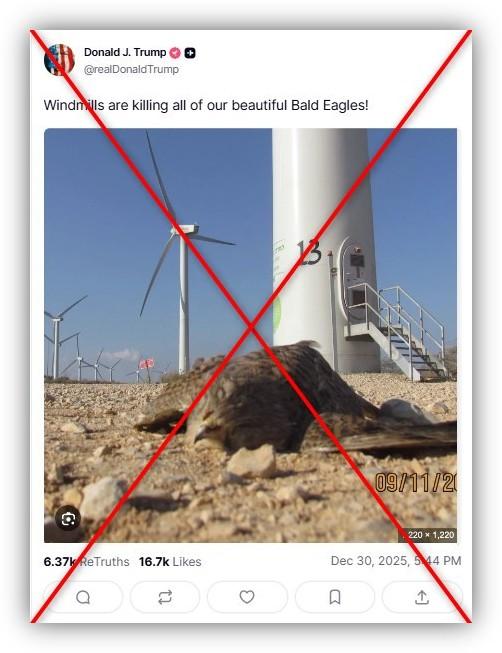
An official White House account and the US Department of Energy both shared the post on X, amplifying an attack on the wind energy sector from the US president, who has long opposed the power-generating turbines he asserts are unsightly, expensive and dangerous to wildlife.
But the picture was captured years ago and far from the United States, where the bald eagle is the national bird and appears on the country's seal, currencies, stamps and military insignia.
Reverse image searches surfaced the photo in a December 2017 article from the Israeli newspaper Haaretz, which credited it to the Israel Nature and Parks Authority and said the bird was a falcon (archived here). The agency had included the image a month prior in a Hebrew-language Facebook post mentioning vultures (archived here).
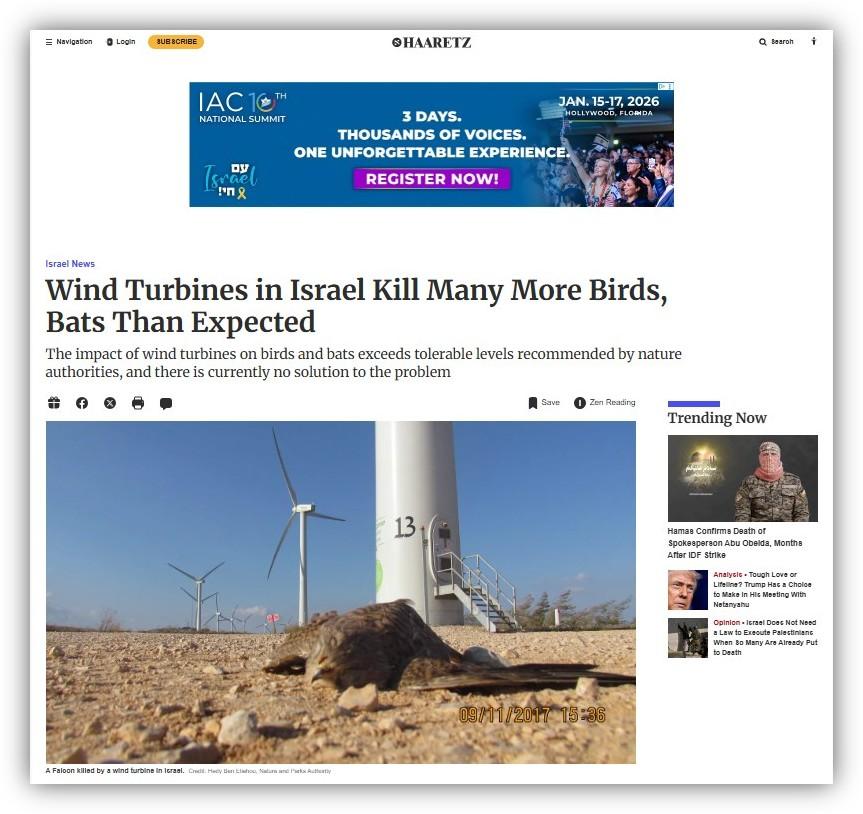
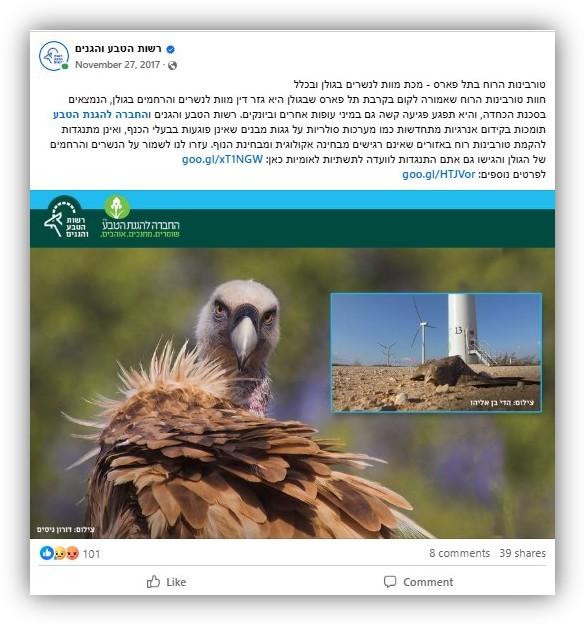
The photo also appeared in a 2019 article from the Times of Israel, which labeled the bird a kestrel, a type of falcon (archived here).
One clue to the photo's origins: writing visible on one of the wind turbines in the photo is in Hebrew.
Two independent ornithologists consulted by AFP agreed that the bird of prey in the photo was not a bald eagle, a species that lives in North America and is known for its large size and white head.
The animal depicted is smaller and has a different color and bill structure, the experts noted. They said it was more likely a Eurasian kestrel, a type of falcon (archived here).
"It is definitely not a Bald Eagle," said Ben Sheldon, who studies birds as a professor of ornithology at the University of Oxford and believed it showed a Eurasian kestrel (archived here). "Bald Eagle occurs only in North America."
"It is a small falcon based on bill structure, and the barred plumage fits Eurasian Kestrel best," he told AFP in a December 31, 2025 direct message via Bluesky.
Sheldon added that he believes another bird of prey common in Israel, the Eurasian griffon vulture, is depicted in a second photo the Israel Nature and Parks Authority included in its original November 2017 Facebook post.
AFP reached out to the Israel Nature and Parks Authority for comment, but no response was forthcoming.
Bird deaths
Trump continued to post about the threat turbines pose to birds, particularly eagles, on January 2, 2026.
Hundreds of thousands of birds die each year to wind turbines in the United States, according to the Massachusetts Institute of Technology, though the university wrote in 2023 that these fatalities "represent a tiny fraction of the birds killed annually in other ways, such as flying into buildings or caught by prowling house cats" (archived here).
Citing similar estimates from the American Bird Conservancy, Mark Jacobson, a professor of civil and environmental engineering at Stanford University, told AFP in a December 31, 2025 email that wind turbines account for only between 0.002 to 0.028 percent of all other bird deaths (archived here and here).
The US Fish and Wildlife Service oversees the issuing of permits to wind energy projects to ensure turbine infrastructure is kept a regulated distance from eagle's nests and companies have faced fines for bird deaths (archived here and here).
Jacobson said modern turbines are safer for birds compared to those of the last century, and that "coal and fossil-gas electricity-generating plants also kill more birds per unit of energy and in total than do wind turbines."
"As such, transitioning from coal or gas to wind reduces bird deaths."
Nevertheless, Trump has used his second term to pause wind projects -- citing unspecified national security risks -- casting new doubt over the future of the industry.
Misleading claims about risks of wind power generation to eagles fit a pattern of his administration promoting climate misinformation and disregarding pollution when making policy.
AFP has debunked other misinformation about wind turbines and animal deaths, here and here.
Copyright © AFP 2017-2026. Any commercial use of this content requires a subscription. Click here to find out more.
Is there content that you would like AFP to fact-check? Get in touch.
Contact us