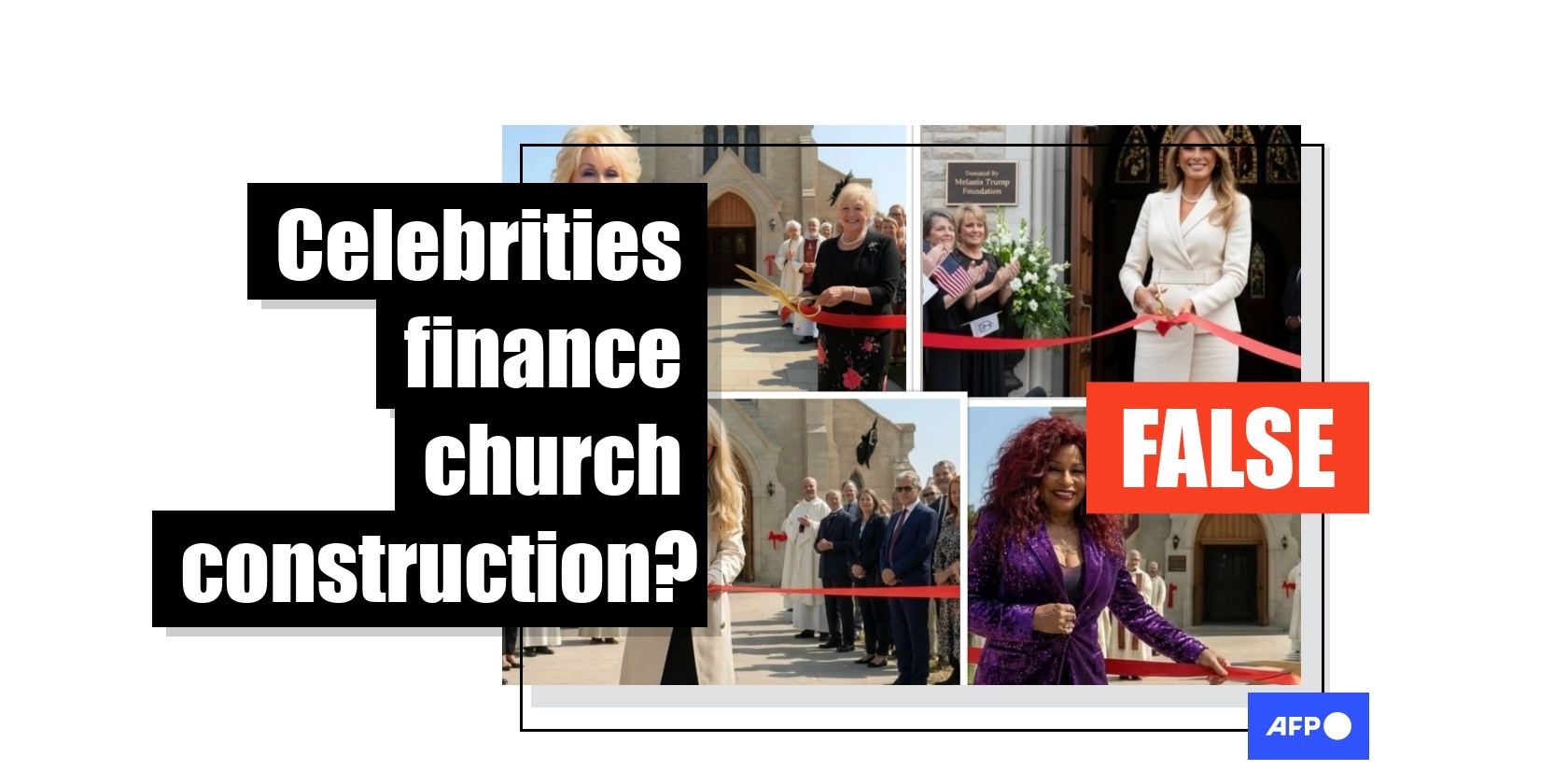
Flurry of stars targeted by AI slop on Facebook over the holidays
- Published on January 2, 2026 at 21:29
- 4 min read
- By AFP USA
As people celebrated Christmas in the United States, heartwarming stories spread on Facebook about celebrities from First Lady Melania Trump to pop star Sabrina Carpenter allegedly building a multi-million dollar church as an act of charity for a "struggling" community. But the stories are false, stemming from text generated by artificial intelligence and pushed by pages that use AI images to attract engagement with clickbait.
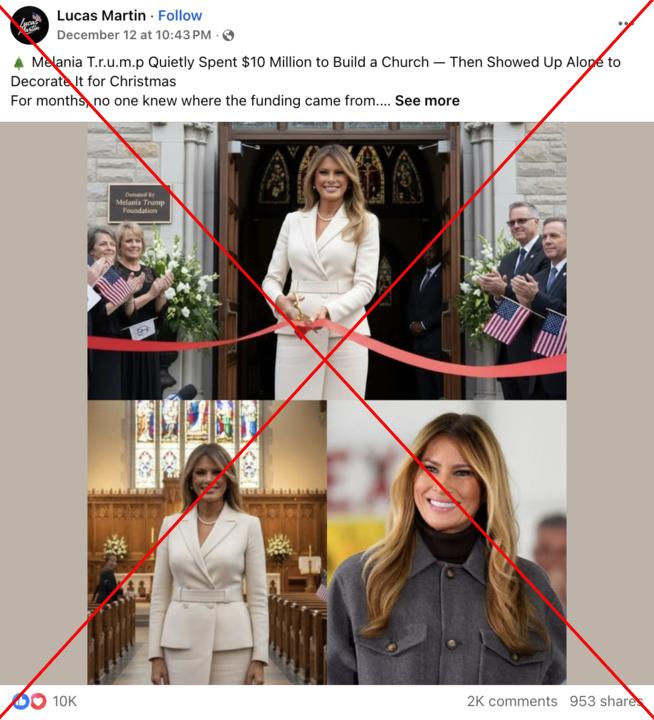
"Melania T.r.u.m.p Quietly Spent $10 Million to Build a Church -- Then Showed Up Alone to Decorate It for Christmas," a December 12, 2025 Facebook post claimed.
"For months, no one knew where the funding came from. A small church quietly rose in a struggling neighborhood, finished without press or ceremony. Only later did it emerge that Melania T.r.u.m.p had personally covered the $10 million cost. And on a cold December evening, she arrived alone, sleeves rolled up, carefully hanging lights and ornaments herself," it continues.
Despite claiming there was no formal event to open the church the post includes images of Trump seemingly at a ribbon cutting ceremony.
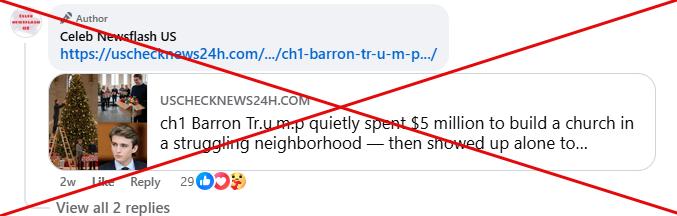
Another Facebook post tells a nearly identical story, but claims the charitable act traces to Trump's son, Barron. It encourages users to read the "full story" linked in the comment section.
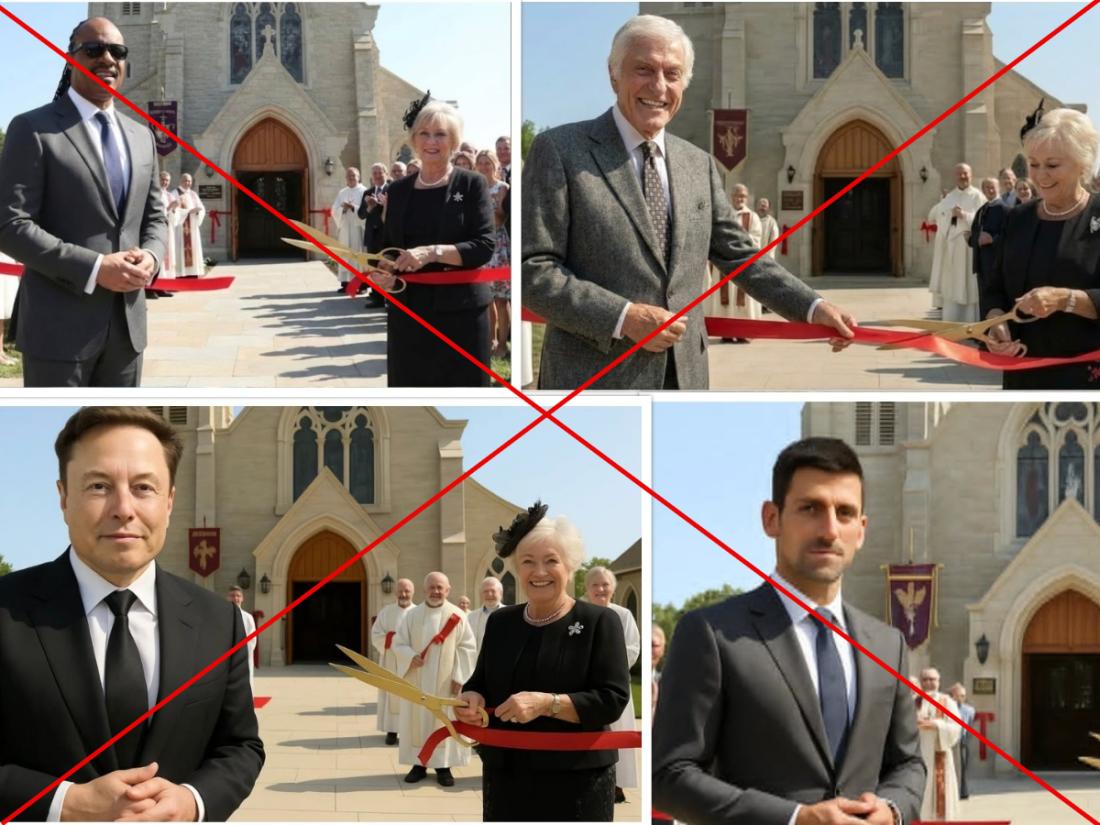
Those posts gathered thousands of interactions, and throughout December, AFP found duplicates of the text swapping out the Trumps for a wide array of personalities ranging from singers Sabrina Carpenter, Stevie Nicks, Dolly Parton, Chaka Khan and Stevie Wonder to actor Dick Van Dyke, tennis player Novak Djokovic, and tech billionaire Elon Musk.
But keyword and reverse images searches on Google yielded no credible evidence that any of the famous names mentioned in the posts financed the construction of a new church in 2025.
Instead, the text and images shows signs of artificial intelligence, according to AFP's analysis and input from independent experts.
Zohaib Ahmed, software engineer and co-founder of tech firm, Resemble AI (archived here), used his company's AI detection tool to examine the posts with Melania Trump and Sabrina Carpenter.
"Our model flags both images with an extremely high certainty that these are AI-generated," he said in a December 26 email.
Gemini's SynthID, Google's tool that watermarks AI content (archived here), similarly pointed to manipulation through artificial intelligence in all the examples fed by AFP to the tool.
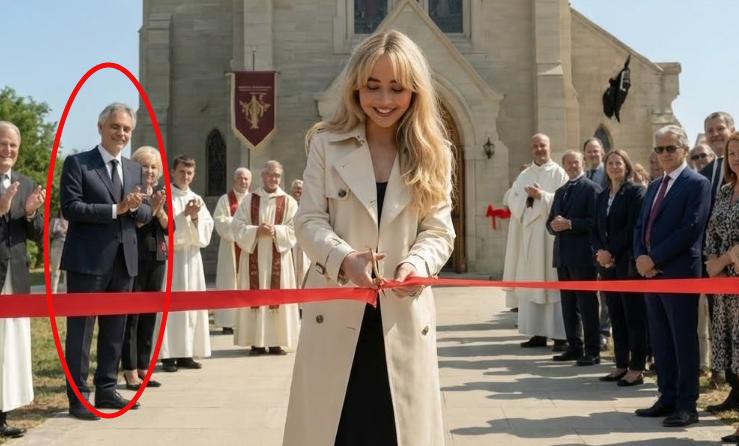
Proportions and architectural inconsistencies, in addition to copy-pasted details from one post to another, further reiterate the implausibility of the stories.
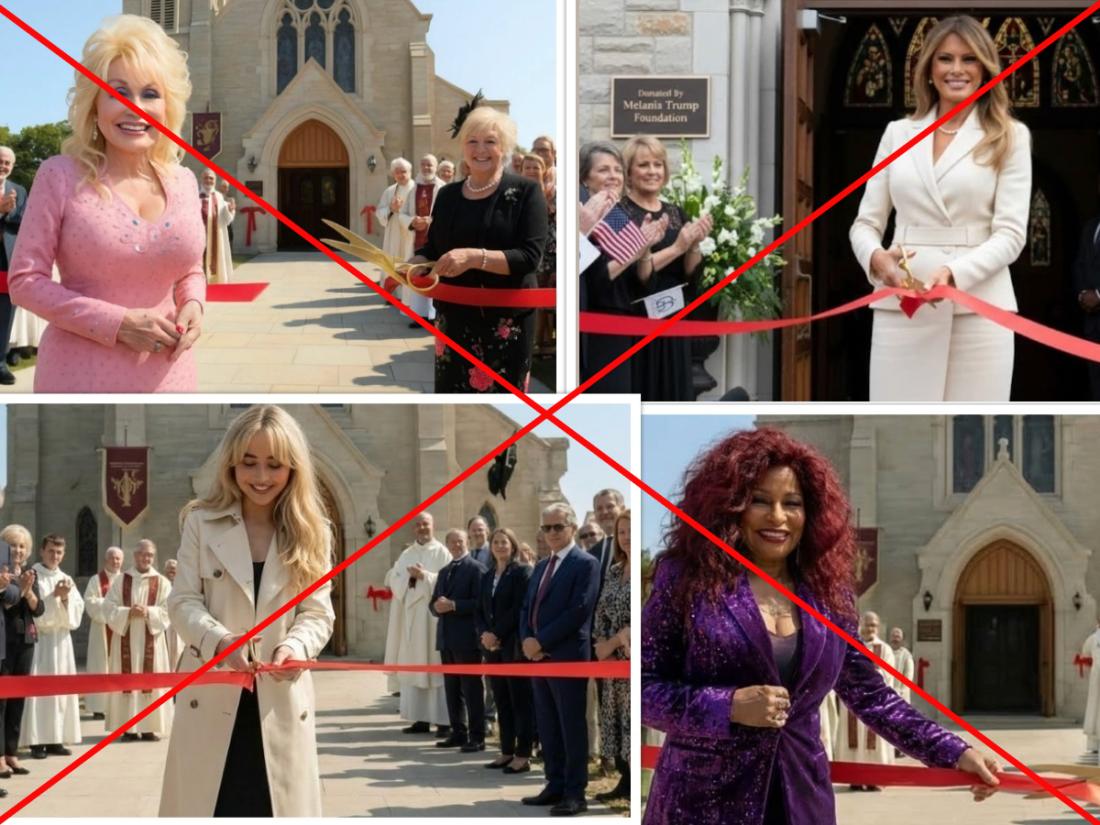
The image of Carpenter's ribbon cutting ceremony, for example, shows opera singer Andrea Bocelli in the background of the post but does not mention his presence in the text.
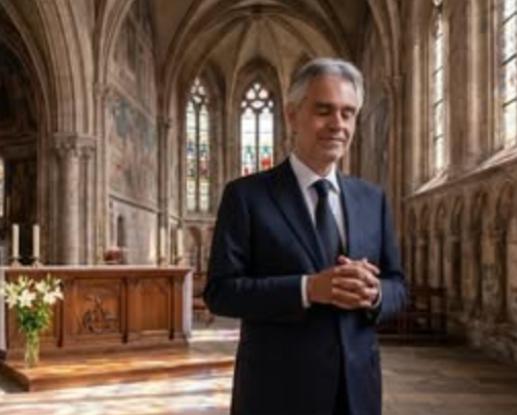
Bocelli has his own version of the fake church article promoted in a separate Facebook post.
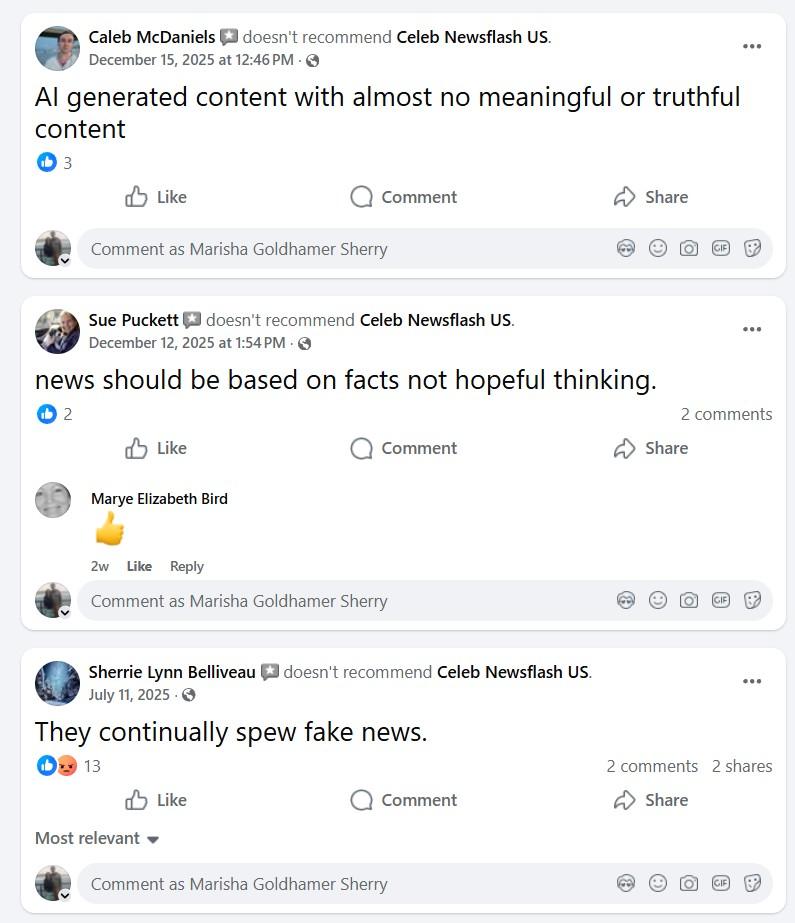
The Facebook pages that promoted such content have names including Celeb Newsflash US and contain reviews complaining about false and AI-riddled content (archived here).
The articles accompanying the posts have nearly identical story lines, unnatural English phrasing and homoglyphs -- characters that look similar but are encoded differently, such as Cyrillic alphabet -- all pointing to the use of artificial intelligence.
"The reason why these websites use homoglyphs on their text is to avoid being detected as having been AI-written and also to bypass automatic fake news detectors," said Aldan Creo, who researches large language models at the University of California San Diego (archived here), on December 26.
"AI-generated text detectors and automatic fake news checkers get super confused when they see this. They simply don't understand the text," he said.
Homoglyphs can also be used to camouflage malware, he added, but the church posts are likely "just click farming."
AFP reached out to representatives of some of the public figures targeted in the posts, as well as the White House, but no response was forthcoming.
Facebook users face an onslaught of phony AI content, often pushed by networks managed in Southeast Asia, which seek to profit off of engagement.
AFP previously debunked similar AI slop around news events, including the assassination of Charlie Kirk, flooding in Texas and Pride month.
Copyright © AFP 2017-2026. Any commercial use of this content requires a subscription. Click here to find out more.
Is there content that you would like AFP to fact-check? Get in touch.
Contact us