Climate denial video of Canadian physicist resurfaces online
- Published on December 16, 2025 at 23:32
- 3 min read
- By Manon JACOB, AFP Canada
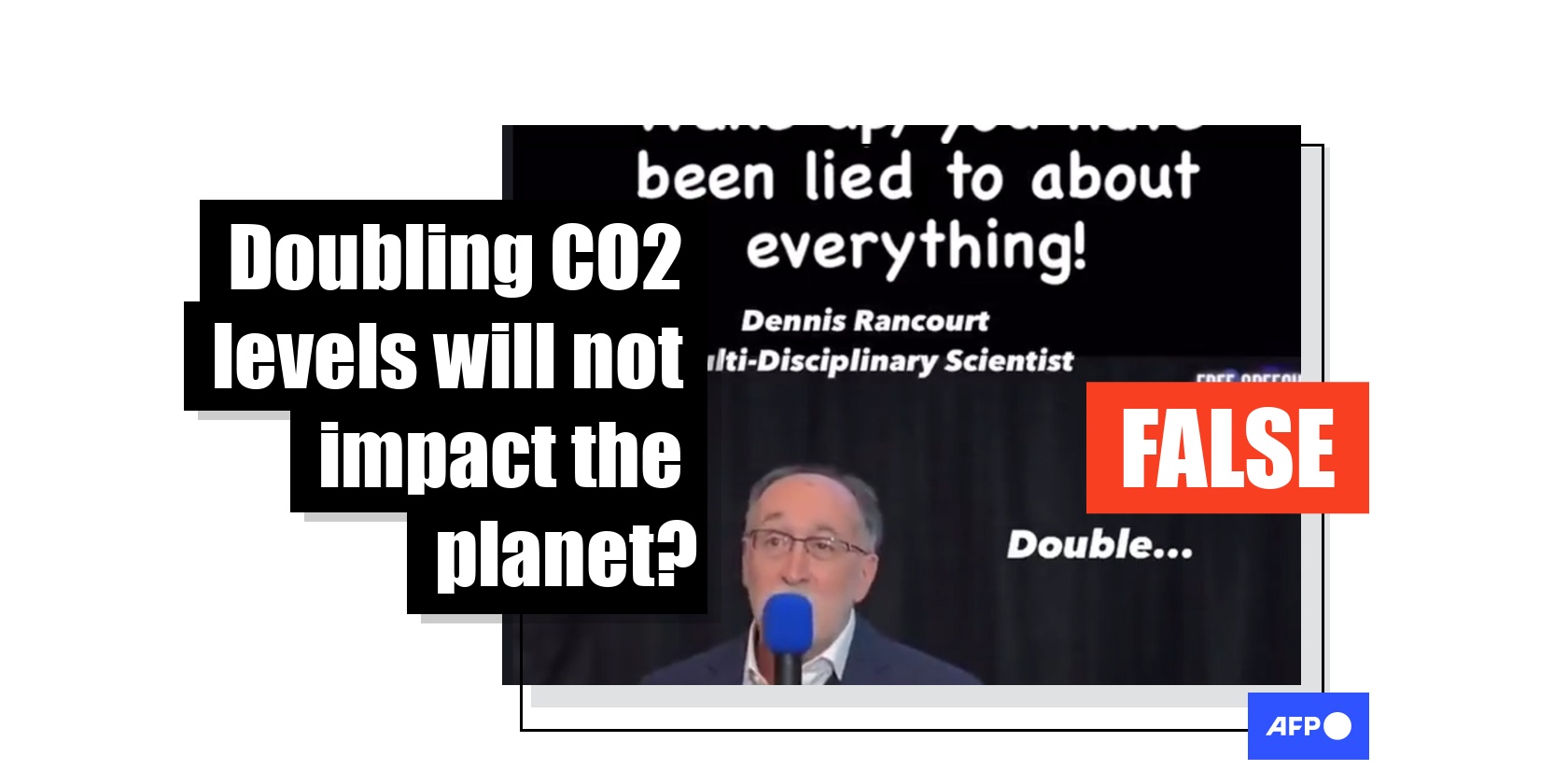
A video has resurfaced online in December 2025 of a former physics professor in Canada asserting that doubling the amount of CO2 in the atmosphere would not noticeably change Earth's mean surface temperature. This is false; climate experts told AFP that decades of research document a clear warming impact of high carbon dioxide levels created by human activity.
"You can double the amount of CO2, and it will not have a noticeable effect on the Earth's mean surface temperature, period. That's a hard calculation," Denis Rancourt says in a video posted to Facebook December 6.
Rancourt, a Canadian physicist who was dismissed from his tenured professor position by the University of Ottawa for academic fraud in 2009, also touts his scientific credentials in the video to deny the existence of climate change and falsely claim "there was no pandemic" (archived here).

The short clip also spread widely on X, where Rancourt himself reshared it.
The footage is not new. It comes from a talk Rancourt gave at a 2023 business event in Ottawa.
In the speech, he made several false statements, including about the reality of climate change and the impact of methane emissions on the warming of the planet -- topics AFP has investigated before. AFP has also debunked false claims traced to Rancourt during the coronavirus pandemic.
His claim about the effect of CO2 in the atmosphere is also inaccurate, scientists told AFP.
Flying 'in the face' of science
Slashing CO2 emissions is essential to slow down climate change.
"We have known since the calculations of Nobel prize-winning physical chemist Svante Arrhenius in the 1890s of the impact increasing CO2 would have on temperature," Katharine Hayhoe, a Canadian atmospheric scientist, told AFP on December 11 (archived here).
Hayhoe cited scientific literature from 1896 demonstrating the influence of "carbonic acid" -- the old vernacular for CO2 -- on climate (archived here and here).
Climate scientist Zeke Hausfather concurred (archived here).
He told AFP on December 11 that the atmospheric physics of CO2 trace to the late 1800s, and that "much of the formative work" on the matter was executed by the US military in the 1940s and 1950s, when requirements for heat-seeking missile technology drove a significant portion of research (archived here).
"Saying that doubling CO2 wouldn't have a noticeable effect flies in the face of well over a century of scientific research and experimentation," he said.
Projected warming range
Those decades of research have also established that burning fossil fuels affects the concentration of carbon dioxide in the atmosphere.
NASA estimates that the amount of CO2 in the atmosphere was about 278 parts per million (ppm) before the industrial revolution (archived here) .
As of 2025, less than 300 years later, it is around 430 ppm (archived here).
The scientific consensus is that a doubling of carbon dioxide levels will likely cause global average surface temperature to rise between 1.5C and 4.5C (2.7 to 8.1 Fahrenheit), depending on emission scenarios, compared to pre-industrial temperatures (archived here).

Some scientists consider the the United Nations' Intergovernmental Panel on Climate Change (IPCC) to be conservative in its predictions (archived here, here and here). Others are starting to move away from the highest-end emission scenarios previously used in the literature, given the undergoing energy transition from fossil fuels to more renewables (archived here and here).
Changes already here
Lisa Alexander, a professor at the Climate Change Research Centre for the University of New South Wales in Sydney, Australia, told AFP on December 10 that doubling the amount of CO2 in the atmosphere compared to pre-industrial levels would have "discernible impacts" on the planet (archived here).
"We can already see those changes and we can attribute them to humans," she said.
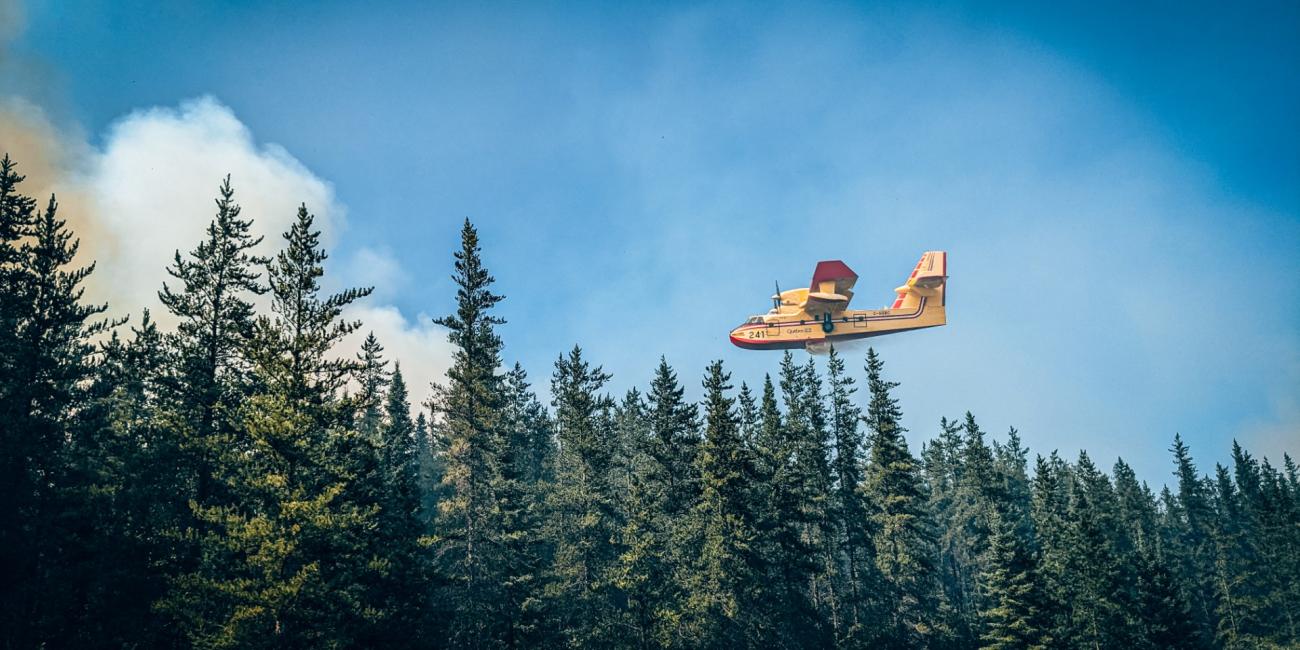
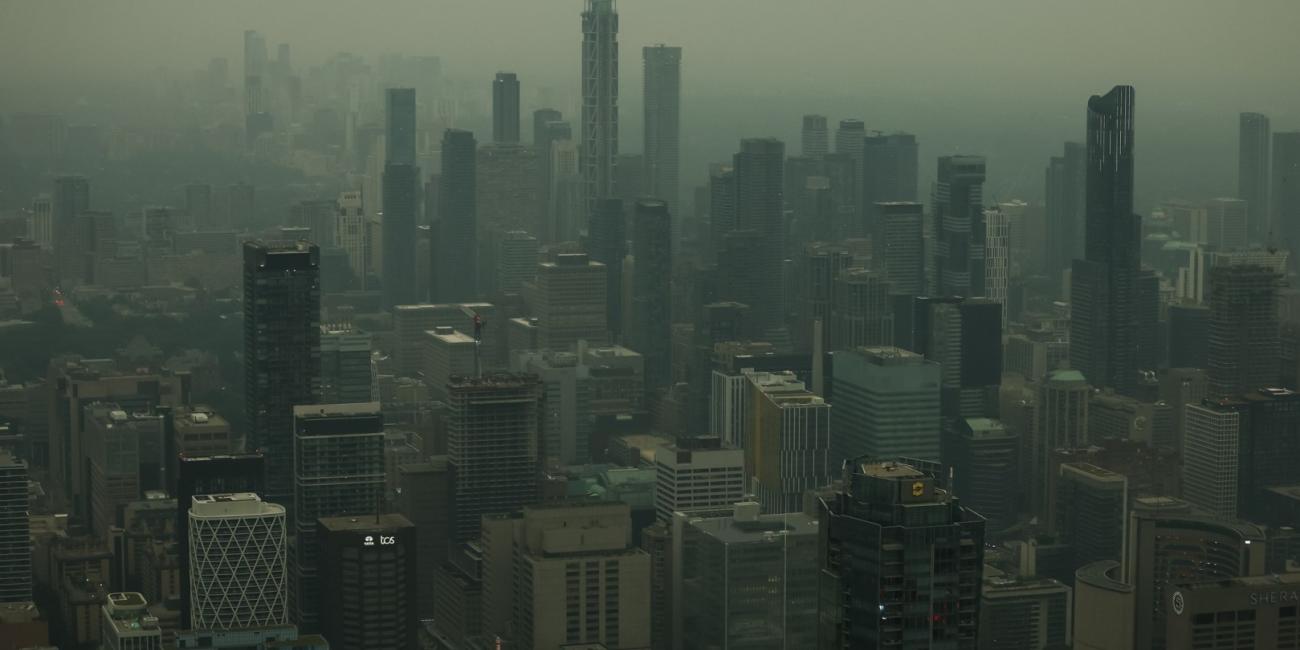
Further rising CO2 levels rise could affect "wildfires and tree mortality, with very large impacts on biodiversity loss and warm water corals," Alexander said.
The latest assessments by the IPCC show humans' influence on climate is "unequivocal."
Oceans have absorbed the vast majority of the excess heat generated by burning fossil fuels. This, in turn, takes a toll on underwater ecosystems around the world -- triggering heat waves, a loss of wildlife, rising sea levels, falling oxygen levels and acidification.
But research shows there is no guarantee oceans can maintain similar CO2 intake in the future as these ecosystems are subjected to further stress (archived here).
AFP reached out to the University of Ottawa for a comment on Rancourt's scientific credentials, but no response was forthcoming.
Copyright © AFP 2017-2026. Any commercial use of this content requires a subscription. Click here to find out more.
Is there content that you would like AFP to fact-check? Get in touch.
Contact us