Trump's primetime speech rehashes false, misleading election claims
- Published on July 17, 2026 at 22:39
- 4 min read
- By Bill MCCARTHY, AFP USA
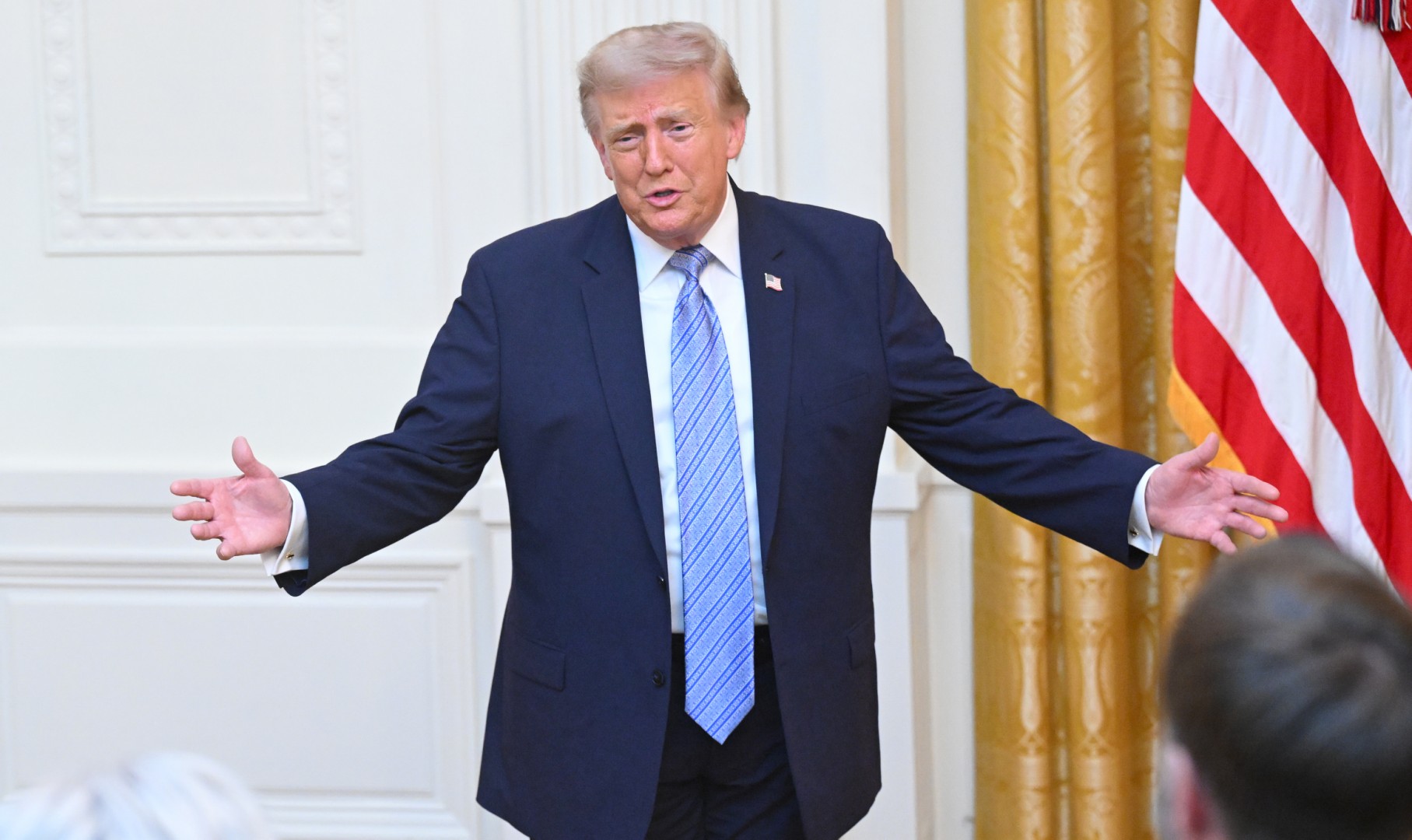
US President Donald Trump resurrected long-debunked claims about fraud and foreign interference in the 2020 election, alleging in a July 16, 2026 primetime address that China stole millions of voter files and suggesting Venezuela could manipulate American voting machines.
The White House declassified intelligence documents as Trump doubled down on his assertion that the election he lost to Joe Biden was "stolen," which has never been substantiated (archived here).
More than 60 lawsuits failed to uncover fraud capable of changing the 2020 result, while elections officials and members of Trump's own administration repeatedly rejected his claims (archived here).
Rick Hasen, an election law expert at the University of California, Los Angeles, told AFP that Trump's speech consisted mostly of "recycled and debunked claims" (archived here).
"What Trump did not do was even purport to show a single ineligible voter voted in the 2020 election, or that any voting machines were actually compromised," he wrote on his blog (archived here).
Other experts agreed that Trump's claims were overstated and not supported by the documents published online, which contained mostly known information (archived here).
Democratic US Senator Mark Warner, a top member of the chamber's intelligence committee, said on MS Now that "virtually everything he talked about tonight, we have reviewed in a bipartisan way" (archived here).
Even controversial journalist John Solomon, who joined the White House in June 2026 and was reportedly instrumental to the declassification effort, acknowledged after Trump's speech that "the intelligence community has zero evidence that a foreign power flipped a vote in 2020" or in subsequent US elections in 2022 and 2024 (archived here).
Here is a fact-check of some of Trump's claims:
Data compromised by China
Trump accused China of "the largest compromise of election data in history, resulting in China's illicit acquisition of 220 million US voter files."
He later claimed China attempted "to manufacture illegal ballots for Joe Biden."
In the United States, however, voter files are largely matters of public record that states are required to maintain and which are regularly sold (archived here).
A declassified March 2021 report from the country's leading intelligence agencies said there were "no indications that any foreign actor attempted to alter any technical aspect of the voting process" (archived here).
The report said the agencies concluded with "high confidence" that Beijing "did not deploy interference efforts and considered but did not deploy influence efforts intended to change the outcome."
It said the country's "longstanding efforts to gather information on US voters" were likely intended only "to predict electoral outcomes and to inform its efforts to influence US policy toward China."
The report also referenced a dissenting view from one analyst, who assessed with "moderate confidence" that China took "some steps to undermine" Trump through social media and official public statements, but agreed that there was "no information suggesting China tried to interfere with election processes."
Trump was provided with the report in January 2021. The director of national intelligence at the time was John Ratcliffe, who is now the president's director of the CIA.
A separate government assessment similarly determined that there was "no evidence that any foreign government-affiliated actor" compromised the election (archived here).
A Chinese foreign ministry spokesperson said in response to Trump's speech that the US president's claims were "pure fabrications" and "groundless."
One of the documents the White House released on July 16, 2026 included a tip describing a supposed Chinese effort to produce fraudulent drivers' licenses using data gleaned from TikTok.
But the file describes the note as "an information report, not finally evaluated intelligence," saying the source gathered it indirectly. It adds that social media users do not need to input their addresses to create TikTok accounts.
Such a conspiracy to create thousands of fake voters would require fabricated Social Security entries, residences and identification, all while evading detection, former Maricopa County, Arizona recorder Stephen Richer wrote on X (archived here).
Venezuela
Trump claimed Venezuela's elections were rigged under president Nicolas Maduro -- and suggested US voting machines were vulnerable to similar manipulation.
The comments echoed conspiracy theories Trump allies pushed in 2020 alleging a Venezuelan plot to flip US votes through the elections software company Smartmatic.
Smartmatic -- whose technology was only deployed in a single uncontested county during the 2020 election -- later won settlements and defamation lawsuits over the false claims (archived here).
The documents the White House released on July 16, 2026 say Venezuelan officials "developed sustained interest and likely some capability in manipulating electronic voting systems," but that the intelligence "did not definitively confirm that large-scale electronic fraud was successfully executed in specific Venezuelan elections."
According to the documents and Smartmatic's website, the company actually ceased operations in Venezuela after blowing the whistle on the Maduro regime for reporting inflated voter turnout numbers in 2017.
The files add that "neither Smartmatic nor the Venezuelan Government had the capability" to predictably "manipulate the outcome of an election outside of Venezuela."
"Nothing presented shows evidence of any vote manipulation," Charles Stewart, an elections expert at the Massachusetts Institute of Technology, told AFP (archived here).
In fact, another intelligence record in the tranche says: "We assess that vote tabulation systems would be difficult to manipulate on a wide enough scale to compromise election result."
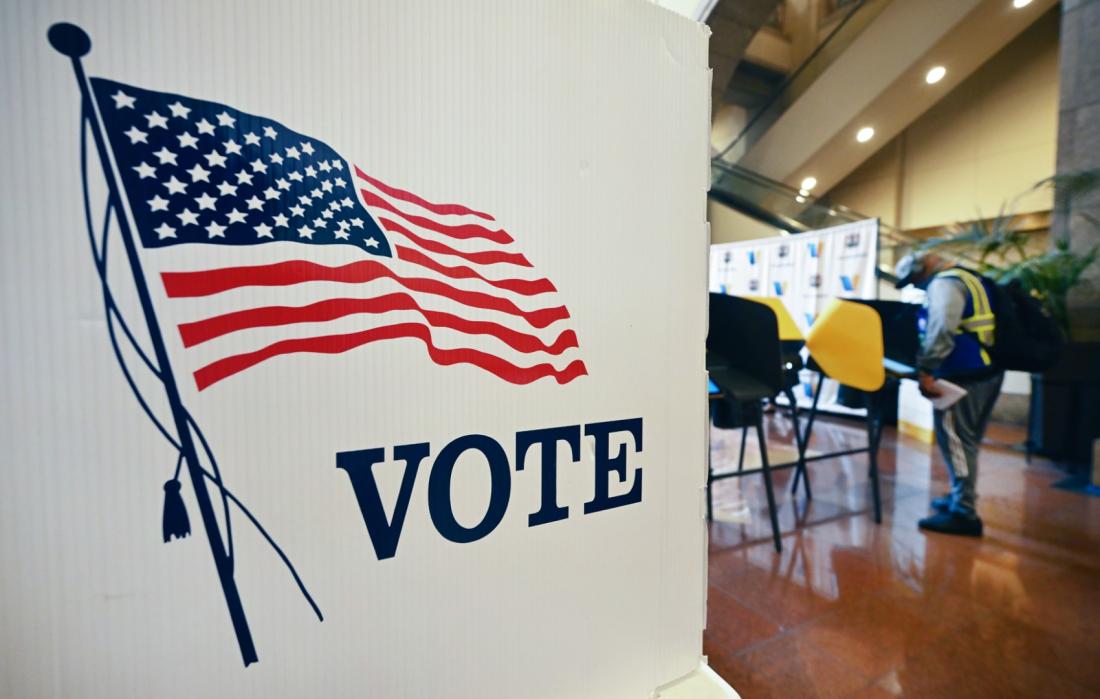
Non-citizen voters
Trump claimed hundreds of thousands of non-citizens were registered to vote.
Non-citizen voting is illegal and has been shown by both election audits and independent research to be exceedingly rare (archived here and here).
Several safeguards prevent non-citizens from voting. Some jurisdictions allow non-citizens to vote in certain local elections.
Trump also blasted mail-in ballots as "inherently corrupt," though there is no evidence of widespread fraud attached to the practice. The president himself has voted by mail.
A Brookings Institution analysis found "an average total mail voting fraud percentage across the 2016, 2018, 2020, and 2022 general elections of only 0.000043 percent, or about four cases of mail voting fraud out of every 10 million mail votes" (archived here).
AFP has debunked other misinformation about US politics here.
Copyright © AFP 2017-2026. Any commercial use of this content requires a subscription. Click here to find out more.
Is there content that you would like AFP to fact-check? Get in touch.
Contact us