Michigan gubernatorial primary revives old misinformation about voter rolls
- Published on August 5, 2026 at 16:40
- 2 min read
- By Marisha GOLDHAMER, AFP USA
Michigan's term-limited Governor Gretchen Whitmer is not on the ballot in 2026, but long-debunked misinformation claiming there were more registered voters than voting-age eligible citizens when the Democrat was reelected in 2022 recirculated ahead of the state's primary. In fact, active registrations in 2022 were well below the eligible voting population, and an expert said election officials rigorously check for records that should be removed.
"MICHIGAN ELECTION FRAUD ALERT," says a July 24, 2026 Instagram post. "Gretchen Whitmer WON the state of Michigan by 469,870 votes in 2022. Michigan had 586,231 MORE VOTERS than eligible voting-age citizens."
The post goes on to call for the passage of the SAVE Act -- a bill backed by President Donald Trump before the US Senate that would implement new, strict voter identification requirements.
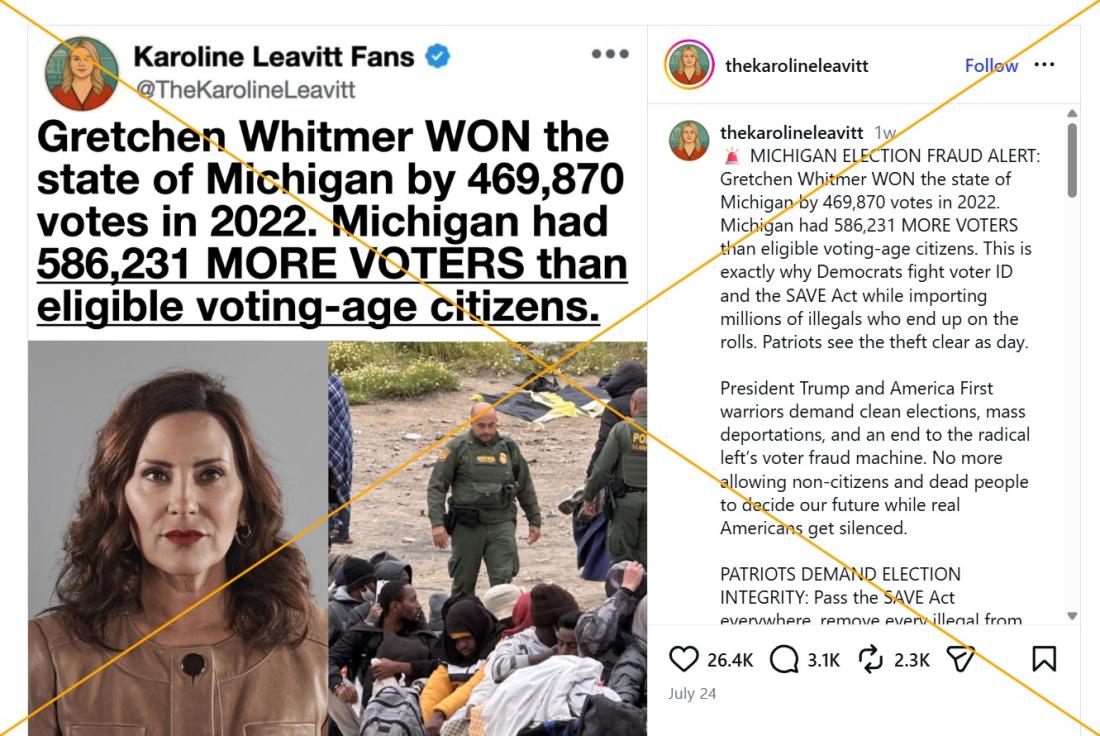
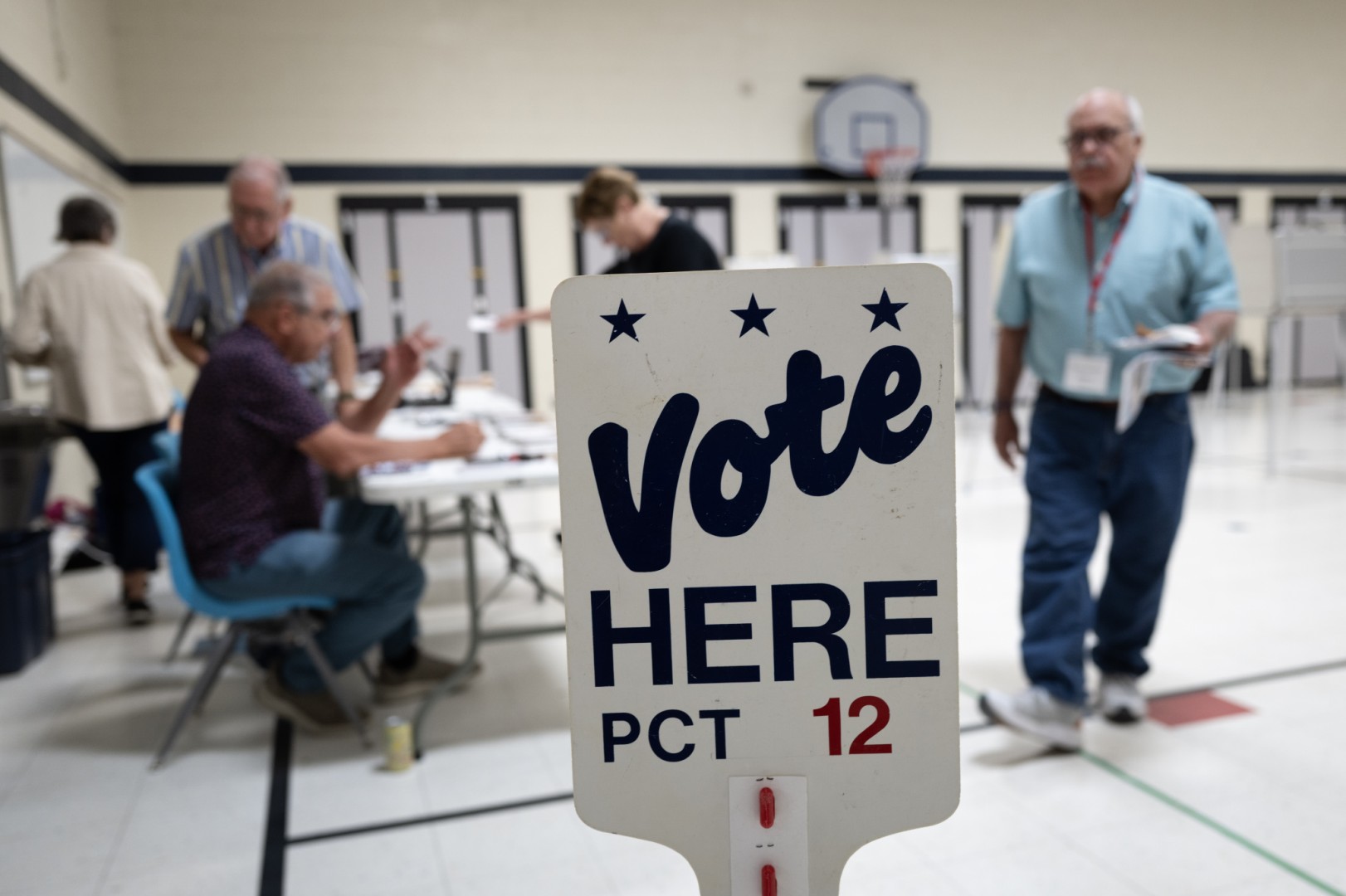
The same claim spread across platforms including X, Facebook, Threads and TikTok as Michiganders voted in an August 4, 2026 primary to determine the candidates for governor and other key races in the November 2026 state and federal elections.
Whitmer has served as governor since 2019. Secretary of State Jocelyn Benson -- whose office oversees the state's elections -- is projected to be the Democratic candidate facing Republican John James to replace her.
But there is no evidence that widespread fraud impacted the 2022 election, when Whitmer won reelection with 469,870 more votes than her Republican opponent Tudor Dixon (archived here). The social media posts about Michigan's voter roll maintenance recycle misinformation that has spread for years.
The posts mislead by focusing on the total number of registered voters instead of the number of active registered voters. Election laws require the retention of inactive voter registrations for prescribed periods of time.
Continuous updates
Figures on the Michigan government's website show that, in 2022, the state did have 302,327 more registered voters than residents of voting age (archived here).
But that total includes inactive registrations. The number of active voters was 626,518 fewer than the voting-age population.
State law and provisions in the National Voter Registration Act both require a waiting period before inactive voters are removed.
"Since 2019, state and local election officials have identified over 2.1 million voter registrations that are eligible for cancellation, and 1.5 million have been removed from the Qualified Voter File," the Michigan Department of State's website says (archived here).
The state says its list of qualified voters is continuously maintained. Registrations are removed immediately when a voter is confirmed dead or the voter requests the cancellation (archived here).
Registration is automatically updated when a voter moves within the state and applies to change their state identification card or driver's license (archived here).
"Michigan's existing voter list maintenance practices have proven highly effective at keeping pace with natural changes in voters' lives, such as moving," Christopher Mann, research director at the nonprofit Center for Election Innovation and Research, told AFP on August 4, 2026 (archived here).
"To ensure the best possible voter records, federal and state law requires changing records to inactive and specifies why and when to make a record inactive and then remove it," he said.
In 2024, a federal judge rejected a lawsuit filed by the Republican National Committee claiming that Michigan should be required to make further efforts to remove unqualified voters from the rolls (archived here).
And in April 2026, Benson hailed a new administrative rule aiding efforts to identify additional dormant registrations eligible for removal (archived here and here).
AFP reached out to Benson's office for additional comment, but no response was forthcoming.
Read more of AFP's reporting on misinformation surrounding US politics here.
Copyright © AFP 2017-2026. Any commercial use of this content requires a subscription. Click here to find out more.
Is there content that you would like AFP to fact-check? Get in touch.
Contact us