Sudan blaze video falsely linked to violence in Ethiopia’s Oromia region
- Published on July 15, 2026 at 13:17
- 4 min read
- By Tolera FIKRU GEMTA, AFP Ethiopia
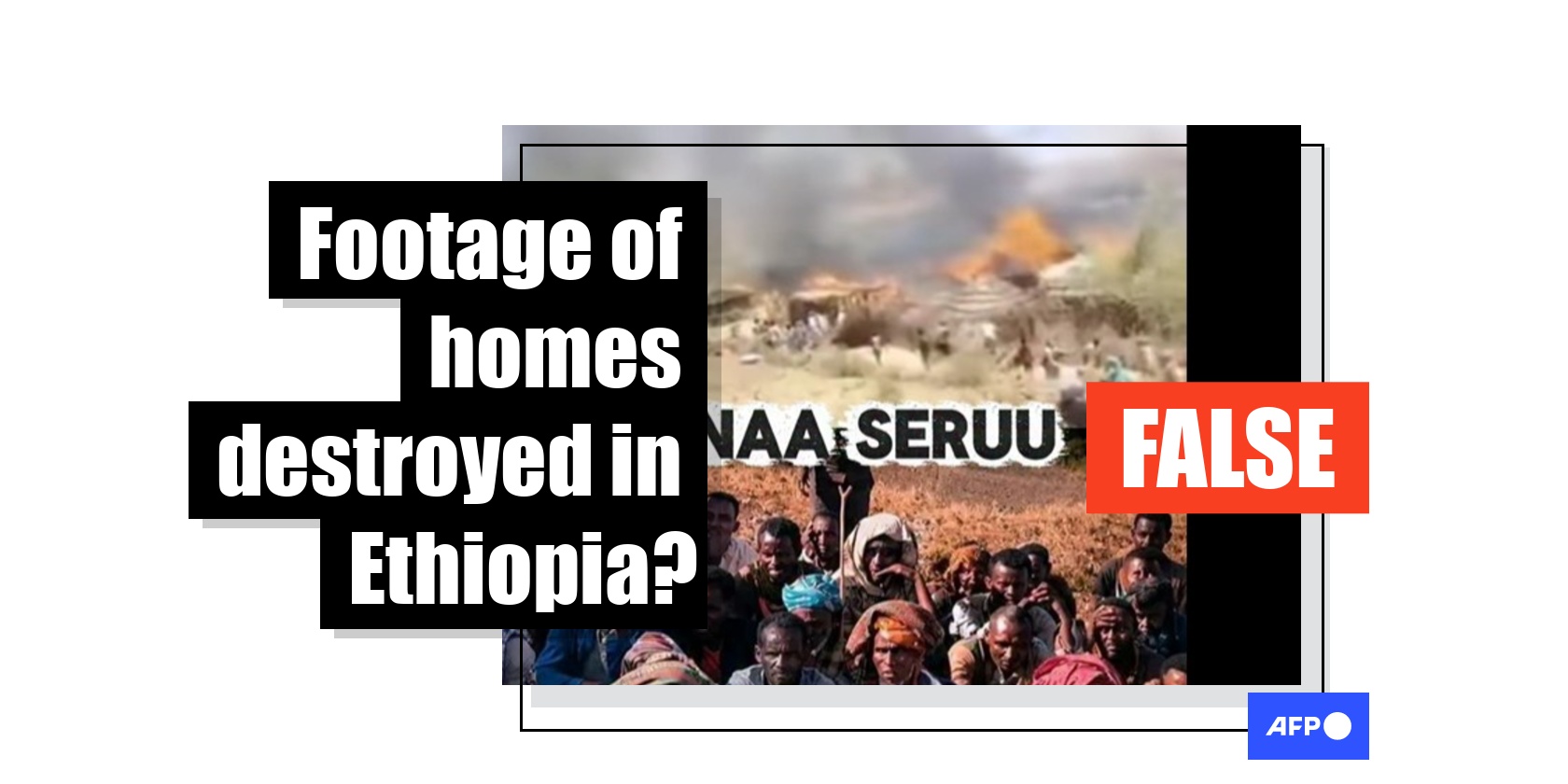
Armed attacks in Ethiopia’s Oromia region in early June were blamed on an insurgent group that had threatened to disrupt nationwide elections. Posts shared on Facebook claim to show the aftermath of these attacks, including a video of rural homesteads on fire. However, this is false: the video shows a fire that destroyed a displacement camp in the northern Darfur region of Sudan in May.
The post, shared on June 17, 2026, contains a caption in Afaan Oromoo which reads: “In Arsi. This is a tragic incident happening against our people.”
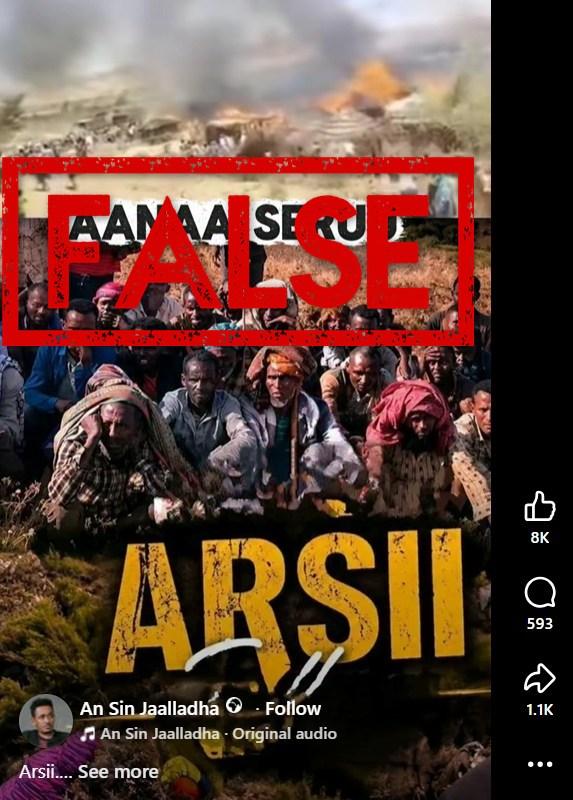
Text embedded in the video further claims that the footage shows events in Seru, a district in the Arsi zone of the Oromia region, in the southeastern part of Ethiopia.
Shared more than 1,100 times, the clip comprises footage of a large fire destroying grass huts at the top, with two static images of people outdoors stacked below.
Similar posts were also widely shared on Facebook here, here and here.
Deadly attacks
AFP reported on June 7, 2026, that an insurgent group in Oromia, Ethiopia’s most populous region, carried out attacks that witnesses said killed at least 11 people, and possibly dozens more (archived here).
The Ethiopian government blamed the rebel Oromo Liberation Army (OLA), which accused the government of igniting community violence.
The Oromo Federalist Congress (OFC), an opposition political party, stated in a press release published on its official Facebook page on June 20, 2026, that “a systematic arson campaign” in Seru district destroyed villages, displacing nearly 17,000 households (archived here).
However, the clip shared on Facebook does not show homes destroyed during the Oromia attacks.
Tawila fire
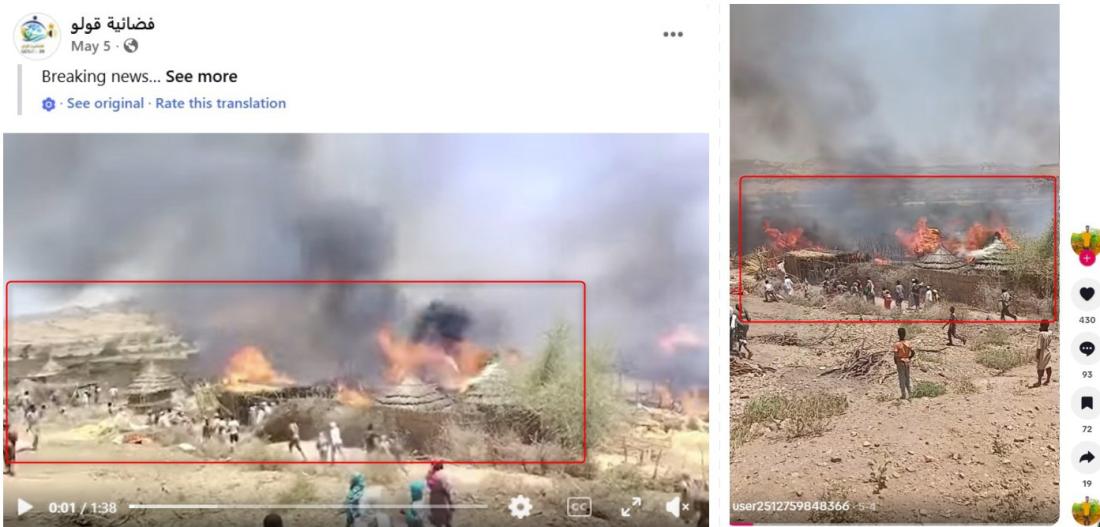
AFP Fact Check conducted reverse image searches on keyframes from the video and found the same footage posted on Facebook on May 5, 2026 (archived here).
“A devastating fire broke out in the Mertal area of Tawila locality in North Darfur State, causing widespread panic among residents, who fear the flames will spread to other residential areas,” reads part of the Arabic caption.
Tawila is a refugee town in North Darfur, west of El Fasher, the flashpoint in a civil war between paramilitary Rapid Support Forces (RSF) and the Sudanese Armed Forces, a conflict the UN found showed the “hallmarks of genocide” (archived here).
A man speaking Arabic in the video describes the scene.
“Guys, fire, fire, fire, fire... The fire is in Mertal, guys, [unintelligible], a fire, a very big fire, a big fire, guys. Yes, may God ease this, guys, may God ease this,” he says.
The footage is originally 98-seconds long, but only 12-seconds feature in the clip in the false post, which has replaced the audio with a song in Afaan Oromoo.
AFP confirmed through local sources in Darfur that the video shared on Facebook was originally filmed in the Mertal area in Tawila.
Further reverse image searches led to another video on TikTok, recorded from a slightly different angle and published online a day earlier (archived here).
AFP Fact Check identified the same burning structures in both the clips, confirming the videos depict the same runaway fire.
In another clip published by the same TikTok account, a text overlay in Arabic specifies again that the fire took place in the Rakona area of Mertal village, in the Tawila locality (archived here).
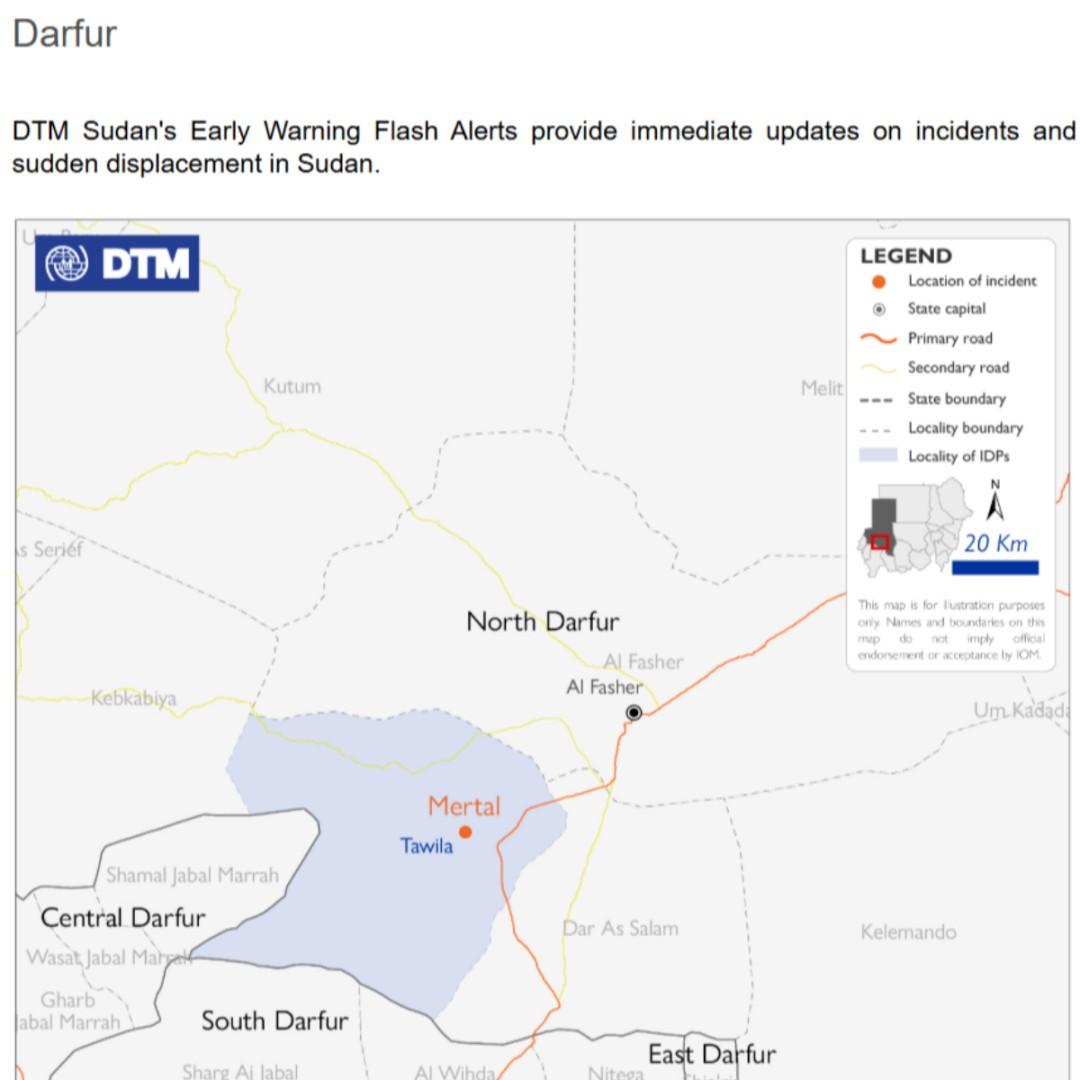
Meanwhile, keyword searches uncovered two reports about the fire, one on the website of the Displacement Tracking Index (DTM) managed by the International Organization for Migration (archived here).
“On 4 May 2026, a fire incident in Mertal village in Tawila locality, North Darfur reportedly displaced 14 households,” reads part of the DTM report.
Another article published by Darfur24 on May 8 also mentions the blaze in Tawila, and in nearby camps where wildfires have piled on the misery this year for thousands of people (archived here and here).
Notably, Ethiopia’s Arsi zone is entirely characterised by a comparatively greener highland environment with substantial vegetation cover, whereas the footage shows a lowland landscape with desert-like terrain (archived here).
Displaced people
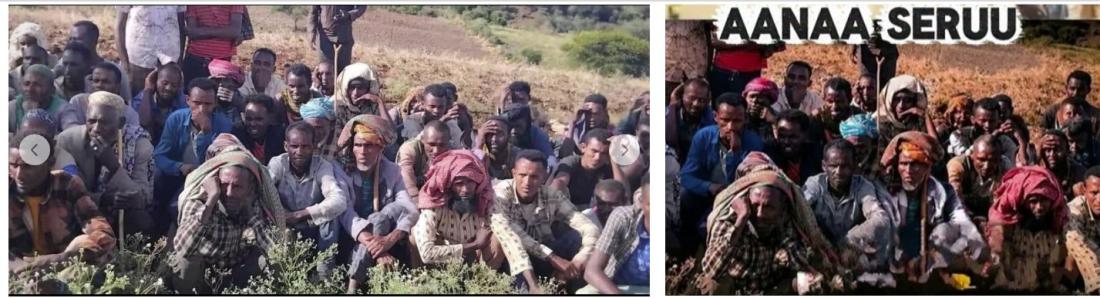
AFP Fact Check also conducted a reverse image searches on the static images of people shown in the bottom half of the footage. The results established that they were published on Facebook by the Oromia Media Network (OMN), a US-based broadcaster, alongside several other images on June 17, 2026 (archived here).
“People displaced from their homes in Seru district in Arsi have encountered serious problems,” reads the post., adding that they were forced to stay in the place known as “Hadido” without shelter.
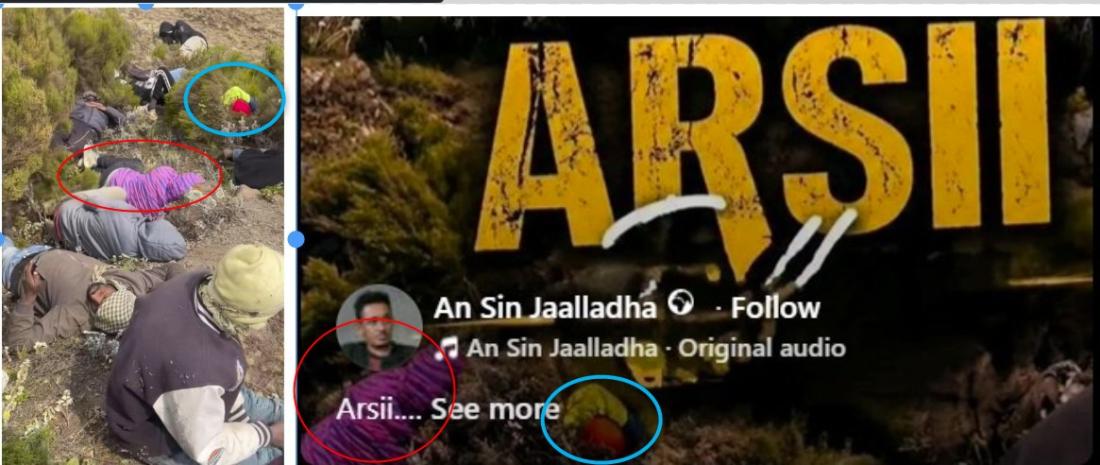
While the images have indeed been linked to the current unrest in Arsi, they appear in the Facebook post under review with slight alterations. The image showing the displaced people seated outdoors is a cropped, digitally enhanced version of the original.
The second image is partially obscured by graphics, leaving only part of it visible.
Copyright © AFP 2017-2026. Any commercial use of this content requires a subscription. Click here to find out more.
Is there content that you would like AFP to fact-check? Get in touch.
Contact us