Taiwan voters on alert for Chinese meddling after disinformation overseas
- Published on July 7, 2026 at 11:47
- 4 min read
- By Sammy HEUNG, AFP Hong Kong
Taiwanese social media is awash with baseless claims that China meddled in recent elections in South Korea, warning of potential interference to come in the self-ruled island's own polls later this year.
AFP fact-checkers have debunked a slew of disinformation targeting South Korea's municipal races last month, playing on long-simmering anti-China sentiment to fuel unfounded rumours about hacking and vote-rigging.
The trend shows the speed at which social media speculation from one country can spread to another, fuelled by one-click translation tools that make the posts accessible in any language.
Some of the most viral disinformation about South Korea's election first spread in Korean before being translated to Chinese, where it found a home among Taiwanese netizens concerned about the integrity of their votes in November's local races.
China claims Taiwan is part of its territory and has threatened to seize it by force, with Beijing ramping up military pressure on the democratic island in recent years.
Eros Lee, a Taipei-based corporate worker who posted several unverified claims of election meddling, said he felt it was important to share them ahead of Taiwan's vote.
"If we choose to remain silent... that would be the ultimate victory for authoritarian threats," he told AFP.
Lee, 47, posted a video on Threads of South Korean poll workers adjusting a ballot box seal that he claimed raised "suspicion of procedural unfairness and ballot-rigging".

Local authorities said the footage showed standard security procedures, but Lee stood by sharing it with his 5,000 followers, saying he would not exclude the possibility of "systematic deception".
Ballot paper shortages at scores of polling stations fuelled suspicions among some over South Korea's early voting system and claims that voters had been deprived of their right to vote (archived link).
The uproar prompted the country's top election official to resign (archived link).
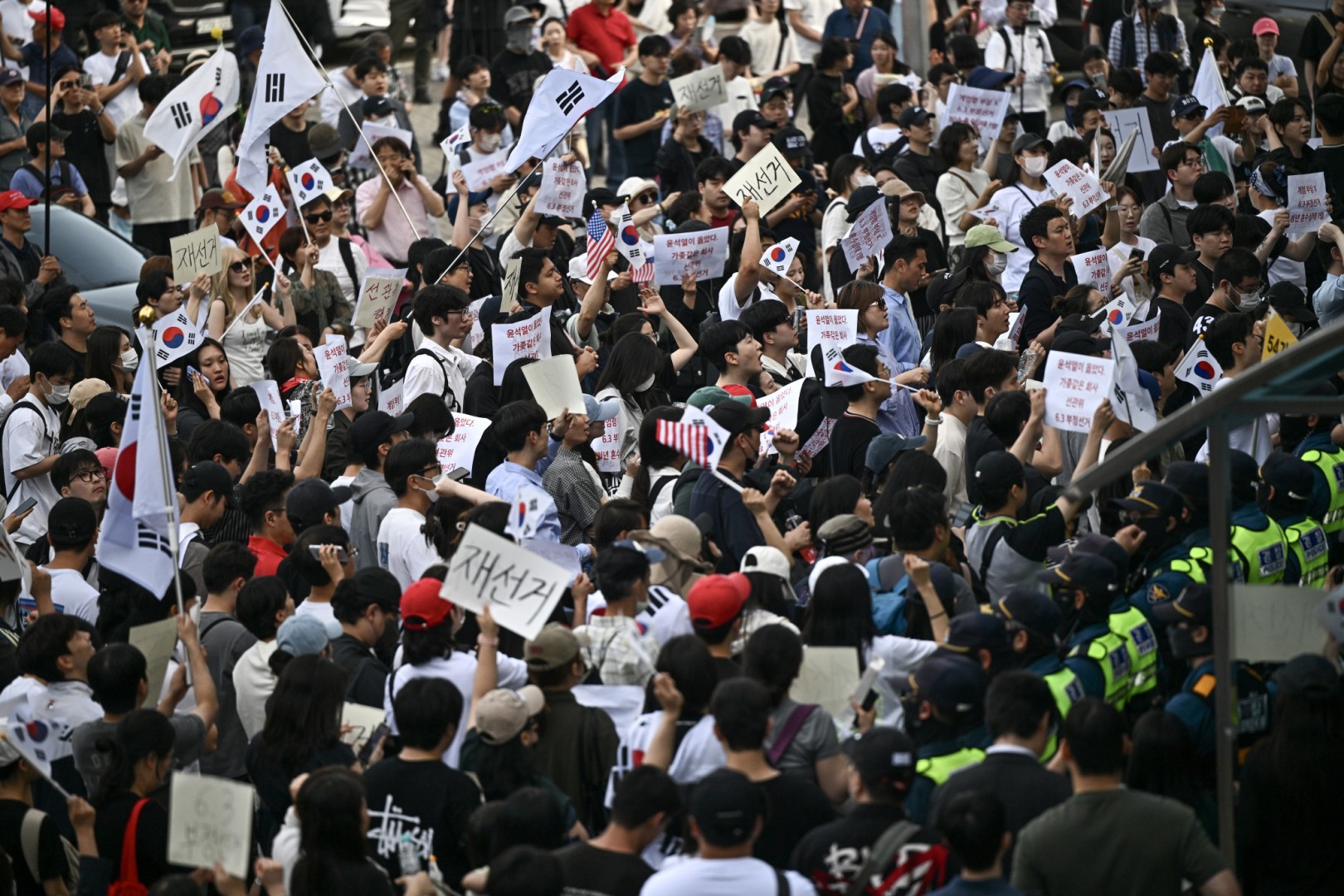
Protests continued, along with a weeks-long blockade of a Seoul ballot-counting centre.
Scores of Taiwanese social media users also joined an online chorus calling for a new vote in South Korea.
'Anxiety about China'
Rumours of Chinese meddling have long featured in South Korean politics.
Following the botched 2024 martial law attempt, some right-wing forums amplified unsubstantiated claims alleging Chinese interference in South Korea's electoral system.
In the wake of last month's polls, far-right groups angered by the ruling Democratic Party's victories nationwide fanned long-running conspiracy theories about China.
Yang Chien-hao, a Taiwanese journalist covering South Korea, cited one claim picked up by Taiwan news outlets that voting centres used Huawei servers.

An official investigation found that rumour stemmed from an election observer who reportedly named their mobile hotspot after the Chinese technology giant during local polls in 2025 (archived link).
The National Election Commission has clarified that vote-counting systems use a wired network that is not connected to the internet.
Claire Chen Wei-Ting, editor-in-chief of the nonprofit Taiwan FactCheck Center, said that in the past, falsehoods mostly circulated among niche groups or influencers with political agendas (archived here and here).
"But unexpectedly, the controversy over South Korea's local elections spread quickly to Taiwan this time, and it was driven by the premise of 'Chinese interference in the election'," she said.
"It echoes Taiwanese society's resistance to and anxiety about China".
Taipei has repeatedly warned of a growing threat from Chinese espionage, disinformation and cyberattacks (archived link).
'Influenced by misinformation'
Hung Chen-ling, a professor who researches disinformation at National Taiwan University, said the South Korean elections were ripe for Taiwanese voters to project their own political anxieties about the island democracy's fate (archived link).
She pointed to domestic concerns about absentee voting, a system available in South Korea and floated by Taiwan's Kuomintang party, which favours closer ties with China, and its allies in the opposition.

Some worry the system "could lead to ghost voters, significant vote-rigging or increase opportunities for fraud," Hung said.
Unlike South Korea, Taiwan does not have absentee voting, and voters generally must cast ballots in person at the polling station associated with their household registration (archived link).
Tzeng Wei-feng, an associate research fellow at the National Chengchi University's Institute of International Relations in Taipei, said supporters of Taiwan's ruling Democratic Progressive Party (DPP) may leverage that anxiety in November's elections by amplifying unverified information about Chinese meddling (archived link).
"For the green camp, they have been promoting these messages about anti-China or resistance to China. It is beneficial for them to consolidate their electoral base," he told AFP, referring to the DPP's official colour.
If rival parties were to respond in kind, he said it could worsen polarisation in Taiwan.
"Then, the rational discussions on policies will lose their meaning as everyone's votes will be influenced by misinformation".
Copyright © AFP 2017-2026. Any commercial use of this content requires a subscription. Click here to find out more.
Is there content that you would like AFP to fact-check? Get in touch.
Contact us