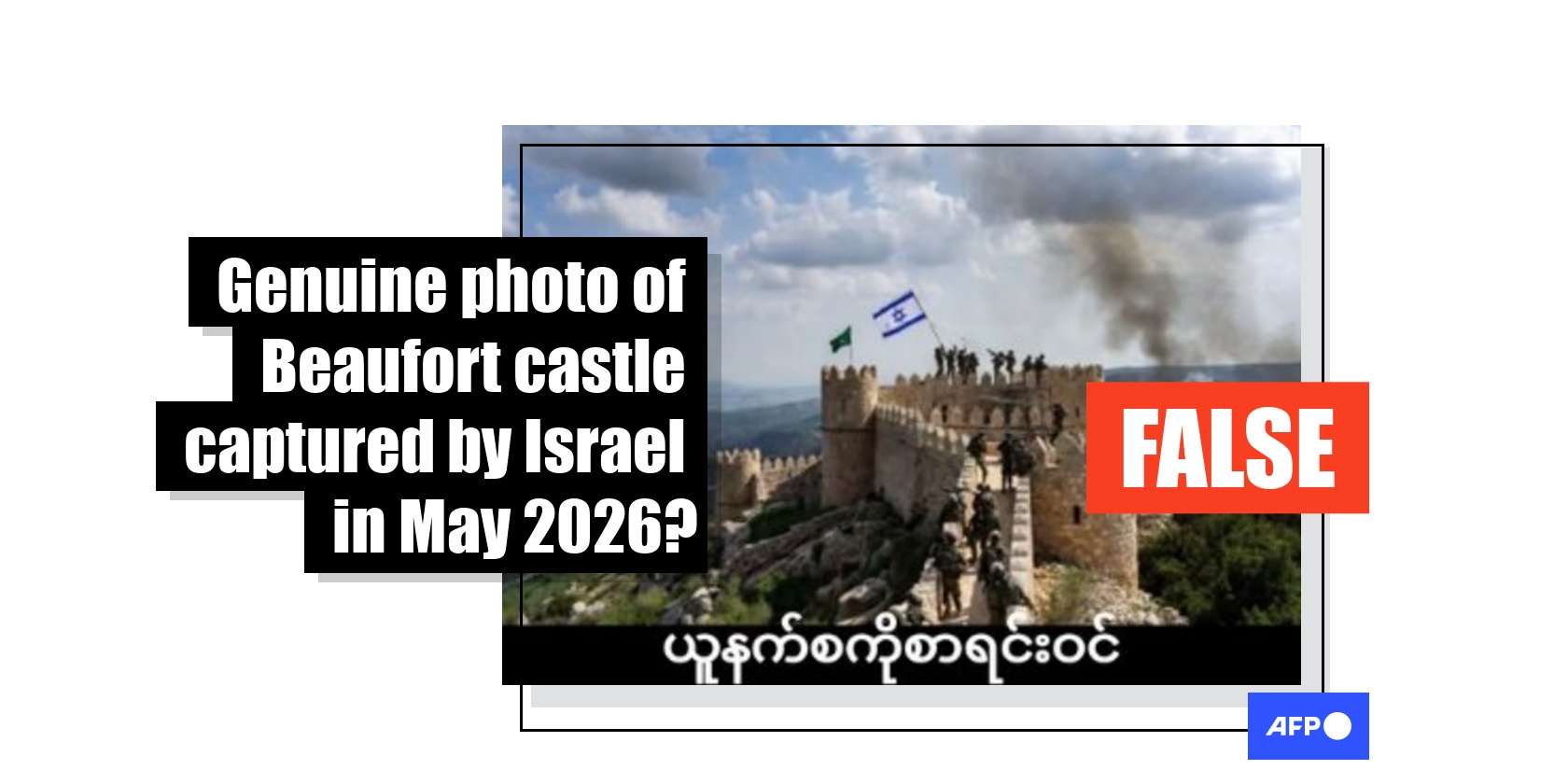
Image of Israeli soldiers seizing medieval castle in Lebanon is AI-generated
- Published on June 4, 2026 at 11:04
- Updated on June 4, 2026 at 11:07
- 2 min read
- By Nyan Tun SHEIN, AFP Thailand
After Israeli forces captured a Crusader-built castle in one of its deepest incursions into Lebanon in decades, social media users in Myanmar circulated a fabricated image purporting to show soldiers planting their flags atop the fortress. The structure depicted in the picture does not match genuine photos of Beaufort castle, and detection tools indicate it is AI-generated.
"Israeli forces captured historic Beaufort Castle in southern Lebanon," reads part of a Burmese-language Facebook post published on June 1, 2026.
The post, which accumulated hundreds of interactions, includes an image of a castle with soldiers appearing to raise Israel's flag next to another green banner.
"Israel announced occupation of UNESCO-listed Crusader-era castle in southern Lebanon," reads superimposed text on the image.
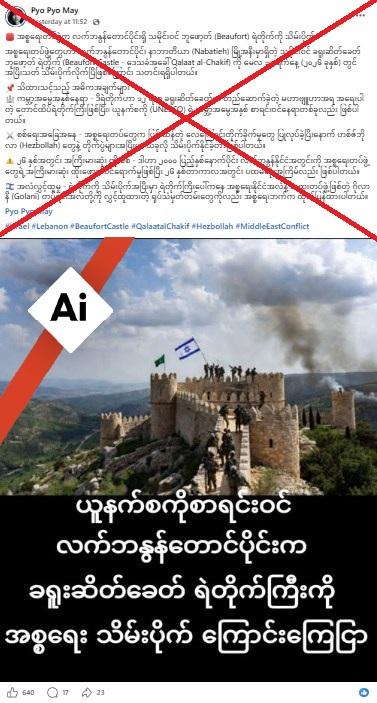
The same image spread elsewhere on Facebook alongside similar claims after Israeli forces captured Beaufort castle on May 31, marking its deepest Lebanese incursion in over two decades (archived link).
Israeli Prime Minister Benjamin Netanyahu vowed to push deeper into the country in what he called a "dramatic shift" in the campaign against Iran-backed Hezbollah. Lebanon was dragged into the Middle East war in March when Hezbollah fired rockets towards Israel in retaliation for the US-Israeli killing of Iran's supreme leader.
Hezbollah lawmaker Hassan Fadlallah said Beaufort castle is "a national archaeological site ... and was not a military site for the resistance", adding the raising of the Israeli flag there "should provoke the feelings of every loyal patriot".
Israeli forces had previously used Beaufort castle, also known as Qalaat al-Chakif, as a base during their previous two-decade occupation of southern Lebanon that ended in 2000.
However, the image shared online was fabricated using artificial intelligence.
AFP identified several visual inconsistencies that are hallmarks of AI-generated content, including a blurry soldier and a green flag that differs from that of the Israel Defense Forces' Golani Brigade, which is green and yellow (archived links here and here).
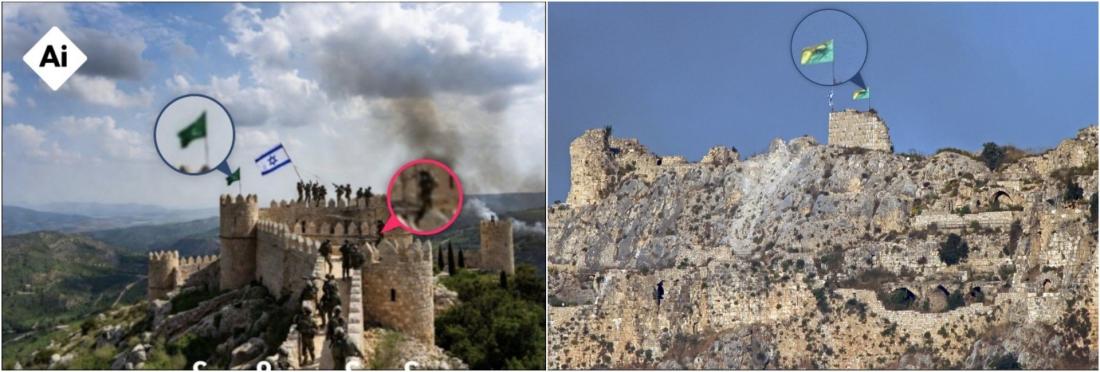
The castle depicted in the false post does not match the structure seen in photos released by AFP and geotagged images on Google Maps, which show less-defined turrets, windows and other architectural details (archived link).
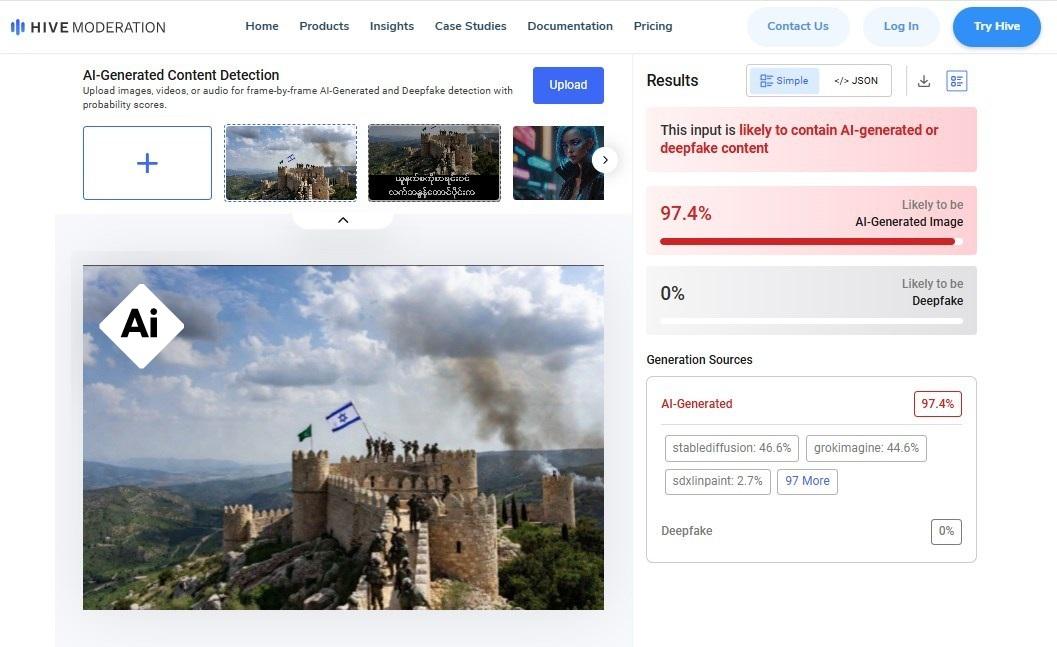
An analysis of the image using the Hive Moderation detection tool also found the image shared online is likely AI-generated.
AFP has previously debunked other misinformation related to the Middle East war.
Copyright © AFP 2017-2026. Any commercial use of this content requires a subscription. Click here to find out more.
Is there content that you would like AFP to fact-check? Get in touch.
Contact us