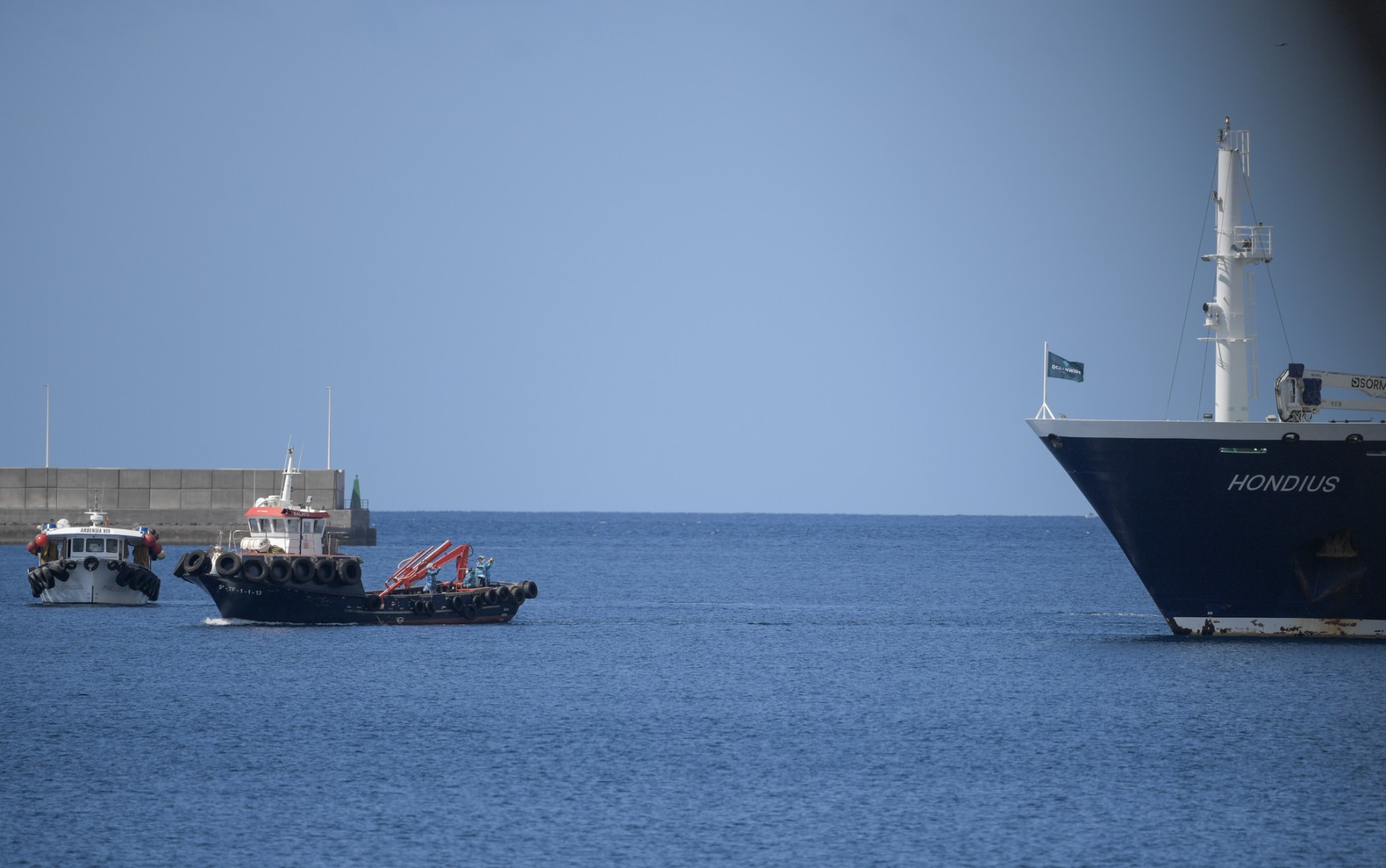
Hantavirus outbreak sparks misinformation on ship passenger nationalities
- Published on May 15, 2026 at 07:07
- Updated on May 15, 2026 at 11:51
- 3 min read
- By Sammy HEUNG, AFP Hong Kong
A deadly hantavirus outbreak on a cruise ship across the Atlantic Ocean sparked global alarm, and triggered rumours about the nationalities of some of the passengers. Four Australians sailed on the stricken MV Hondius but were not among those who disembarked before the illness was reported, a list from the World Health Organization (WHO) showed. And contrary to posts online, no Taiwanese traveller was on board, according to Taiwan's health authorities and the vessel's operator.
"Shocking! Hantavirus outbreak on MV Hondius spreading rapidly: 23 passengers have already disembarked early and returned to locations all around the world," reads a simplified Chinese X post published May 7, 2026.
"They are from: Australia, Taiwan, the United States, the United Kingdom, the Netherlands."
The post, which has been viewed over 73,000 times, includes a screenshot from a New York Post article that was translated into Chinese.
It cites a report from Spanish newspaper El Pais, quoting an anonymous passenger, that nearly two dozen people got off at the remote British island of Saint Helena before the WHO confirmed the outbreak.
They were supposedly able to return to their countries without undergoing strict isolation measures.

Similar claims spread on Threads, Instagram and Weibo as reports emerged that a rare outbreak of hantavirus had hit the MV Hondius cruise ship travelling from Argentina to Cape Verde (archived link).
A total of 11 cases have been reported, including three deaths aboard the Dutch-flagged vessel. Eight patients have tested positive for the Andes virus, the only strain transmitted between humans, the WHO said (archived link).
Hantavirus typically spreads from the urine, faeces and saliva of infected rodents.
There are currently no vaccines or specific treatments for the disease.
All known cases in the current outbreak were people aboard the cruise ship, and the WHO has said the risk to the general population is "absolutely low" (archived link).
'Inaccurate' report
Taiwan's Centers for Disease Control (CDC) said on May 8 it checked with Dutch and Argentinian authorities, as well as the WHO, and found there were "no Taiwanese citizens" onboard MV Hondius (archived link).
The health agency called the anonymous passenger's report to El Pais "inaccurate".
AFP reached out to El Pais, as well as the New York Post, but responses were not forthcoming.
The ship's operator Oceanwide Expeditions said 32 passengers disembarked at Saint Helena a week before the outbreak was reported -- not 23 as the online posts claimed (archived link).
They include a passenger from New Zealand currently undergoing quarantine in Taiwan, the island's CDC said on May 15, adding the person tested negative for Andes hantavirus (archived link).
Those who left did not include the cruise's four Australian guests, a table included in the statement showed.
According to a list sent by Oceanwide Expeditions to AFP on May 14, the passengers who left are from Canada, Switzerland, Germany, Denmark, the United Kingdom, Saint Kitts and Nevis, the Netherlands, New Zealand, Singapore, Sweden, Turkey, the United States and Chile.
An earlier list published May 7 -- and which the company has since revised -- indicated 30 passengers left at Saint Helena (archived here and here).
It did not mention Chile, but listed two passengers with "unknown" nationalities.
WHO chief Tedros Adhanom Ghebreyesus said on May 7 the global health agency had informed the countries whose nationals disembarked in Saint Helena (archived link).
The countries he mentioned match the list from Oceanwide Expeditions, excluding Chile.

Tenerife, the largest of Spain's Canary Islands, agreed to allow the MV Hondius to anchor on May 10, enabling the evacuation of more than 120 people (archived link).
Six passengers caught up in the outbreak landed in Australia on May 15 to undergo one of the strictest quarantines "anywhere in the world", health minister Mark Butler said (archived link).
The four Australians, a Briton living in Australia, and a New Zealander tested negative before boarding the charter flight.
Australia's foreign ministry told AFP on May 15 it was not aware of any other Australian citizens on board the vessel.
AFP has debunked more hantavirus misinformation here.
Updated to add statements from Taiwan's CDC and comment from Australian government on May 15Updated to clarify that 11 total cases were reported, with eight confirmed and three deathsMay 15, 2026 Updated to add statements from Taiwan's CDC and comment from Australian government on May 15
May 15, 2026 Updated to clarify that 11 total cases were reported, with eight confirmed and three deaths
Copyright © AFP 2017-2026. Any commercial use of this content requires a subscription. Click here to find out more.
Is there content that you would like AFP to fact-check? Get in touch.
Contact us