Motorists concerns over E15 fuel overblown, experts say
- Published on April 15, 2026 at 22:12
- 4 min read
- By Manon JACOB, AFP USA, AFP Canada
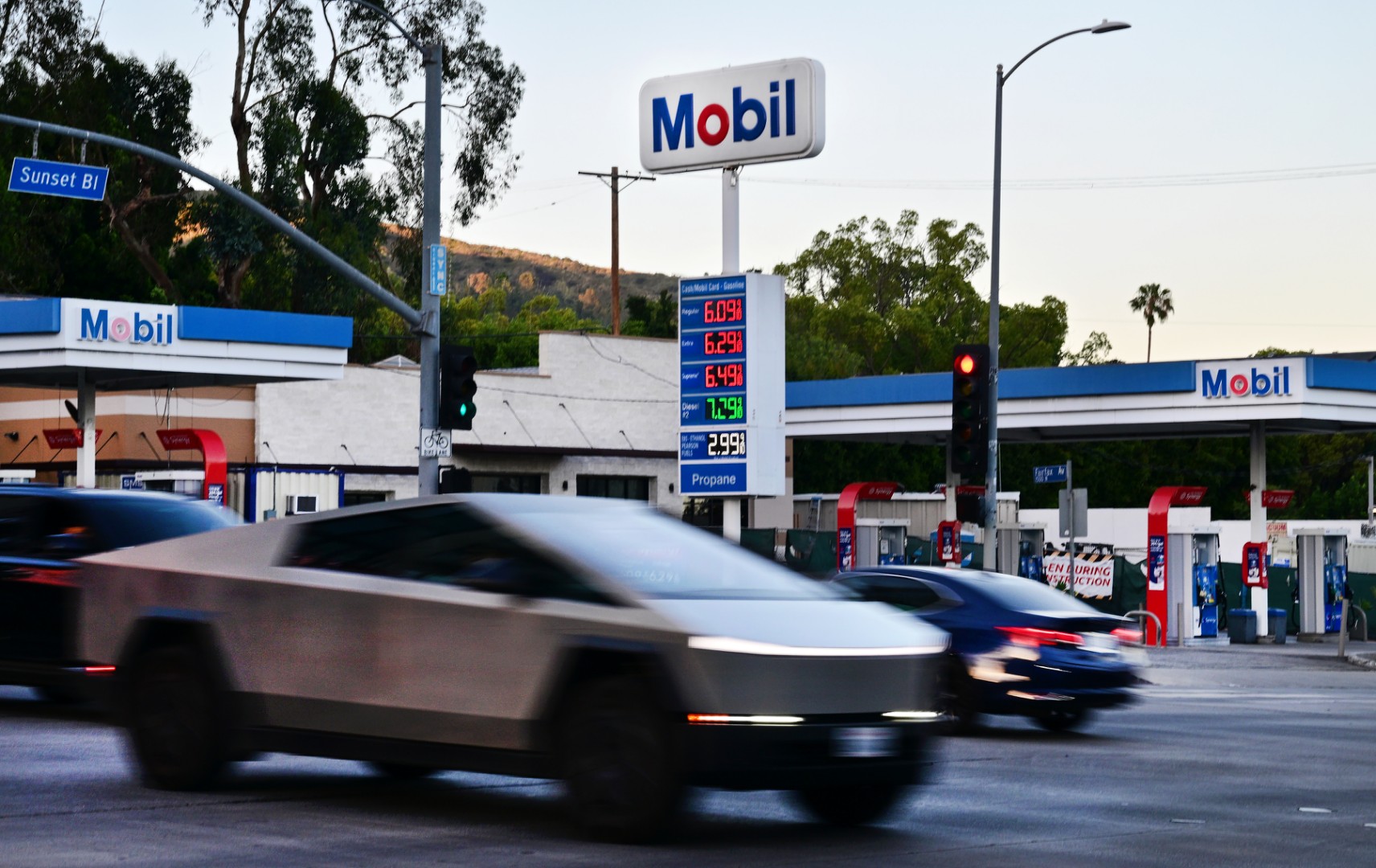
Gasoline prices remain high in North America amid mixed signals about talks to end the war in the Middle East, leading to misinformation about policies impacting the sale of E15 -- a traditionally cheaper fuel containing a higher concentration of ethanol. But contrary to claims on TikTok, there is no plan to universally require stations to offer the biofuel in the United States or Canada, and experts told AFP concerns about purported dangers of the gas blend to car engines are overblown for vehicles manufactured after 2001.
"I heard, as of May 1, all gas is gonna be cut with 15 percent ethanol. From my understanding, ethanol is going to destroy my engine. So essentially, they're forcing us to buy electric vehicles," a TikTok user said in a video posted April 5, 2026.

Across TikTok, concern about E15 fuel is surging. Some videos warn drivers the gasoline -- often cast as "watered down" -- is already found at stations in the United States and Canada with no notice.
The claims circulated on social media amid a global surge of oil and gas prices, with tanker traffic choked at the key shipping waterway in the Strait of Hormuz (archived here).
The United States has imposed a naval blockade on Tehran's ports amid a ceasefire for negotiations to end the war that started with US-Israel strikes on Iran in late February. Analysts say US President Donald Trump is aiming not only to cut off Iranian revenue but also to pressure China, the biggest buyer of Iran's oil, to push it to reopen the strait.
But posts claiming E15 will be the only fuel available starting in May are false.
Summer ban waiver
According to the US Energy Information Administration (EIA), blends of petroleum-based gasoline with 10 percent ethanol, commonly referred to as "E10," represent over 95 percent of the fuel consumed in motor vehicles with gasoline engines (archived here and here).
"E15" and "E85" are high-level ethanol-gasoline blends sometimes on offer (archived here and here). They are considered "biofuels" due to their higher concentration of ethanol which is produced from the starch of a type of corn (archived here).
The US Department of Energy classes ethanol as a renewable and domestically produced fuel (archived here).
E15 is typically cheaper, but its sale is restricted in some locations during summer under regulations aimed at limiting air pollution, according to analysts at commodity market intelligence group, Argus.
However, the Environmental Protection Agency (EPA) authorized a temporary emergency waiver to allow nationwide sales of E15 this summer (archived here).
EPA Administrator Lee Zeldin said the emergency action was aimed at keeping gas prices affordable, increasing the fuel supply and allowing for "consumer choice."
According to the EPA, E15 is currently offered at over 3,000 gas stations across the United States. And without the waiver, E15 gasoline could not be "used by roughly half of the country this summer" (archived here).
An EPA spokesperson also told AFP on April 13 that multiple gasoline blends -- including E10 -- will remain available after May 1.
Patrick De Haan, head of petroleum analysis at GasBuddy, a website that monitors prices across all 50 US states, said the discourse about ethanol on TikTok is far from factual (archived here and here).
"The E15 waiver simply allows a separate product from gasoline to continue to be sold through the summer," he told AFP on April 10.
Similarly, summer ban waivers are nothing new, deployed in 2024 by President Joe Biden's administration and others years before that (archived here and here).
Engine worries limited
Daniel Ciolkosz, an associate research professor of agricultural and biological engineering at Pennsylvania State University, told AFP that the risks to car engines from E15 gas, as portrayed on social media, are also overblown (archived here).
When ethanol was first introduced to the fuel supply network in the United States, people reported operational issues with antique engines, as well as very small engines in lawnmowers and outboard boats, he said.
But, Ciolkosz explained, these problems have been addressed by fuel additives or the use of "ethanol free" blends of fuel that remain available in almost all areas of the United States.
The EPA only approves E15 for use in car models from later than 2001, as well as flex‑fuel vehicles (archived here).
Vehicles that should avoid using E15 majorly consist of models older than 2000, "motorcycles, diesel engines, nonroad engines, and any motors that prohibit E15," according to an EPA spokesperson.
Consumers should also note that E15 usually offers a slightly lower fuel economy than E10, GasBuddy's De Haan remarked (archived here).
Canadian claims
In Canada, similar posts on Facebook have been warning against an imminent, nationwide switch to high-ethanol blends, recommending looking into "Native reserve gas stations" to maintain access to "pure" gasoline.
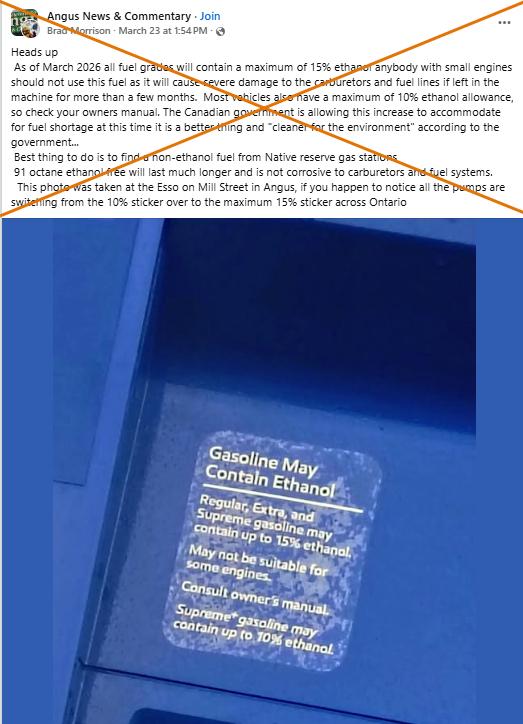
Environment and Climate Change Canada spokeswoman Samantha Bayard told AFP these claims are misconstrued.
The country's Clean Fuel Regulations (CFR) "do not require that every batch of gasoline sold in Canada contain ethanol" (archived here).
"It is up to suppliers to determine the most appropriate way to meet the requirements of the Regulations, for example through inclusion of ethanol or other renewable fuels in some or all of their fuel supplies," she said on April 9.
Current CFR rules require a minimum of five percent ethanol or biodiesel blending in gasoline nationally (archived here).
According to the US Grains and Bioproducts Council, the Canadian average blend rate has exceeded the CFR requirement since 2012, driven by provincial mandates including those implemented in Quebec, Ontario, British Columbia, and Saskatchewan (archived here).
In Ontario, under the Cleaner Transportation Fuels regulation, suppliers are required to blend 11 percent renewable content in regular-grade gasoline from 2025 to 2027. The requirement increases to 13 percent in 2028 and 15 percent in 2030 and onward (archived here).
AFP has debunked other claims about the sustainability of electric vehicles, as well as domestic and international gas prices.
Copyright © AFP 2017-2026. Any commercial use of this content requires a subscription. Click here to find out more.
Is there content that you would like AFP to fact-check? Get in touch.
Contact us