Video of oil tankers on fire in Hormuz misrepresented as Iranian attack on Japanese ship
- Published on April 13, 2026 at 11:13
- Updated on April 13, 2026 at 11:22
- 3 min read
- By Livia LIU, AFP Hong Kong
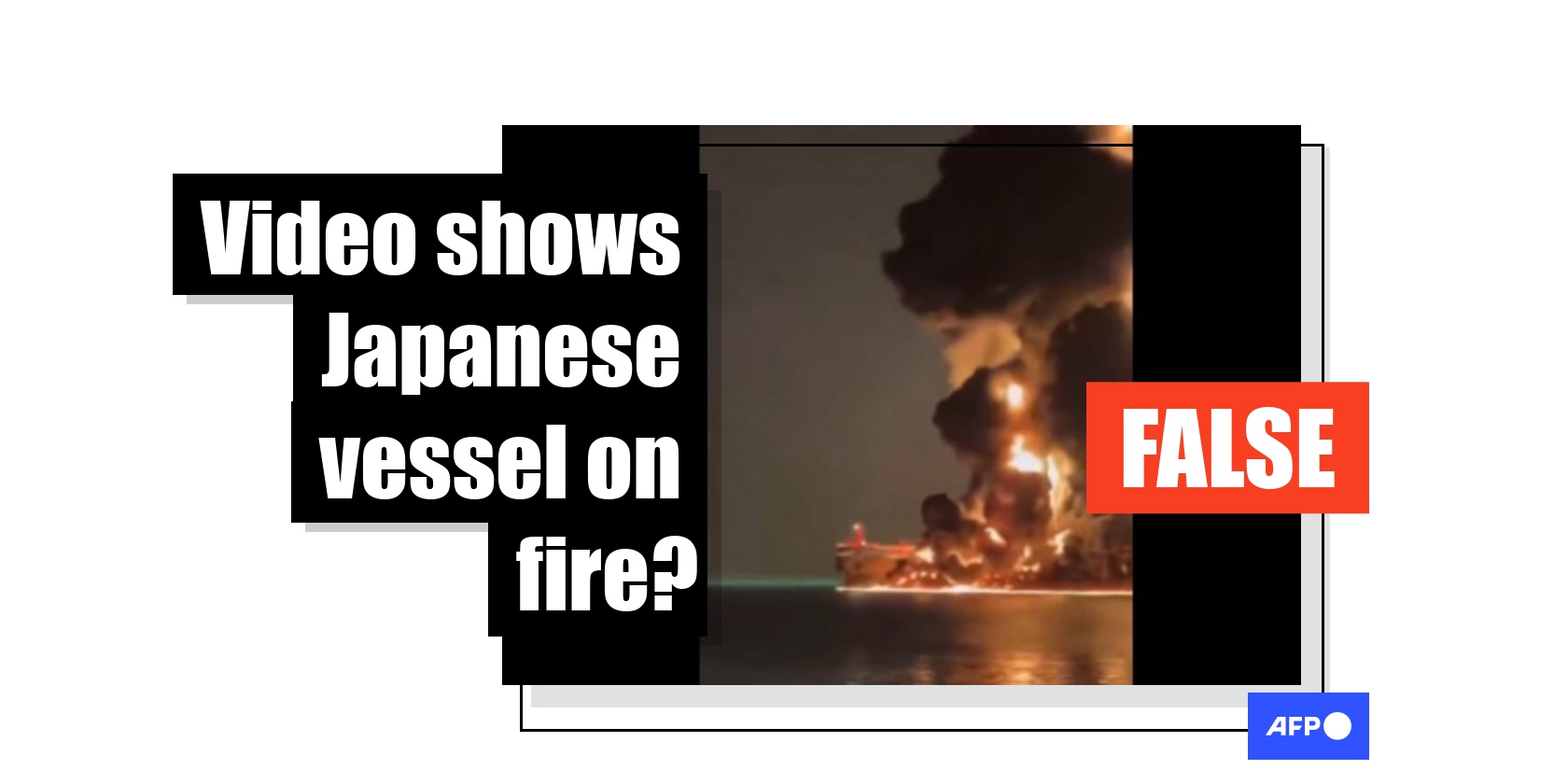
About 30 ships have reportedly been struck after Iran effectively sealed off the vital Strait of Hormuz in retaliation for joint US-Israeli attacks in late February, but posts circulating ahead of a ceasefire announcement have falsely claimed a video shows a Japanese ship ablaze in the waterway. Though a Japanese vessel did suffer hull damage in a March 11 attack, the video shows Maltese and Marshall Islands-flagged oil tankers after a separate assault.
"Japanese ship sunk after being attacked by Iran! Iran has attacked a Japanese container ship attempting to transit the Strait of Hormuz; the vessel has been engulfed in flames," reads a simplified Chinese Weibo post published on March 28, 2026.
"The Iranian regime has announced that the Strait of Hormuz is open only to Russia, India, China, and Spain," the post continues.
It includes a 23-second clip showing two vessels engulfed in flames, which garnered more than six million views.
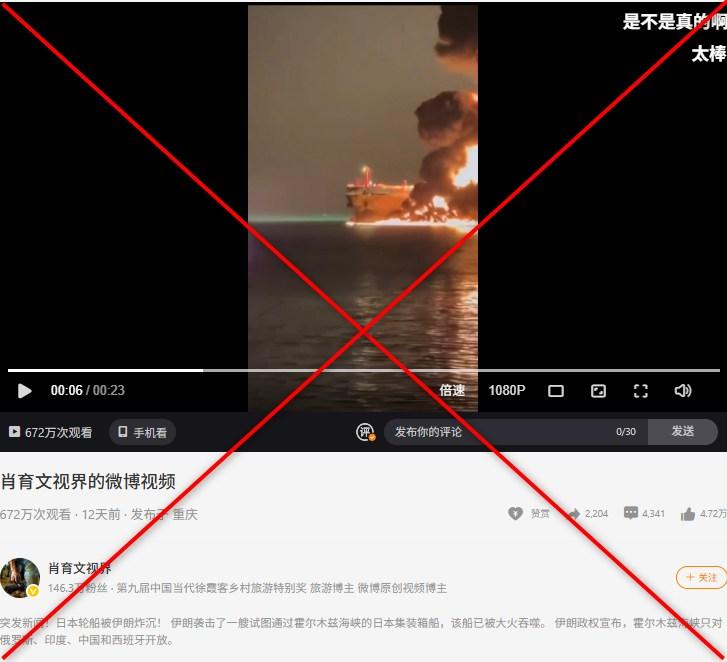
The video was shared alongside a similar claim elsewhere on Weibo, X, Facebook, and Douyin before the US and Iran agreed to a two-week ceasefire on April 8 that would see the Strait of Hormuz reopened to hundreds of ships stranded in the Gulf due to the US-Israeli war on Iran (archived link).
However, peace talks held in Islamabad, Pakistan, on April 12 fell apart, with US Vice President JD Vance saying Tehran had refused to accept Washington’s terms after 21 hours of negotiations (archived link).
This led to the US military announcing that it would blockade all Iranian Gulf ports the following day, effectively halting maritime traffic to and from the country’s ports in the strait.
As of April 11, only 16 cargo vessels have transited the Strait of Hormuz according to maritime data provider Kpler, while roughly 800 ships remain stranded in the Persian Gulf, according to shipping intelligence firm Lloyd’s (archived link).
Meanwhile, maritime tracking data shows 30 commercial ships, including 13 tankers, had been attacked or reported incidents in the region since March 1, according to the International Maritime Organization (IMO), the UK Maritime Trade Operations centre, and Vanguard Tech (archived link).
A Japanese container ship, "One Majesty", did suffer hull damage in an attack on March 11, but the clip is unrelated to the circulating posts (archived link).
A reverse image search using keyframes on Google found an Instagram account called "shipspotter_hayriray" had shared the same clip on March 13 (archived link).
The user, a self-described independent ship spotter and analyst, said the clip shows two oil tankers -- the Maltese-flagged ZEFYROS and the SAFESEA VISHNU, which was sailing under the Marshall Islands flag.
The user credited the video to an Iraqi sailor named Alaa Albayaty, who shared the same clip on his Instagram account on March 13 (archived link). AFP contacted him for comment but did not receive a reply.
AFP reported that the attack on the two oil tankers off Iraq killed at least one crew member, an Indian national (archived link). Iran said it was behind the attack on SAFESEA VISHNU, which it claimed was US-owned, but made no comment on the other.
A separate reverse image search found similar footage published by multiple media outlets, showing an explosion and flames engulfing the vessels (archived here and here).
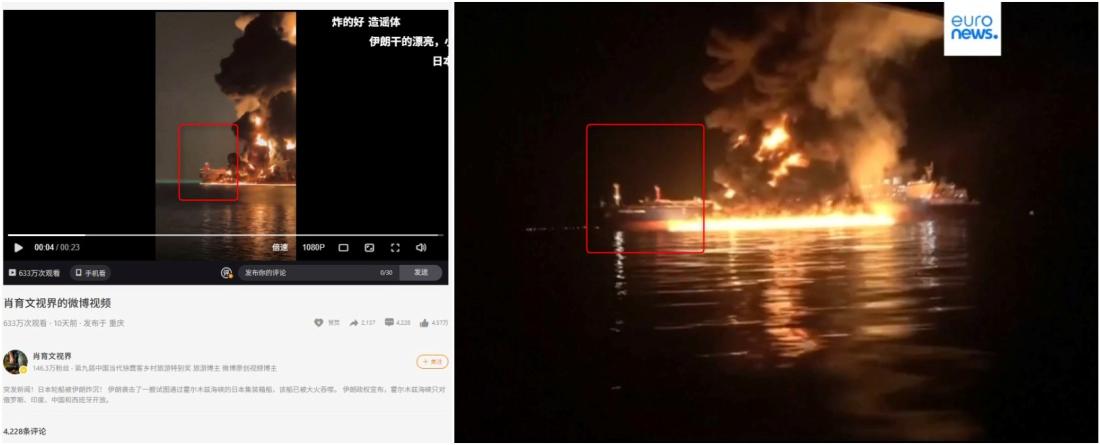
A comparison with a photo of ZEFYROS published by Reuters found the red forward mast seen in the circulating footage matches with the Maltese-flagged ship (archived link).
AFP has debunked other misinformation surrounding the Middle East war.
Fixes typo in first paragraphApril 13, 2026 Fixes typo in first paragraph
Copyright © AFP 2017-2026. Any commercial use of this content requires a subscription. Click here to find out more.
Is there content that you would like AFP to fact-check? Get in touch.
Contact us