Trump exaggerates Chinese oil dependence on Strait of Hormuz
- Published on April 6, 2026 at 07:25
- 6 min read
- By Jeff LI, AFP Hong Kong
US President Donald Trump has highlighted other countries' dependence on oil that transits the Strait of Hormuz as he pushes for them to help police the waterway, but his assertion that "about 90 percent" of China's crude imports go through the strait is inaccurate. According to Chinese customs data, less than 40 percent of Beijing's imported crude oil passes through the strait. Experts say that while China is not immune to disruptions caused by the Middle East war, imports from Russia and significant reserves helped cushion it from energy shocks.
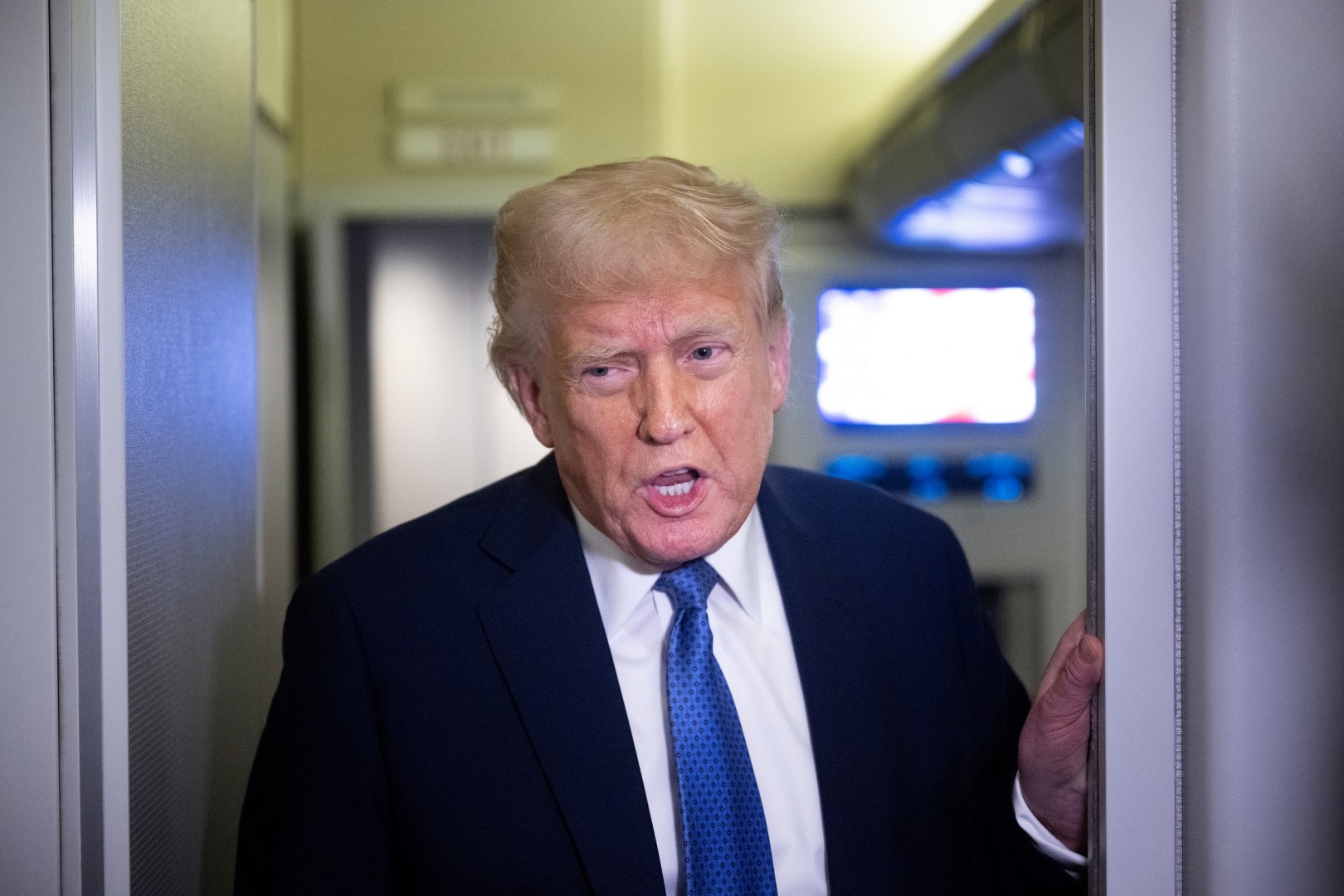
US President Donald Trump made the claim on Air Force One on March 15, 2026, as he spoke with the press about talking to other countries about policing the vital Strait of Hormuz, which has been effectively closed since the start of the Middle East war.
The conflict, triggered by a joint US-Israeli attack on Iran, has mushroomed to draw in nations around the Middle East, sending energy markets into a tailspin and threatening to torpedo the global economy (archived link).
"China, as an example, gets about 90 percent of its oil from the Hormuz Strait," he said. "And [it would be] nice to have other countries police that with us, and we'll help, we'll work with them."
He went on to downplay the United States' dependence on the waterway, saying: "You could make the case that maybe we shouldn't even be there at all because we don't need it. We have a lot of oil."
The Republican president again mentioned the 90 percent figure during a lunch with Kennedy Center Board members and in a Financial Times' interview quoted by the Guardian.
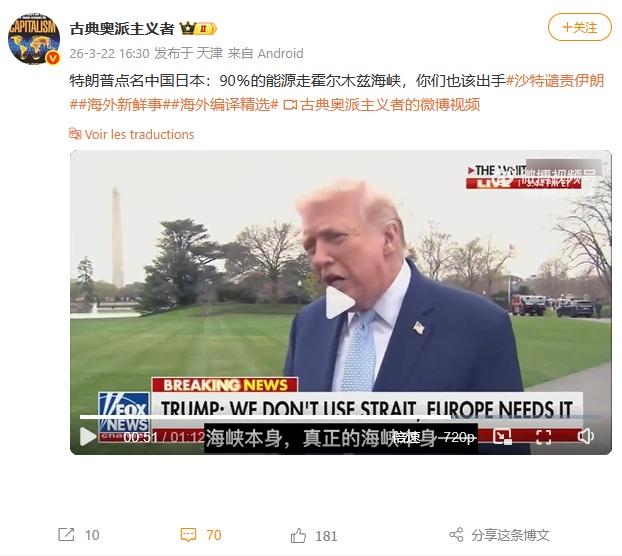
His remarks also circulated widely on Chinese social media, with many users mocking him for the claim (archived here, here and here).
Trump on April 5 threatened "hell" if Iran did not reopen the Strait of Hormuz, vowing in an expletive-laden social media post to strike its bridges and power plants (archived link). He set a new deadline of 0000 GMT on April 8 for Tehran to do so.
While China imports billions of barrels of crude oil from countries that export it through the Strait of Hormuz, Trump's assertions vastly overstate Beijing's dependence on fuel transiting the strategic waterway.
An AFP analysis of Chinese customs data found the true number is nearly half of what the US president claims.
"Trump often uses hyperbole. There is nothing to suggest that the claim of the (People's Republic of China) importing 90 percent of its oil through the Strait of Hormuz is true," Chong Ja Ian, an associate professor of political science at the National University of Singapore (NUS), told AFP via email on March 20 (archived link).
"It may be a way to suggest or push the PRC to take (a) greater role (in) stabilising access to the Strait of Hormuz."
AFP reached out to the White House for comment on the 90 percent figure but did not receive a response at time of publication.
China's imports
Data from Beijing's customs agency show China imported 4.17 billion barrels of crude oil in 2025, worth $296.59 billion (archived link).
Most of the crude oil China imported in 2025 was supplied by Russia, with which it shares a land border and mostly receives supplies using pipelines and oil tankers through ports in its Far East region. Those imports totalled 745.98 million barrels, worth $49.82 billion, or 17.8 percent of China's total.
According to the International Energy Agency (IEA), the strait is the primary export route for oil produced by Saudi Arabia, the United Arab Emirates, Kuwait, Qatar, Iraq, Bahrain and Iran (archived link). Saudi Arabia and the UAE also have routes that do not transit the strait.
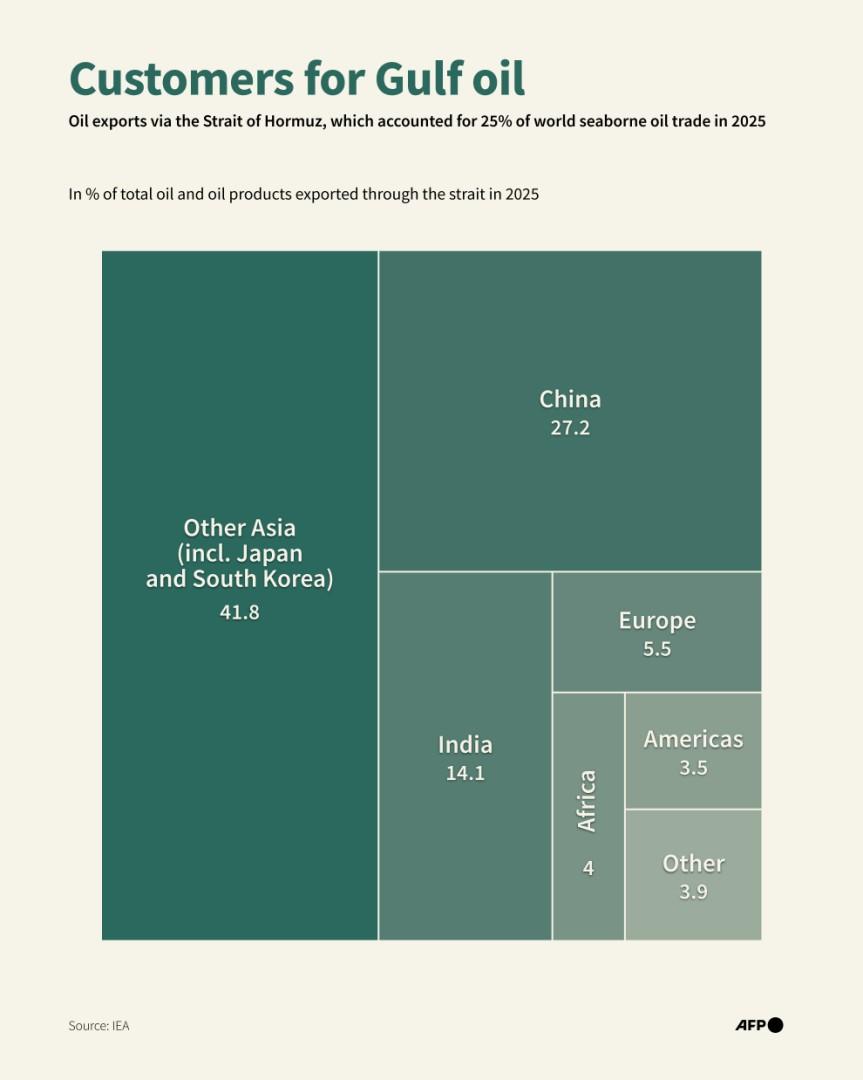
China imported 1.50 billion barrels of crude from Saudi Arabia, the UAE, Kuwait, Qatar and Iraq, worth $111.91 billion, or 36.1 percent of its total crude oil imports in 2025.
The figures do not include imports from Bahrain, which make up a negligible amount of China's foreign crude purchases.
China has not provided data on imports from Iran -- which are subject to US sanctions that Beijing has called "illicit" and "unilateral" -- since 2022 (archived link).
The latest figures from OPEC show Iran shipped about 1.21 million barrels of oil a day to China in 2024, or 11.0 percent of its total imports from that year. The United States has accused Beijing of masking its purchase of Iranian oil by claiming the imports come from known transhipment hubs such as Malaysia (archived link).
But adding the oil imports from Malaysia in 2025, which totalled 463.73 million barrels worth $31.0 billion, to the imports from Middle East nations only brings the fraction of China's imports from these nations up to 47.3 percent -- far lower than the 90 percent figure cited by Trump.
China also purchases a substantial amount of liquefied natural gas (LNG) from the Middle East, with imports through the Strait of Hormuz making up around 30 percent of its total in 2025. However, China's single biggest LNG supplier was Australia, according to Beijing's customs data.
Energy reserves
Ali Wyne, a senior adviser focusing on US-China ties at the International Crisis Group think tank, told AFP that China is less vulnerable to disrupted traffic through the waterway than others in the region such as Japan, South Korea and India (archived link).
China has "prioritised boosting its crude reserves and accelerating its investments in alternative energy sources", Wyne said on March 21.
The country produced some 215 million tonnes of crude oil in 2025, equivalent to 1.57 billion barrels, according to calculations based on data from the National Energy Administration (archived link).
According to intelligence analysis from Kpler, China has also accumulated crude reserves of around 1.2 billion barrels, amounting to "around 115 days of its crude oil imports by sea" (archived link).
Moreover, the country installed a record 315 gigawatts of solar power and 119 gigawatts of wind power capacity in 2025 -- over 80 percent of total newly installed power generation capacity, according to the China Electricity Council, a national trade association for the power industry (archived link).
China, however, is not immune to the situation in the Middle East, Chong from NUS said.
"[H]igh oil prices, fertiliser, and plastic prices are global," he said, explaining this will affect prices in China and further dampen consumption.
China's top economic planner has hiked retail petrol and diesel prices twice since the war broke out, before announcing on March 23 it would limit the amount by which the country's retail fuel costs can rise (archived here, here and here).
Global impact
While Trump has asserted that the United States does not "need" the Strait of Hormuz, experts have cautioned it is also not exempt from the fluctuation in oil prices as a result of the strait's effective blockade.
Canada and Mexico were the United States' biggest sources of crude oil imports in 2025 -- accounting for some 69.5 percent of its overall imports -- while those from Gulf countries made up about 7.9 percent (archived link).
Erica Downs, a senior scholar from Columbia University's School of International and Public Affairs, said even countries that import little or no oil from the Gulf will be impacted (archived link).
"The oil market is global so a disruption of oil supplies transiting the Strait of Hormuz increases prices around the world," she told AFP in a March 26 email.
According to the American Automobile Association, US average domestic fuel prices as of March 26 rose by about 33.4 percent compared with a month earlier (archived link).
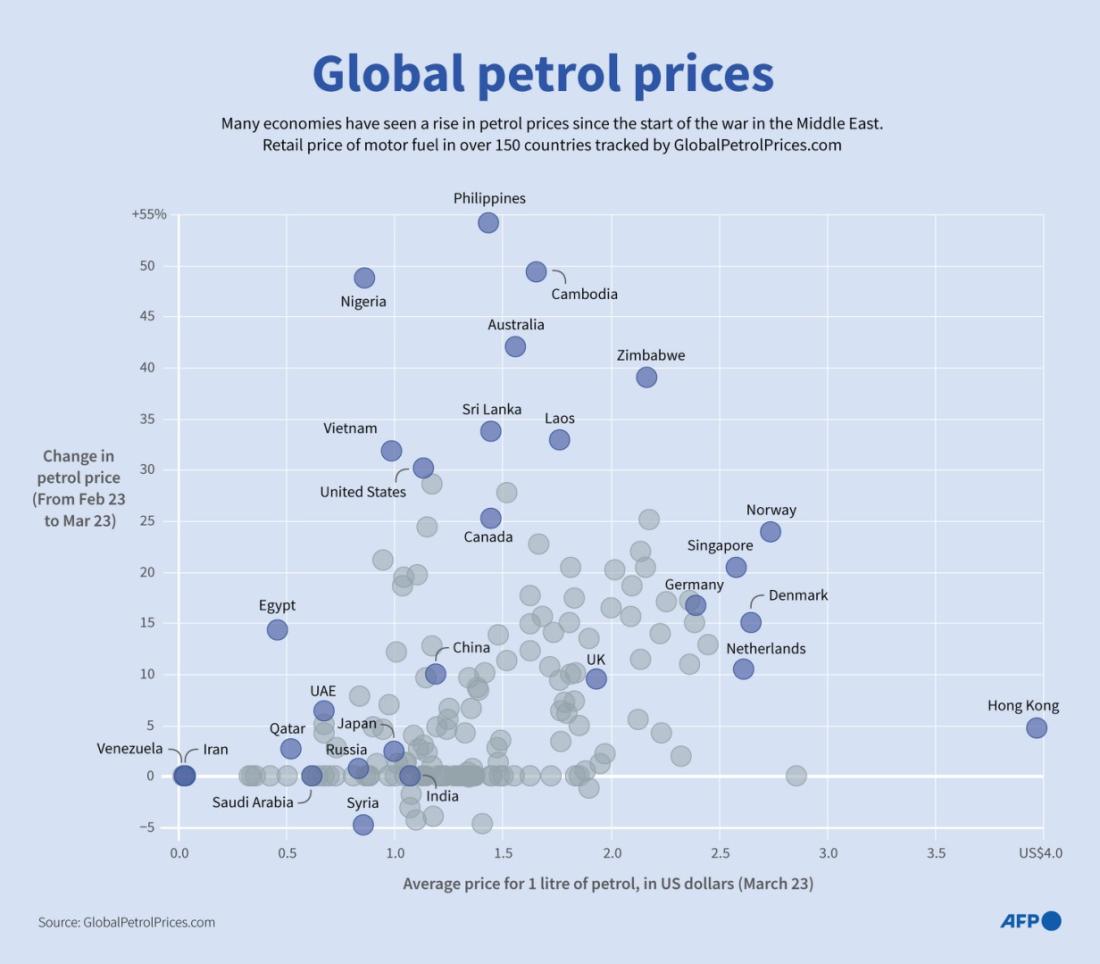
US Federal Reserve Chair Jerome Powell said in a press conference on March 18 that higher energy prices "will push up overall inflation", but cautioned that it was too soon to know its scope and potential effects on the economy (archived link).
Oil prices have been fluctuating in response to Trump's flurry of contradictory remarks on the war, but they remain higher than before fighting broke out (archived link).
The surging fuel prices have prompted countries to limit consumption, provide subsidies and release their stockpiles to limit the financial impact on consumers and businesses (archived link).
Copyright © AFP 2017-2026. Any commercial use of this content requires a subscription. Click here to find out more.
Is there content that you would like AFP to fact-check? Get in touch.
Contact us