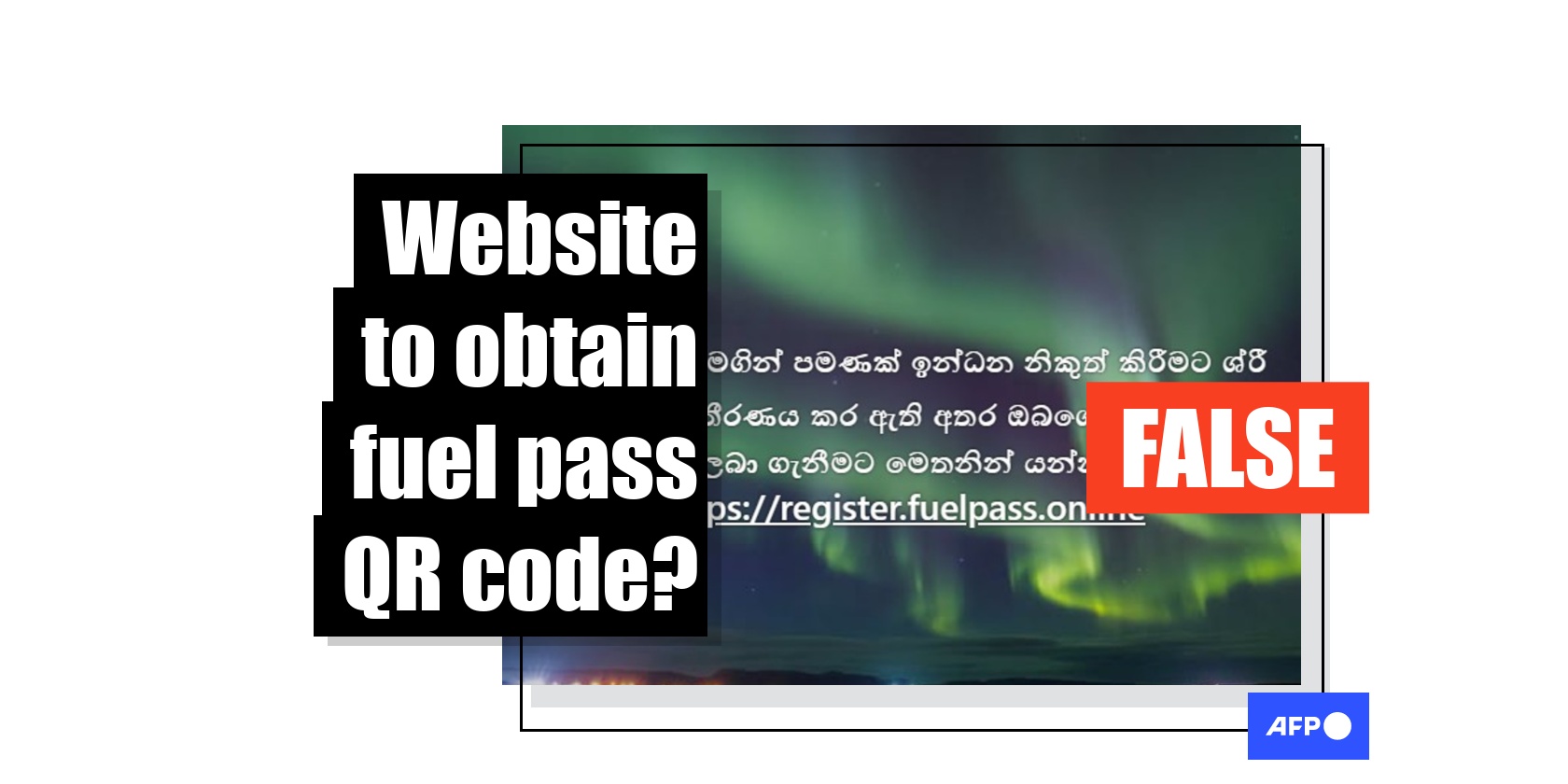
Posts share imposter registration site as Sri Lanka rations petrol
- Published on March 19, 2026 at 09:59
- Updated on April 6, 2026 at 03:36
- 2 min read
- By Harshana SILVA, AFP Sri Lanka
Sri Lanka reintroduced a system designed to ration fuel purchases as the Middle East war strained supplies, but a link shared in posts urging users to sign up for the National Fuel Pass does not point to the government's official registration website. The state-run Ceylon Petroleum Corporation told AFP the link is "fake", while an information technology official warned the site was being used by scammers to steal personal information.
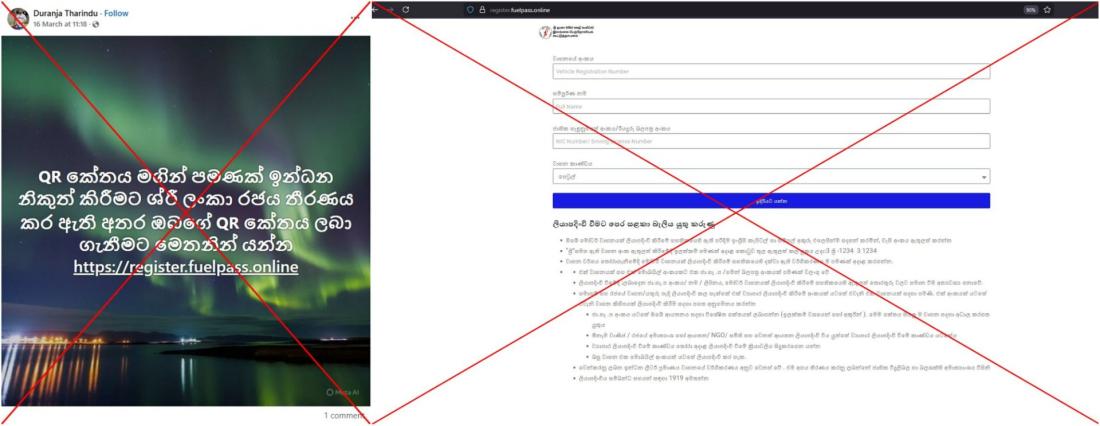
"The government of Sri Lanka has decided to release fuel only to those who have a QR code. Go here to get your QR code," reads a Sinhala-language Facebook post shared on March 16, 2026.
The post includes a URL that links to a website bearing the logo of the state-run Ceylon Petroleum Corporation (archived link).
Users are prompted to fill in a form that asks for their full name, national identity card number, driving licence number and vehicle licence plate number.
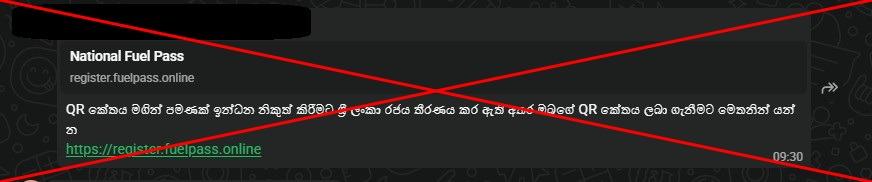
The same URL was also included in similar Facebook posts, and spread on WhatsApp.
The posts circulated after Sri Lanka reintroduced fuel rationing as authorities braced for energy shortages caused by the war in the Middle East (archived here and here).
Besides retaliating against Israel and US interests in the Middle East over their joint attack on Iran, Tehran has also effectively blocked the vital Strait of Hormuz -- a crucial passage for energy and other exports from the region. Sri Lanka imports all of its oil and also buys coal for electricity generation.
In addition to reintroducing a QR-code based National Fuel Pass previously seen during the country's economic crisis in 2022, Sri Lanka has also announced a shorter work week to conserve its scarce fuel reserves (archived here, here and here).
While motorists can obtain a QR code for the fuel pass online, the URL shared on social media is not the website the government has set up for this purpose.
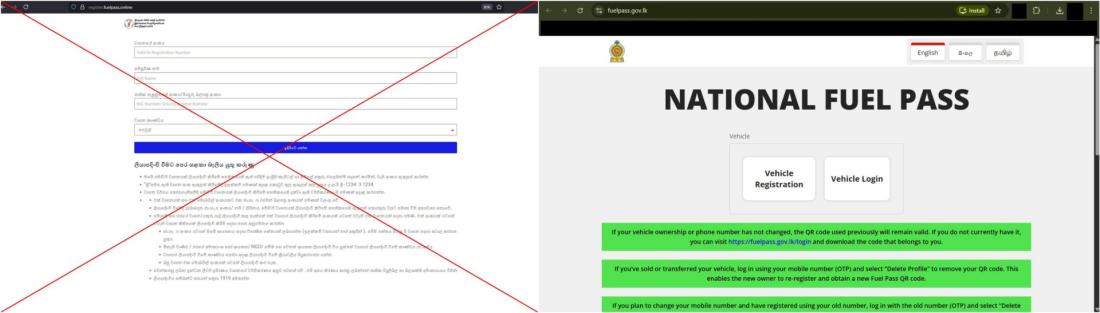
The Sri Lankan government's official fuel pass website is "fuelpass.gov.lk" (archived link).
The falsely shared website does not contain the government's "gov.lk" domain in its URL, and also differs in style from the official fuel pass registration website which bears the country's national emblem.
The correct website URL was given by the Ministry of Energy when it announced the reintroduction of the scheme, and was also reported by local media (archived here, here and here).
"The link is fake," Mayura Neththikumarage, managing director of the Ceylon Petroleum Corporation told AFP on March 18 (archived link).
He said when they receive such links, they forward them to the Sri Lanka Computer Emergency Readiness Team (CERT) (archived link).
"We have taken down five such fake websites," Charuka Damunupola, CERT's lead information security engineer, told AFP on March 19, adding that the public should verify they are posting the correct website before sharing.
He warned the websites collect information, such as vehicle chassis numbers, that scammers can use to generate QR codes for their own use.
AFP has debunked a wave of misinformation related to the conflict in Iran.
Article updated to add metadataApril 6, 2026 Article updated to add metadata
Copyright © AFP 2017-2026. Any commercial use of this content requires a subscription. Click here to find out more.
Is there content that you would like AFP to fact-check? Get in touch.
Contact us