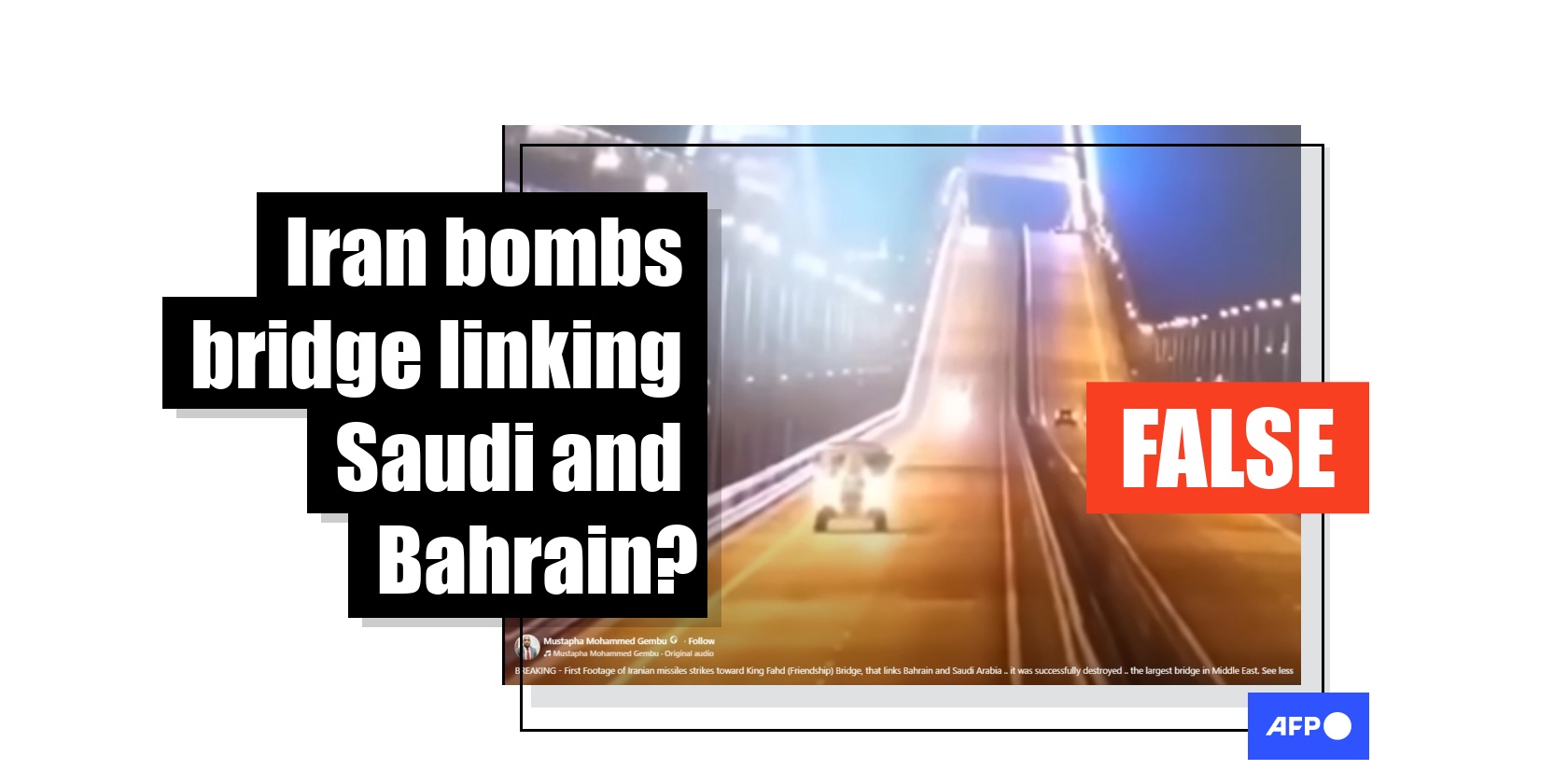
2022 Crimea bridge blast falsely shared as Iranian attack on the King Fahd Causeway
- Published on March 11, 2026 at 14:55
- 3 min read
- By AFP Middle East & North Africa
- Translation and adaptation Tolera FIKRU GEMTA, AFP Ethiopia
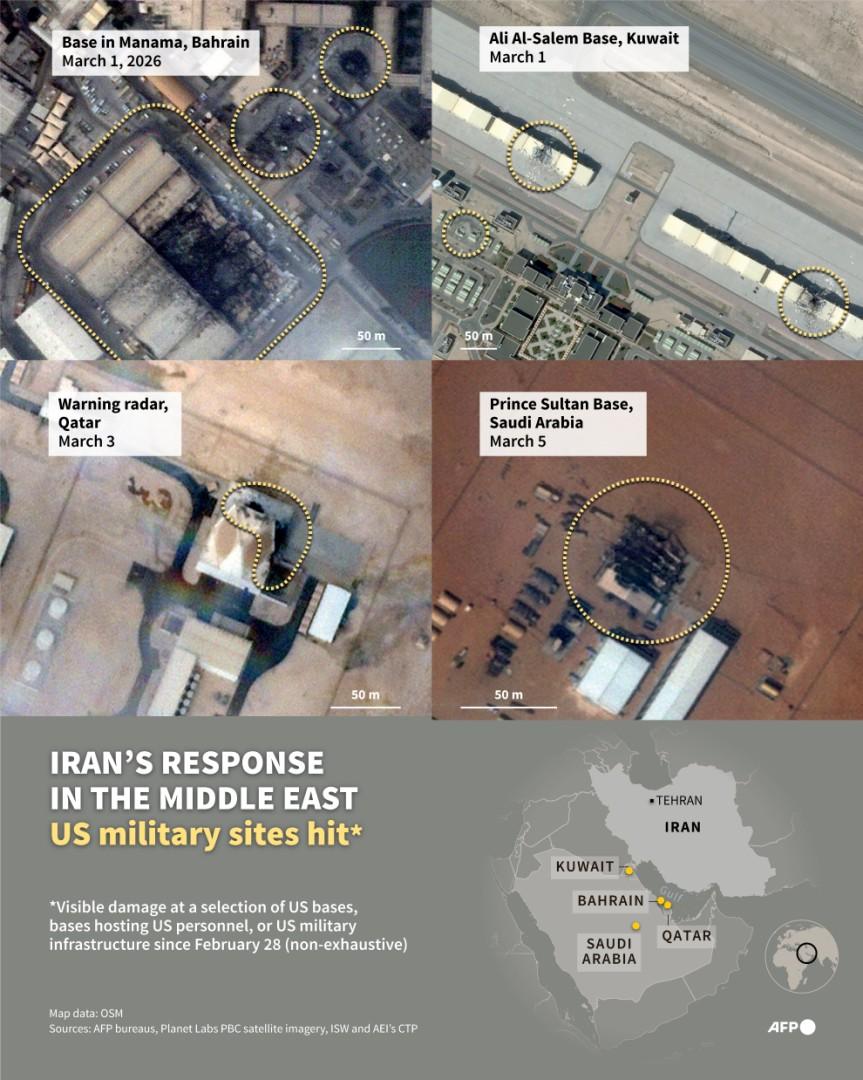
As Iran continues its retaliation against Gulf states following the US-Israeli bombardment that killed the supreme leader of the Islamic Republic, a post claims to show Iranian missiles striking the King Fahd Causeway, the bridge which links Bahrain and Saudi Arabia. However, the footage is old and depicts a Crimean bridge that was bombed in 2022, a few months after Russia invaded Ukraine.
The post, shared by a Facebook account from Nigeria, reads: “BREAKING - First Footage of Iranian missiles strikes toward King Fahd (Friendship) Bridge, that links Bahrain and Saudi Arabia (sic).”
Opened in the 1980s, the King Fahd Causeway is a 25-kilometre (16 miles) series of bridges connecting Saudi Arabia and Bahrain (archived here).
The post adds that “it was successfully destroyed … the largest bridge in the Middle East.”
The clip contains 17 seconds of footage that shows vehicles crossing a bridge at night before parts of the span explode.
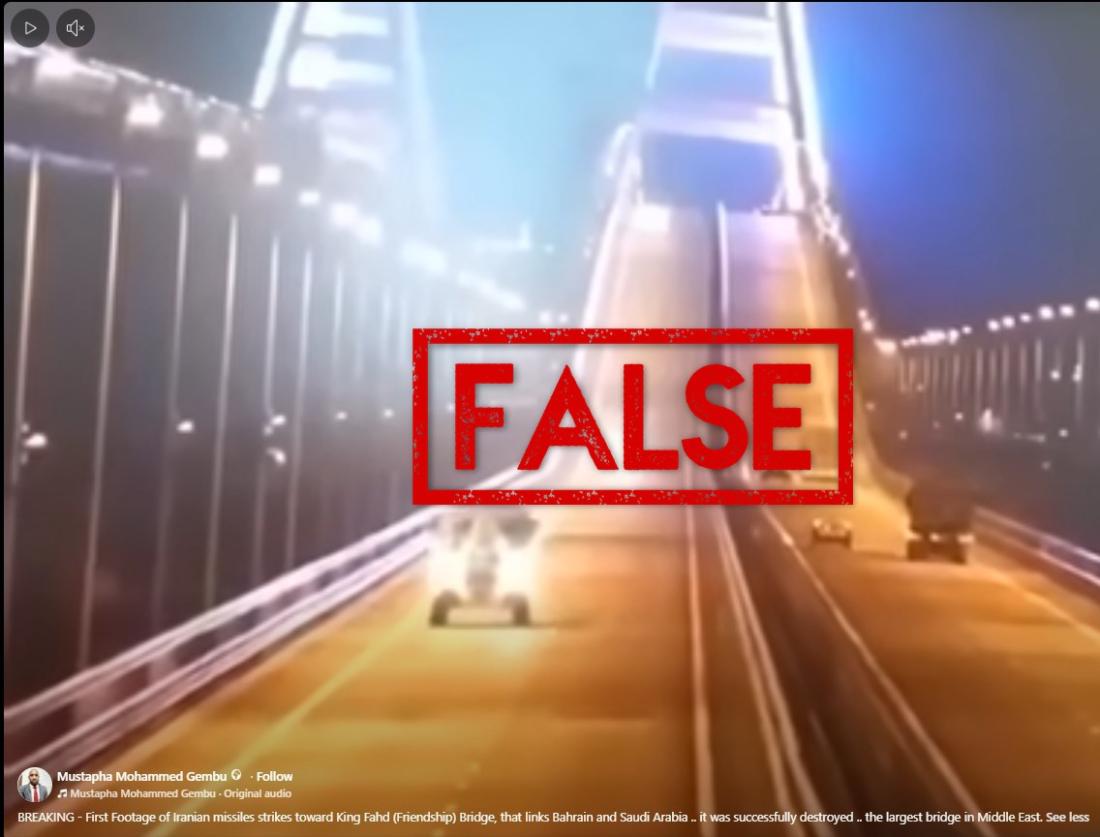
Similar posts were shared on Facebook here and here.
Israel’s military said it struck targets in central Iran on March 9, 2026, including internal security command centres and missile launch sites. The operation marked the first raid since Iran appointed a new supreme leader, Mojtaba Khamenei, who succeeded his father Ali Khamenei (archived here).
The conflict continues to spread across the region. AFP reported the war’s humanitarian impact has worsened in Lebanon, where the UN says more than 100,000 people were displaced in a single day as Israeli strikes intensified against Iran-backed Hezbollah militants (archived here).
Meanwhile, a drone attack sparked a fire in an industrial zone in Abu Dhabi that hosts oil and energy facilities, as Iran continued retaliatory strikes across Gulf states.
However, the footage of the bridge being blown up is old and unrelated to the ongoing Middle East war.
Crimean bridge explosion
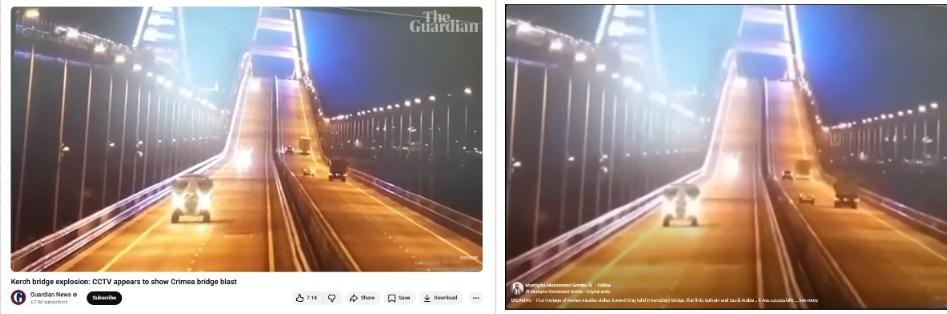
AFP Fact Check used InVID-WeVerify to conduct reverse image searches on keyframes from the clip. The results established that the footage was originally published on the official YouTube channel of the Guardian News on October 9, 2022 (archived here).
“Kerch bridge explosion: CCTV appears to show Crimea bridge blast,” reads the video's title.
The Kerch bridge, also known as the Crimean bridge, is a major road-and-rail bridge connecting Russia’s Krasnodar Krai region to the Crimean Peninsula.
The video’s accompanying description explains that the CCTV footage was initially shared on Russian Telegram channels and later by news agencies, and appeared to show the moment of the explosion, with a truck and a car at the centre of the blast.
AFP reported at the time that Russian authorities said the blast killed three people (archived here).
The original footage is more than 90 seconds long and shows the explosion and the level of damage caused to different parts of the bridge.
The false posts used the first 17 seconds from the CCTV footage and misrepresented it as a major event in the ongoing Middle East war.
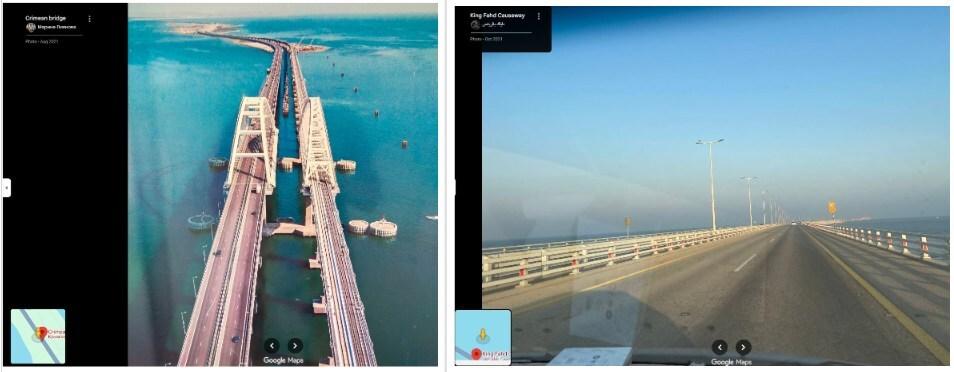
AFP Fact Check geolocated the Crimean bridge and King Fahd Causeway on Google Maps to show that the two structures are materially different.
The King Fahd Causeway is a longer structure built mainly for vehicle traffic, while the Crimean bridge is a more complex infrastructure project that carries both road and rail lines and features large arch spans.
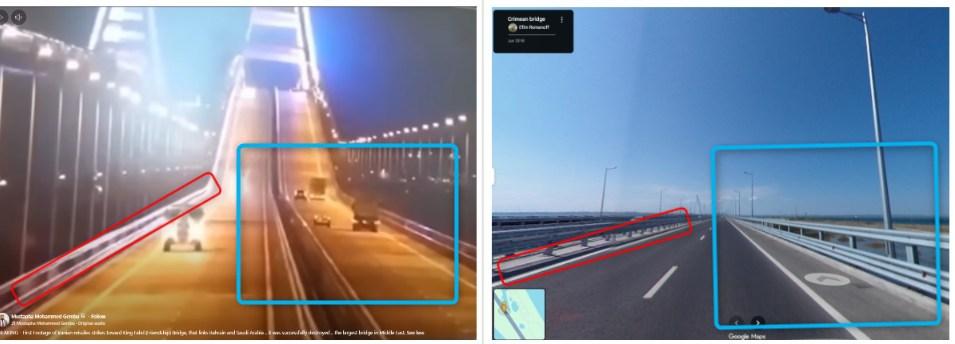
The architectural design of the bridge shown in the CCTV footage, including the road lanes and roadside features, also match that of the Kerch bridge in Crimea.
Russia annexed Crimea from Ukraine in March 2014 and launched a full-scale military invasion of the country in February 2022 (archived here).
AFP Fact Check has also debunked the claim in Arabic here.
Copyright © AFP 2017-2026. Any commercial use of this content requires a subscription. Click here to find out more.
Is there content that you would like AFP to fact-check? Get in touch.
Contact us