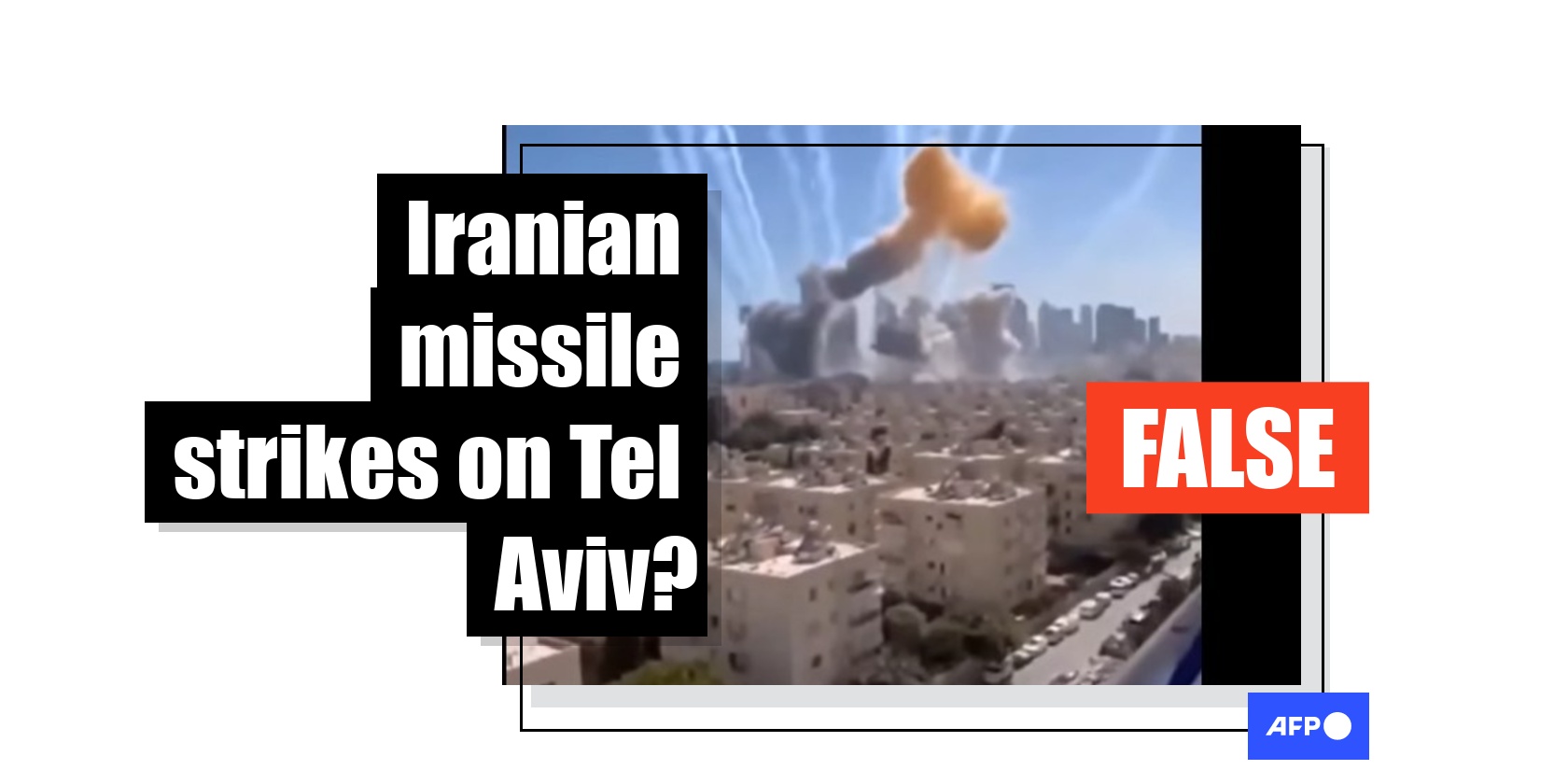
AI-generated video falsely claims to show Iranian missiles hitting Israeli city
- Published on March 6, 2026 at 17:27
- Updated on March 13, 2026 at 17:07
- 3 min read
- By Pierre MOUTOT, AFP France
- Translation and adaptation Oluseyi AWOJULUGBE, AFP Nigeria
Joint Israeli-American airstrikes on Iran in late February triggered a war in the Middle East. A video widely shared on social media claims to show a series of missile strikes on the Israeli city of Tel Aviv, purportedly fired by Iran as part of its regional retaliation. However, the video was generated using artificial intelligence tools, and there is no evidence of the depicted bombing.
“Crazy footage of Iranian cluster Warhead missiles Hitting Tev Aviv hard (sic),” reads a Facebook post published on March 3, 2026, and shared more than 170 times.
The post includes a clip that appears to show a barrage of missiles striking a dense urban area, leaving trails of smoke.
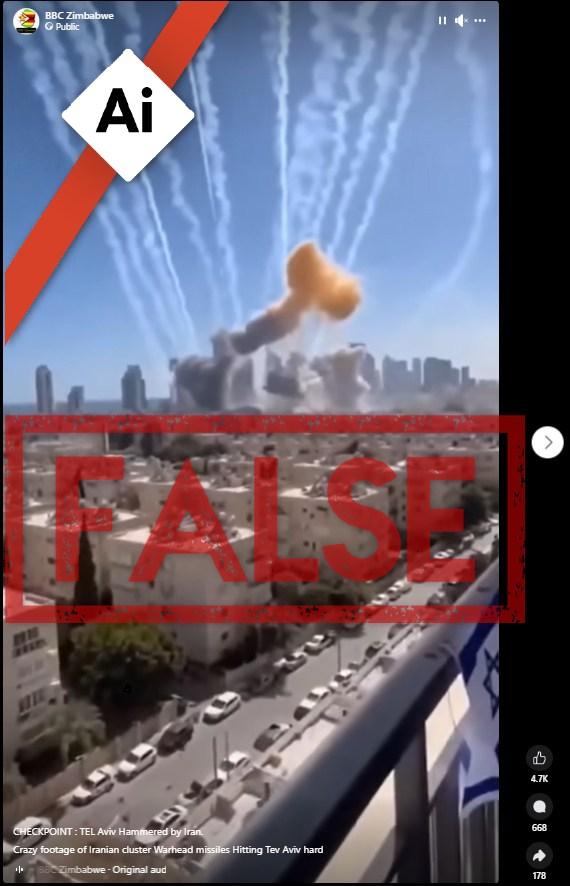
The video has been widely shared in other languages, including French, Arabic, Spanish and German.
Tel Aviv has been targeted several times, both by Iran and its ally, the Lebanese Shiite militia Hezbollah, since the war began on February 28, 2026 (archived here).
The Iranian state-run Foundation of Martyrs and Veterans Affairs, run by the Iranian government, said on March 4, 2026, that over 1,200 people have been killed so far (archived here). AFP has been unable to verify this.
The war has also spread to other Gulf countries, including Kuwait, Saudi Arabia and Azerbaijan (archived here, here and here).
However, the video claiming to show missile attacks on Tel Aviv does not accurately depict current events.
AI-generated video
Reverse image searches using keyframes from the clip found no credible media reports or other visuals matching the scenes from the video. AFP correspondents on the ground also did not witness the supposed strike.
But the video contains several visual inconsistencies typical of AI-generated content.
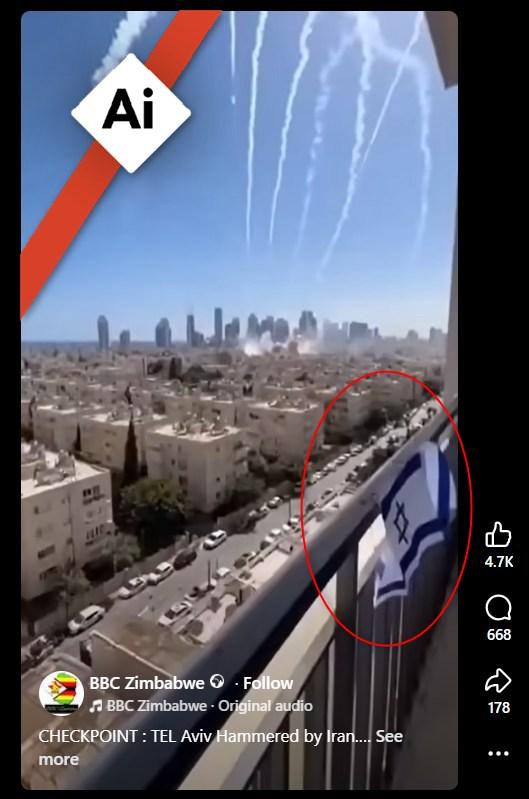
While the post does not include details of when and where the video was shot, a lone Israeli flag, oddly positioned on a balcony, appears to be hanging by itself.
Flags often appear in AI-generated content when a country is mentioned in the prompt, as they provide an easy visual cue.
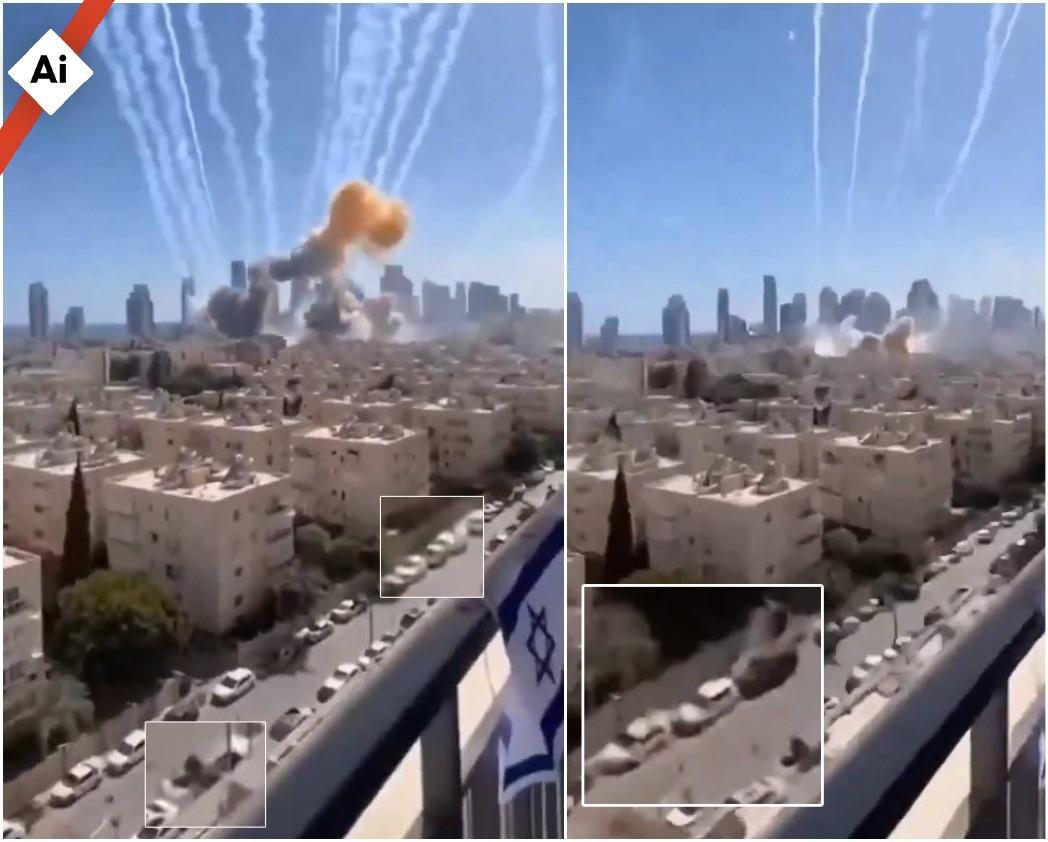
The footage gives the impression it was recorded using a mobile phone, and zooms in at the beginning to focus on the area of the missile impact. However, zooming out, the cars take on distorted shapes, with some appearing stuck together, and others half-formed.
Curiously, the video does not contain the sound of air-raid sirens, which can be heard in videos of other strikes that have hit Israel.
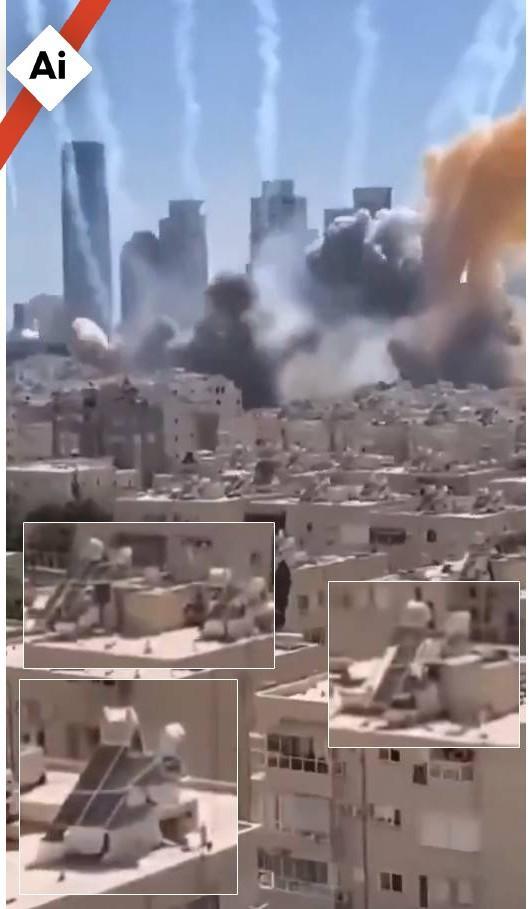
The roofs of the buildings also appear to have unusually uniform solar panels placed in the exact spot on each building, some of them looking distorted.
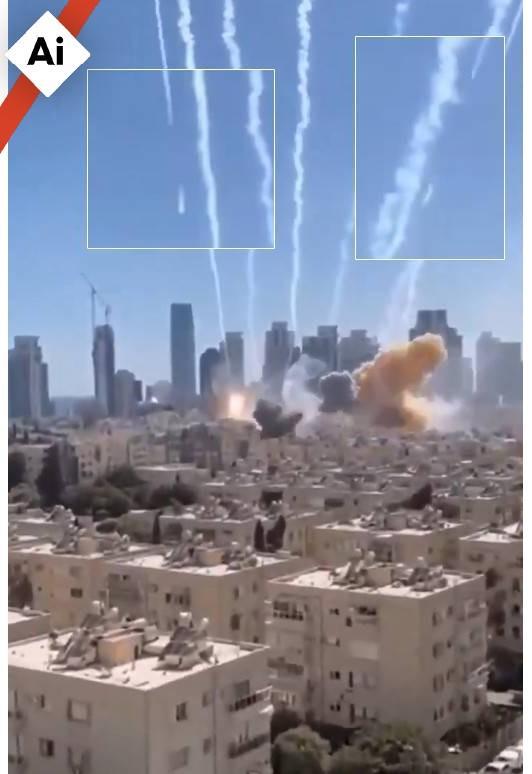
Additionally, the smoke trails from the missiles also break up in some spots.
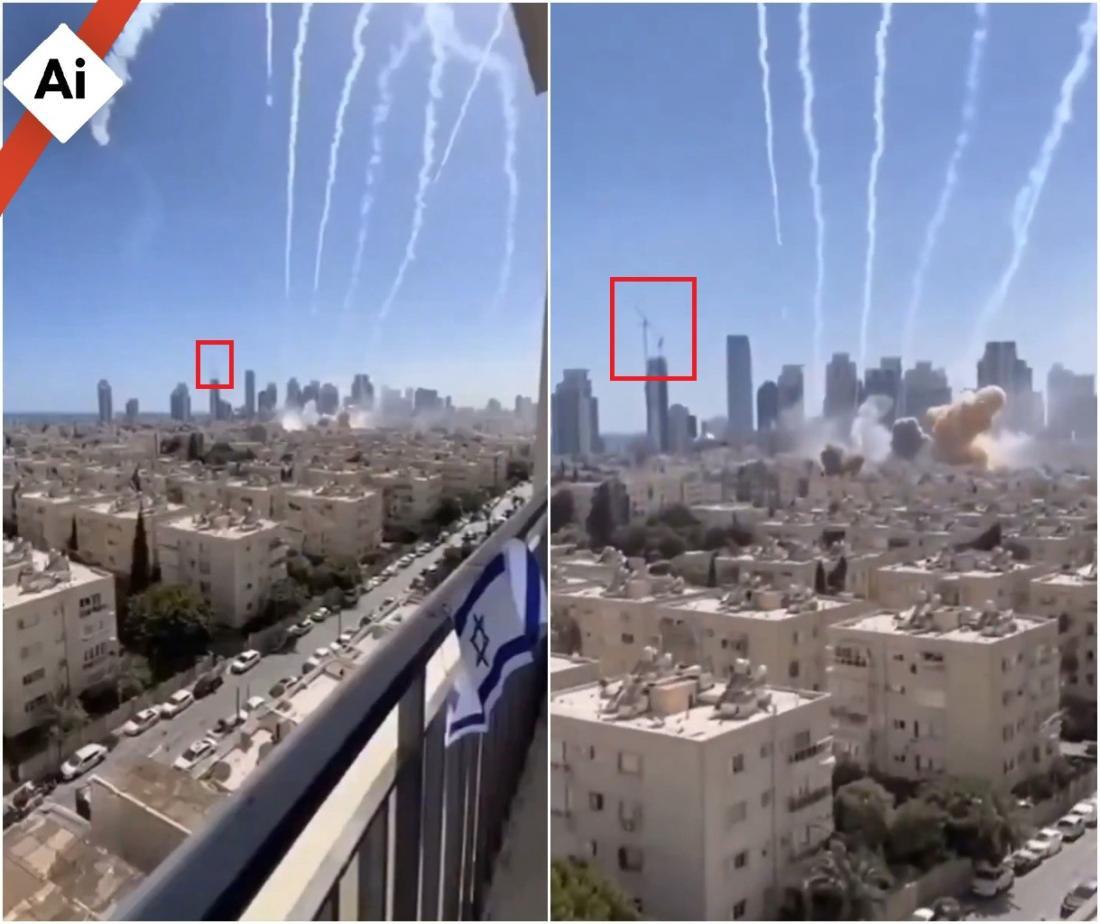
Finally, two construction cranes suddenly appear in the footage the moment it zooms in on the impact area.
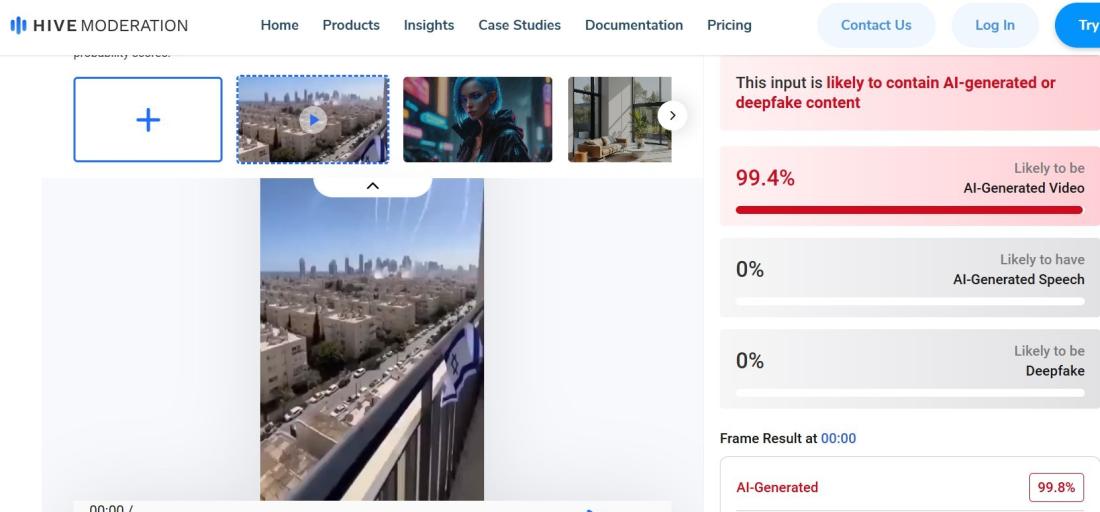
An analysis of the video using the Hive Moderation AI detection tool suggested a 99 percent probability that it was digitally created.
AFP Fact Check also debunked the claim in French and found that Grok, the AI chatbot on X, helped amplify the video. It repeatedly said that “the video is real” when French users asked about the clip’s authenticity.
This is not the first time the chatbot has made such errors. It has previously provided incorrect information about the conflict in Gaza (archived here).
Find more debunked claims related to the ongoing Middle East war here.
Updated to correct bylineMarch 13, 2026 Updated to correct byline
Copyright © AFP 2017-2026. Any commercial use of this content requires a subscription. Click here to find out more.
Is there content that you would like AFP to fact-check? Get in touch.
Contact us