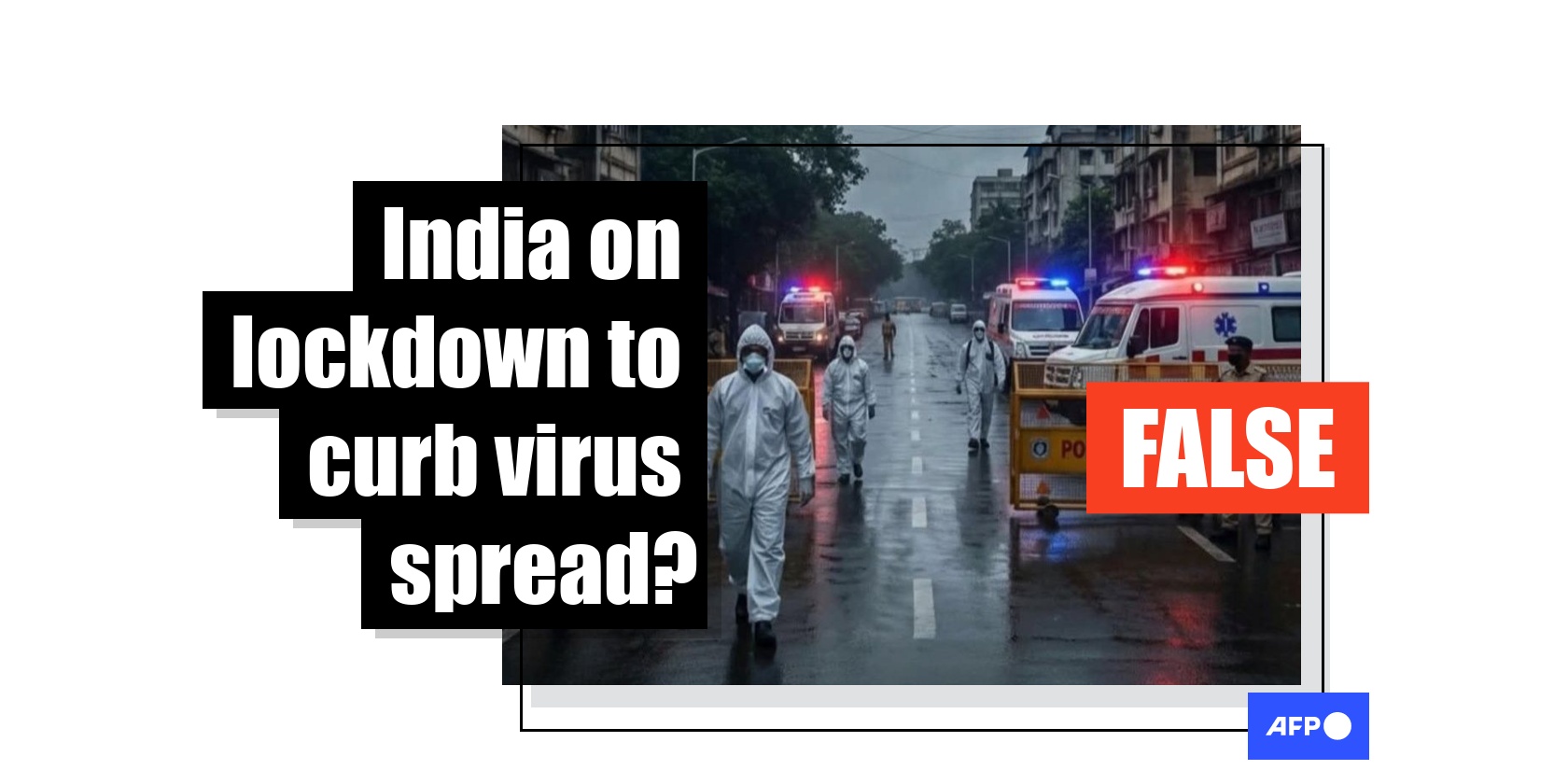
Posts leap on Nipah outbreak in India to spread false lockdown claim
- Published on February 2, 2026 at 03:33
- 3 min read
- By Raevathi SUPRAMANIAM, AFP Malaysia
Indian authorities said they ensured a "timely containment" of the deadly Nipah virus after two cases were confirmed in West Bengal state in December, but there is no truth to a claim circulating on social media alongside an AI-generated image that an emergency lockdown had been implemented. The health ministry said no additional cases of the virus had been detected, and the World Health Organization (WHO) said it does not recommend any travel or trade restrictions.
"Indian authorities issued an emergency lockdown order after the Nipah virus was detected in several areas," reads part of a Malay-language Facebook post shared on January 28, 2026.
The post is accompanied by an image appearing to show armed police officers guarding a street lined with ambulances as healthcare workers in full personal protective equipment walk past.
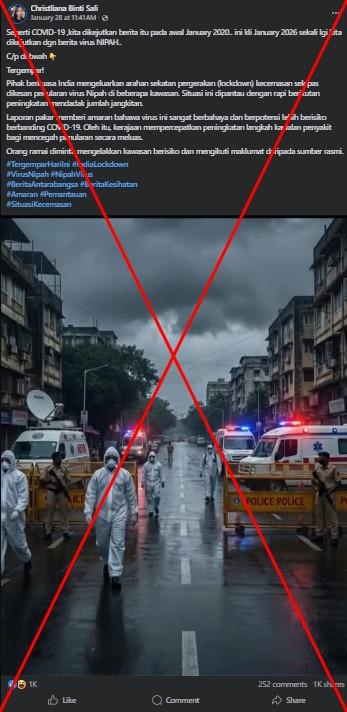
Similar posts were shared elsewhere on Facebook and Instagram after Indian authorities said they had ensured "timely containment" of the deadly Nipah virus after two cases were confirmed in West Bengal state since December (archived link).
The cases marked the third Nipah outbreak in West Bengal, following previous outbreaks in Siliguri in 2001 and Nadia in 2007, according to the WHO. Multiple other outbreaks were also documented in the coastal Kerala state.
Nipah, which spreads from animals to humans, has no vaccine and a fatality rate ranging from 40 to 75 percent.
Fruit bats are the natural carriers of the virus and have been identified as the most likely cause of subsequent outbreaks. Symptoms include high fever, vomiting and respiratory illness, with severe cases causing seizures and brain inflammation leading to coma.
But there have been no official reports or announcements of Indian authorities implementing a lockdown to stop the spread of the virus, as social media posts claimed.
No travel restrictions
A keyword search on Google led to a statement from India's Ministry of Health and Family Welfare published on January 27 (archived link).
While it said two cases had been recorded since December and that public health measures were in place to curb the spread of the virus, it made no mention of any lockdown measures.
"Enhanced surveillance, laboratory testing, and field investigations were undertaken through coordinated efforts of Central and State health agencies, which ensured timely containment of the cases," the ministry said, adding that no additional cases had been detected.
The WHO said its risk assessment of the West Bengal outbreak was at a moderate level, with no evidence of increased human-to-human transmission.
"Based on current evidence, WHO does not recommend any travel or trade restrictions," it said.
AFP reached out to India's health authorities for comment, but a response was not forthcoming. An AFP journalist in Delhi said there has been no lockdown in the city or elsewhere in the country.
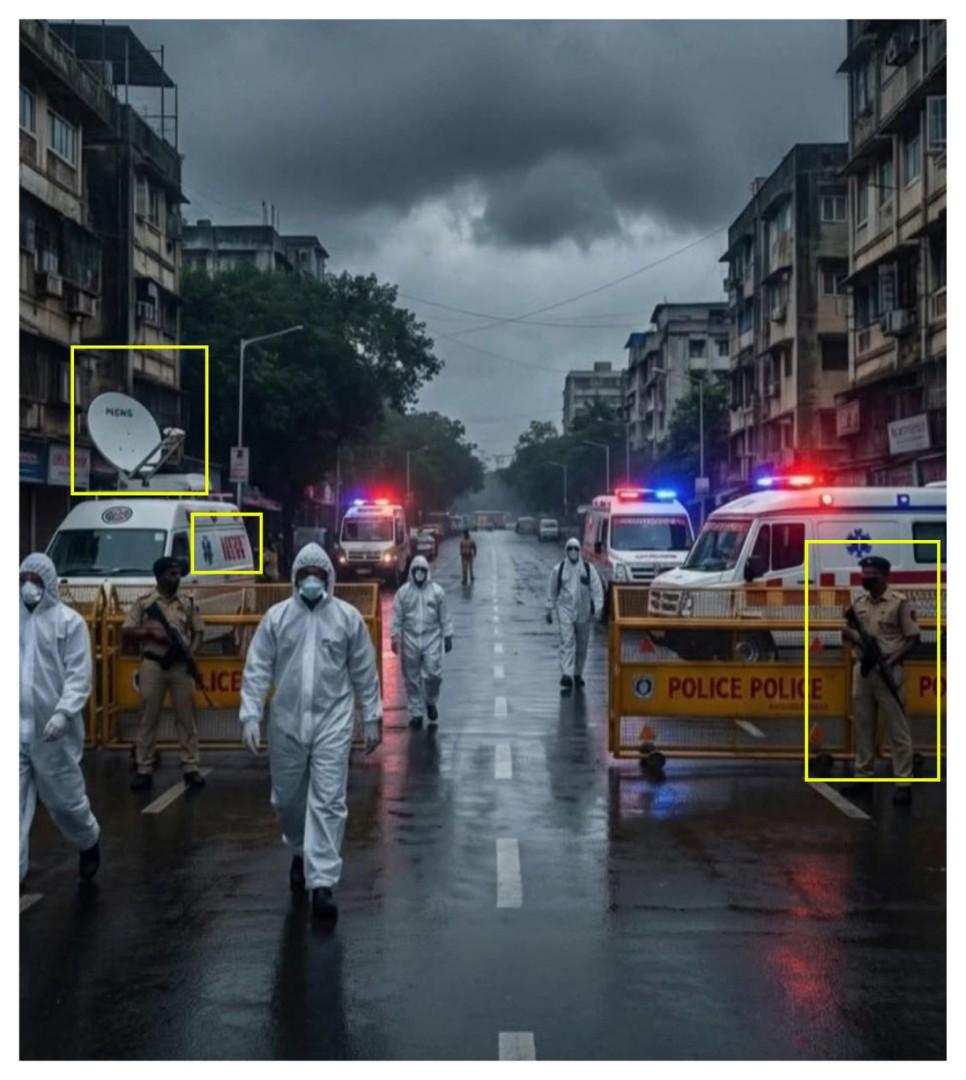
An analysis of the image attached to the false posts using the Hive Moderation detection tool found with a high degree of confidence that the picture is "likely to contain AI-generated or deepfake content” (archived link).

Visual inconsistencies also indicate the image is not authentic.
The van on the left of the image has "ambulance" written on its side but a satellite dish on its roof reads "news". The faces of the two police officers in the image also appear distorted and blurred, features typical of AI-generated content.
AFP has previously debunked other false claims about lockdowns.
Copyright © AFP 2017-2026. Any commercial use of this content requires a subscription. Click here to find out more.
Is there content that you would like AFP to fact-check? Get in touch.
Contact us