Videos mislead on risks of RNA rabies vaccine for pets
- Published on December 16, 2025 at 20:32
- 4 min read
- By Marisha GOLDHAMER, AFP USA
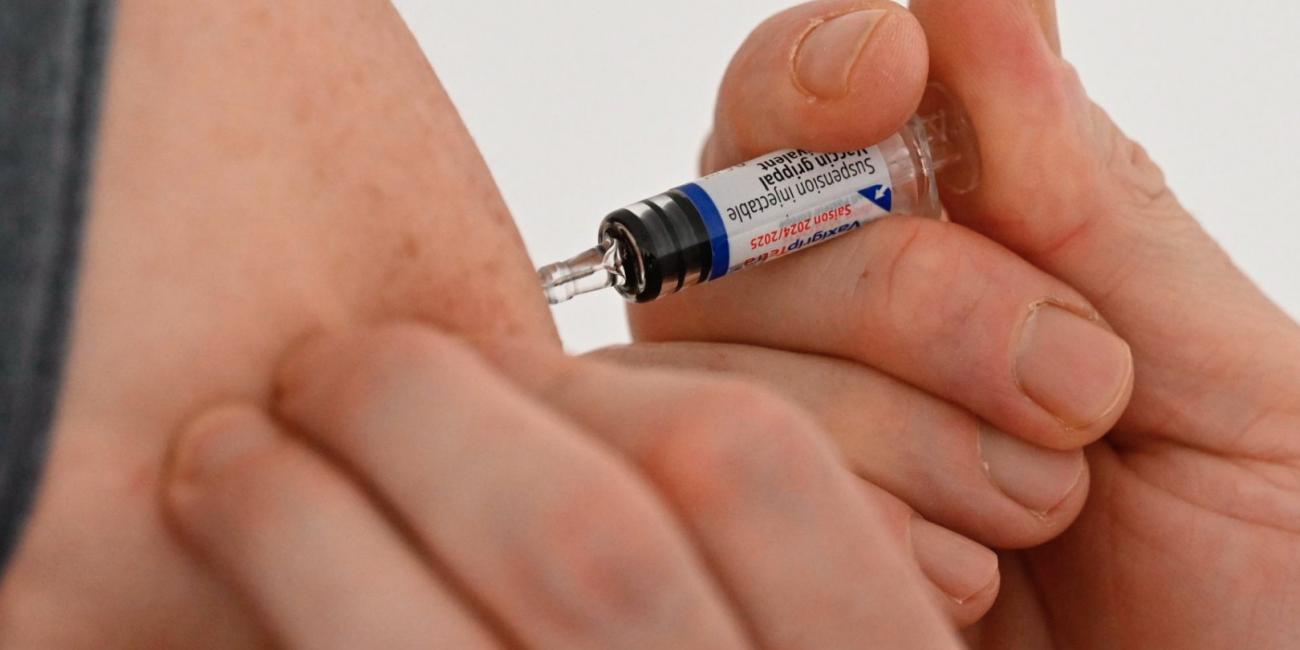
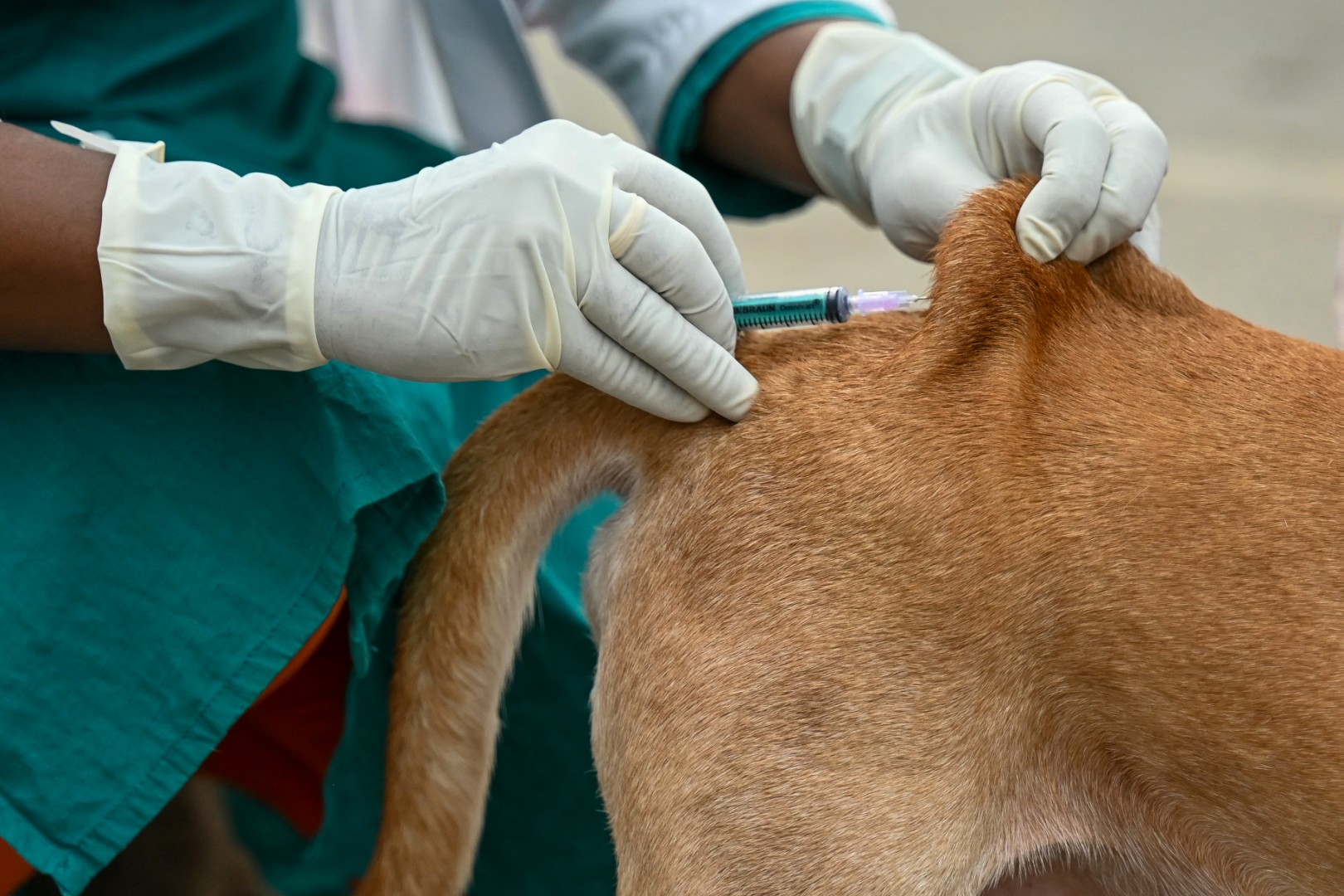
Surveys show vaccine hesitancy among pet owners in the United States is rising, leaving both animals and people at greater risk for zoonotic diseases. On social media, influencers are warning against a vaccine that uses RNA particle technology to protect against rabies, but veterinarians in the United States and Canada say the shot was thoroughly tested and designed to trigger fewer adverse reactions.
"The new rabies shot is even more lethal," says text over a video shared to Instagram on November 12, 2025.
The clip features Judy Morgan discussing Merck's Nobivac NXT rabies vaccine, which she claims veterinarians are rolling out "across the United States."
Morgan first uploaded the short in September to YouTube where her profile says she is an integrative veterinarian who recommends pet owners minimize the use of vaccinations.
In the video, she appears to be reading from a commentary published September 1 on a Canadian website titled: "First they came for us. Now it's our pets!"
Around the same time Sherry Tenpenny, an osteopathic physician AFP has repeatedly fact-checked for spreading vaccine misinformation, was also warning her thousands of followers about the new rabies vaccines.
In a video shared on X, she claimed that when she asked her homeopathic veterinarian if the shot would cause rabies to spread to humans he answered: "Nobody knows."


Rabies is a deadly virus that is transmitted through the saliva of an infected animal (archived here). In humans, the virus affects the central nervous system and once a person shows symptoms of the disease, it is almost always fatal (archived here).
Vaccination against rabies is required by most US states for dogs and cats -- typically as a prerequisite to obtaining a pet license (archived here).
The US Centers for Disease Control and Prevention (CDC) says on its website that, despite rabies being well controlled in the United States, some 4,000 animal cases are reported each year and at least 1.6 million Americans seek medical attention for animal bites annually (archived here).
The posts about Merck's new rabies vaccine come as a spokesperson for the CDC told AFP that the agency is tracking 14 potential rabies "outbreaks/unusual events across 21 states."
Six human deaths from rabies were reported since September 2024, the December 12 email said.
Before 1960, several hundred Americans died of rabies each year, but the CDC credits routine vaccination of pets, animal control programs and the availability of post-exposure prophylaxis treatment for pushing that number down to fewer than 10 annually (archived here).
However, a 2023 paper in the journal Vaccine showed some 52 percent of dog owners exhibit some degree of canine vaccine hesitancy (archived here) -- a trend American Veterinary Medical Association President Michael Bailey attributed to a "deeply troubling" rise in online misinformation (archived here).
He encouraged pet owners to speak with their veterinarians about any concerns but said serious vaccine reactions are "exceedingly rare" and "the benefits of disease prevention far outweigh these risks."
"All veterinary vaccines undergo rigorous testing by the US Department of Agriculture (USDA) for safety and efficacy before they reach the market," he said in a statement sent by email on December 12, 2025.
Self-amplifying RNA technology
Merck developed several vaccines using self-amplifying RNA particle technology under the Nobivac NXT name, including one against feline leukemia virus and another against canine flu (archived here, here and here).
Its rabies shot was licensed by the USDA, and Merck pointed AFP to a peer-reviewed paper from employees of Merck Animal Health describing the safety of the vaccine (archived here and here).
But, Morgan is mistaken that the vaccine is currently in use in the United States.
In a statement sent by email on December 12, Merck said that "the vaccine is not yet commercially available in the US due to contractual obligations." It was, however, made available in Canada in June 2024 (archived here).
Tracy Fisher, president of the Canadian Veterinary Medical Association (archived here), said: "The Nobivac NXT has been well trialed, works very well, and was designed to cause fewer reactions than conventional vaccines."
She told AFP that the key advantage of the new technology over existing vaccines for rabies is that it does not require any adjuvants -- the ingredients added to inoculations that help stimulate immune response (archived here).
"The most common allergic reactions we see with conventional rabies vaccines are to the adjuvants used so it is predicted this vaccine will cause fewer side effects," she said in a December 11 email.
She said that while no vaccine is entirely without risk, the safety profile of the RNA vaccine is "similar to other products on the market."
The Canadian Food Inspection Agency (CFIA) said short-lasting side effects are common in pets following vaccination.
In a December 16 email it said post-licensing reports in Canada show the most common side effects following the Nobivac NXT rabies vaccine were "anorexia, vomiting and lethargy."
No risk to owners
Tenpenny's assertion that the vaccinated animal could somehow pass on rabies to its owner or other animals is false. The RNA vaccine does not contain any live virus.
CFIA said: "There is no evidence to support that the vaccine can lead to rabies exposure to humans or other pets."
This was also confirmed by John Ellis, professor of virology and microbiology at the University of Saskatchewan Western College of Veterinary Medicine (archived here).
The RNA vaccine "can't make rabies virus because it doesn't have all the rabies virus genes," he said in a December 11 interview. "Even though it's in the form of a particle, it's a crippled particle that's only going to stimulate the immune system for the body to make more copies of that one protein that stimulates the immune response."
This response is broad and can allow for a smaller dose of the vaccine to be given, he said.
Read more of AFP's reporting on vaccine misinformation here.
Copyright © AFP 2017-2026. Any commercial use of this content requires a subscription. Click here to find out more.
Is there content that you would like AFP to fact-check? Get in touch.
Contact us