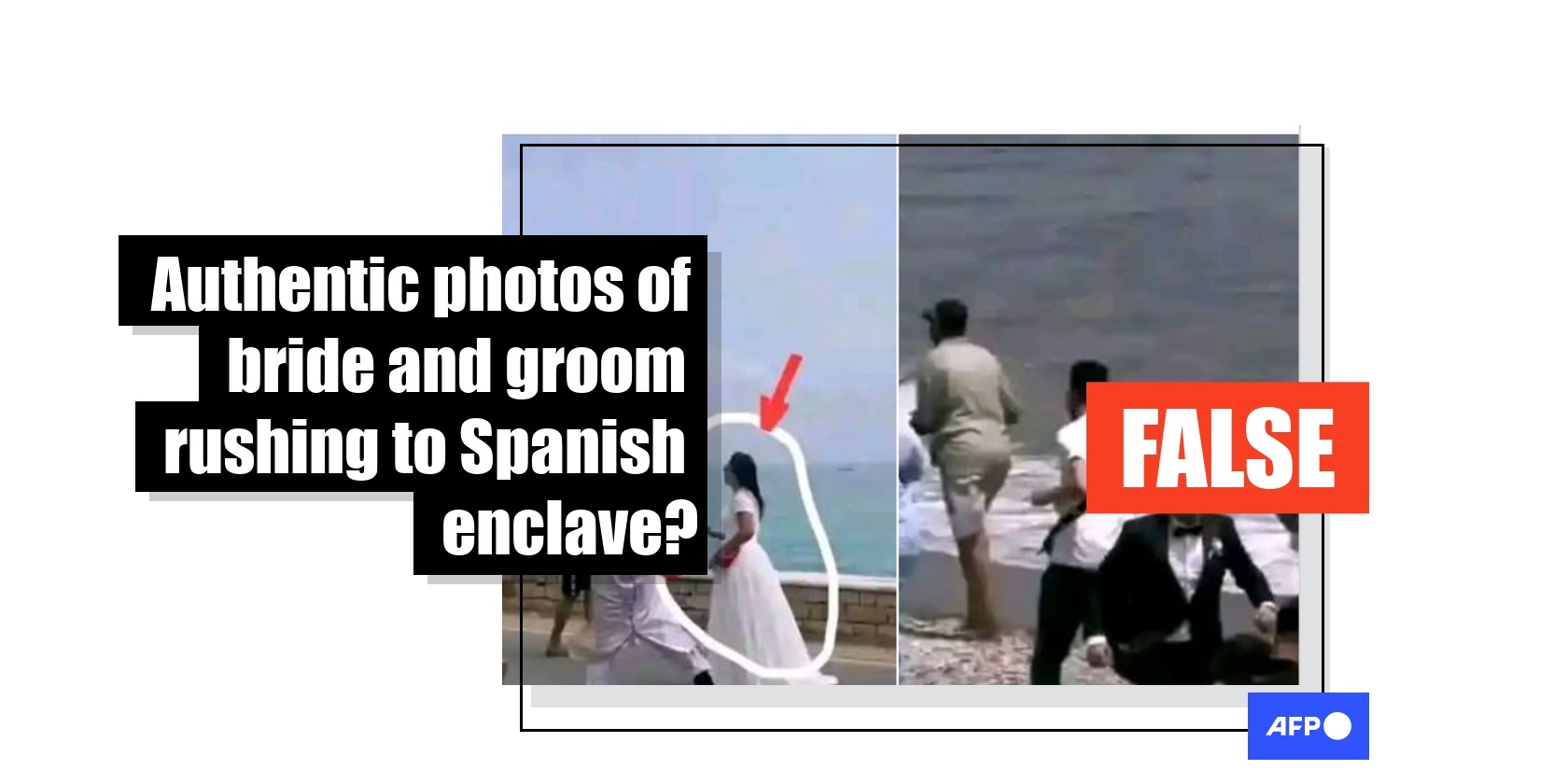
Images of Moroccan couple abandoning wedding to enter Ceuta are fake
- Published on August 11, 2026 at 14:14
- 4 min read
- By Cintia NABI CABRAL, Tolera FIKRU GEMTA, AFP France, AFP Ethiopia
Tens of thousands of migrants flooded the Spanish enclave of Ceuta from Morocco in late July 2026, but images widely claimed on social media to show a newlywed Moroccan couple abandoning their wedding to head for the border are false. AFP found no evidence to support the story and established that the visuals were digitally altered using AI tools.
The post shared on Facebook on August 1, 2026, in English reads: “Moroccan couple who was about to get married learned that the border between Morocco and Spain had opened.”
“They ended up canceling their wedding and left the ceremony even in front of their guest's, to try their luck and cross over (sic),” adds the post.
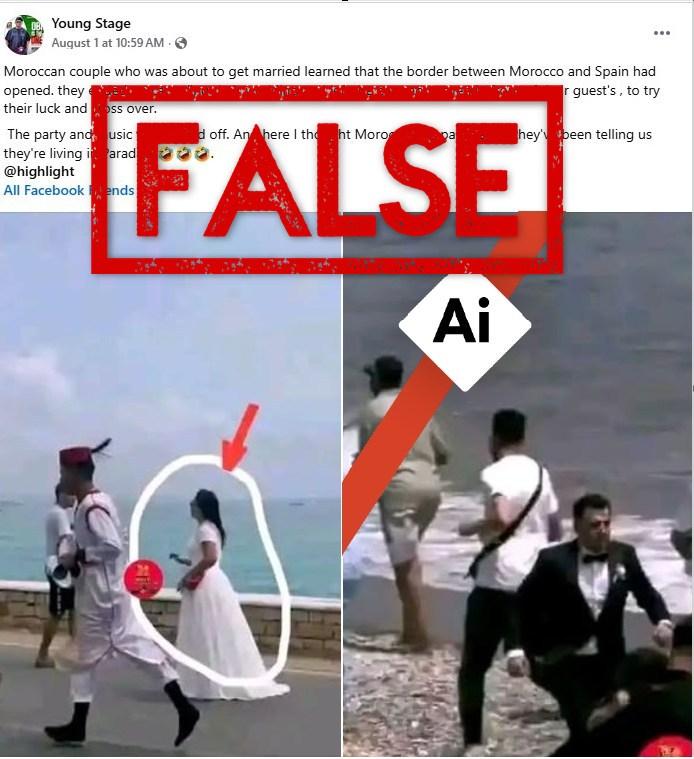
The post includes two images: one shows a bride and groom at the seaside, while the second appears to depict a woman wearing a wedding gown on an ocean promenade.
Similar posts were shared in English on X here and on Facebook here and here.
The claims followed extraordinary scenes in late July in which tens of thousands of people, mostly Moroccans, rushed the Spanish enclave in North Africa on foot or by swimming (archived here and here). Spain sent troops to bolster security as the influx -- the territory's largest-ever mass crossing -- drove the European nation into an international crisis (archived here).
Authorities said the incident claimed dozens of lives and that 70,000 of the 72,000 migrants who reached Ceuta have returned to Morocco (archived here).
But while many authentic visuals documented the unprecedented surge of migrants, AFP has fact-checked several out-of-context photos and videos that have been misrepresented on social media.
However, we found no news report or other factual evidence to support the online claims about a Moroccan couple ditching their wedding to enter Ceuta.
Moreover, the images circulating online are altered.
The first image
Reverse image searches for the scene of the bridal couple on a crowded beach led to a video of similar events posted on July 30 with a watermark that reads: "Zoom.fnideq" (archived here).
Further keyword searches for the online name revealed the video was posted on the same day by Zoom Fnideq -- a page dedicated to Fnideq, a town in northern Morocco near Ceuta -- on Facebook and Instagram (archived here, here and here).
Descriptions attached to the posts indicated, in Arabic, that the footage showed a father, his wife and their daughter heading toward Ceuta with the hopes of crossing over.
The newlyweds depicted in the image circulating on social media do not appear in the original footage -- indicating that they were edited into the frame.
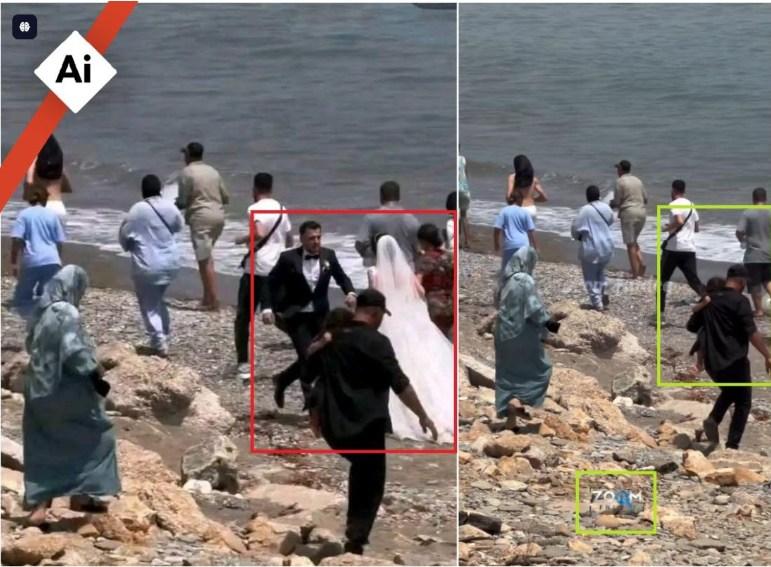
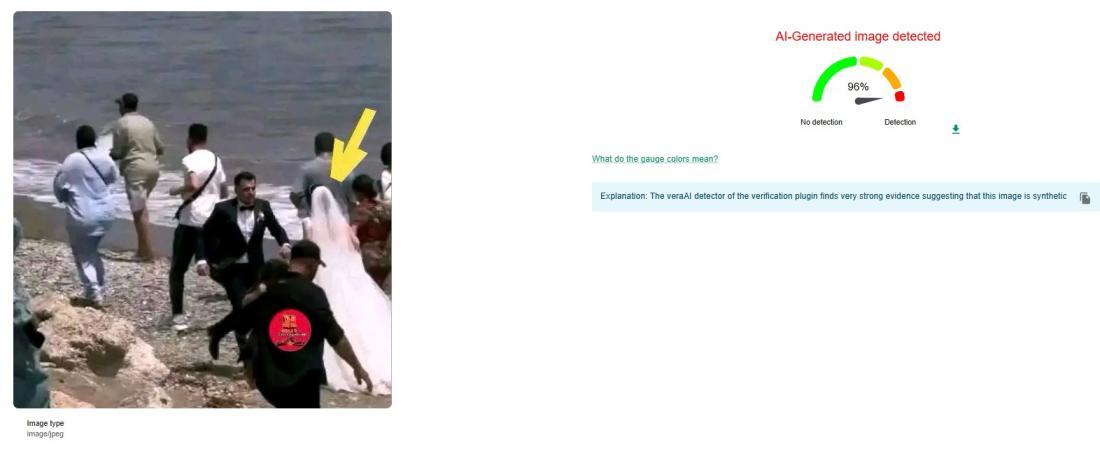
Google's SynthID detection tool found a SynthID in the altered image. This is an invisible watermark that Google says is embedded in AI content made with its technologies.

The InVid-WeVerify tool also found "very strong evidence" that the image was synthetic.
The second image
Additional reverse image searches traced the second image to the Morocco-based outlet "Infosocial.ma," which posted footage of a matching moment on July 30 to Facebook, Instagram and YouTube (archived here, here and here).
The outlet's captions mention Ceuta and refer to a traditional Moroccan musical ensemble that performs at wedding ceremonies, but they do not mention a bride.
The woman in the footage, meanwhile, is wearing a white skirt and pink top; the image depicting her as a bride is altered to portray her in a white wedding dress with a train.
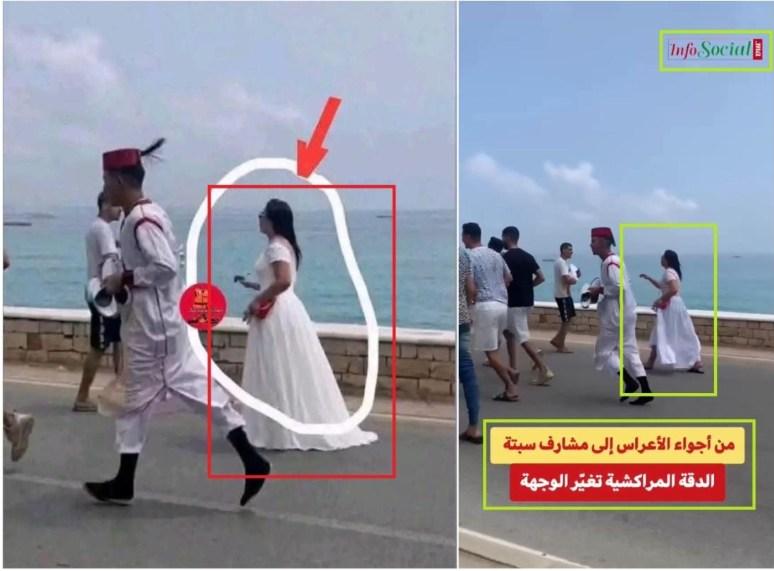
Journalist Samir Daoudi, director of "Infosocial.ma", told AFP Fact Check on August 5 that the video his outlet posted was recorded near the Ceuta border as people moved to cross, but they did not report that the woman was rushing from a wedding.
"Based on the information I have, she is a young woman from Oujda who was there attempting to reach Ceuta. To my knowledge, she was not a bride," Daoudi said.
France 24 also identified the woman as Moroccan influencer Nina Boudkhili and found posts on her Instagram and YouTube pages showing her in the same white skirt and pink top (archived here, here, here and here).
Boudkhili confirmed to the outlet that she was not wearing a wedding dress as she joined others in crossing into Ceuta.
AFP has fact-checked other misinformation about migration here.
Copyright © AFP 2017-2026. Any commercial use of this content requires a subscription. Click here to find out more.
Is there content that you would like AFP to fact-check? Get in touch.
Contact us