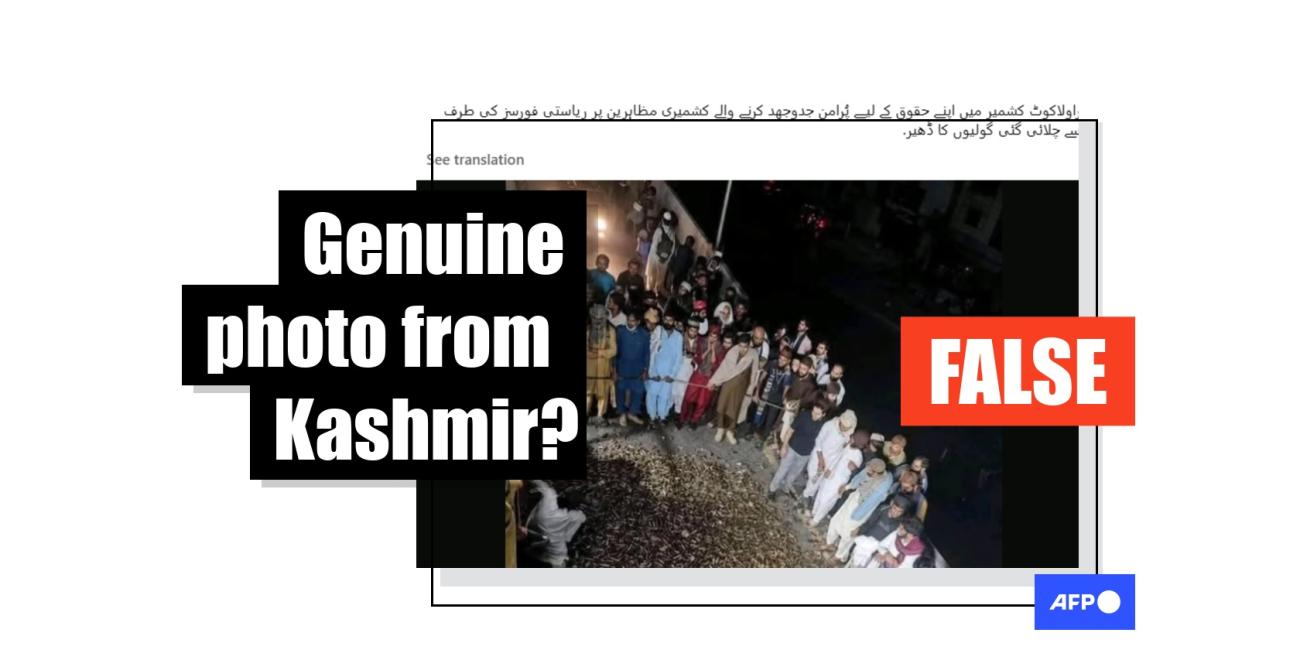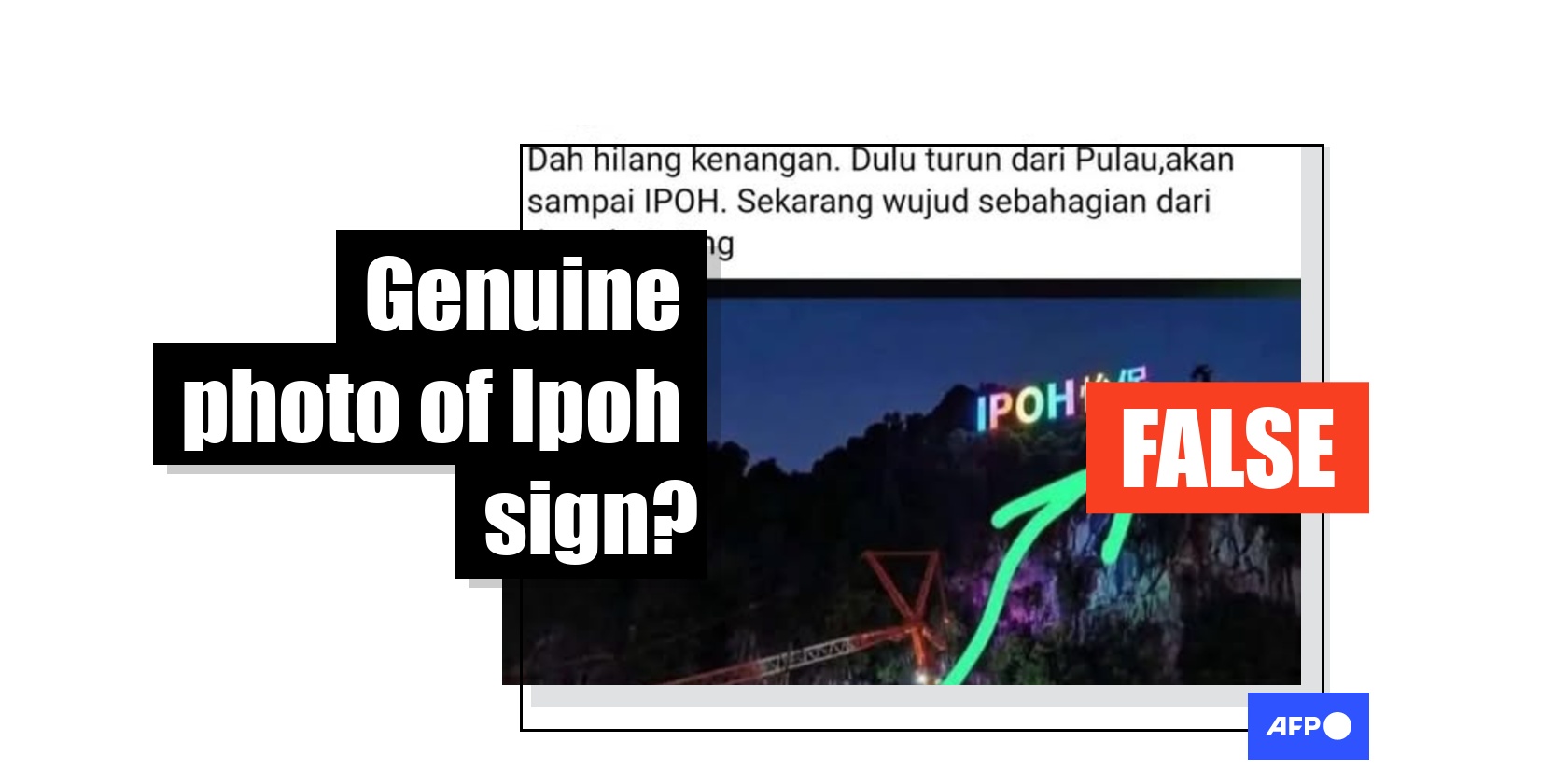
AI-generated image of Chinese-language sign at Malaysian landmark misleads online
- Published on July 26, 2026 at 05:41
- 3 min read
- By Najmi MAMAT, AFP Malaysia
After the Ipoh City Council in Malaysia's Perak state said it took down an iconic landmark bearing its name for maintenance in July 2026, a fabricated image circulated online in posts falsely claiming the sign had been put back up alongside a Chinese-language translation. A detection tool has flagged the image as AI-generated, while the city council has rejected it as fake.
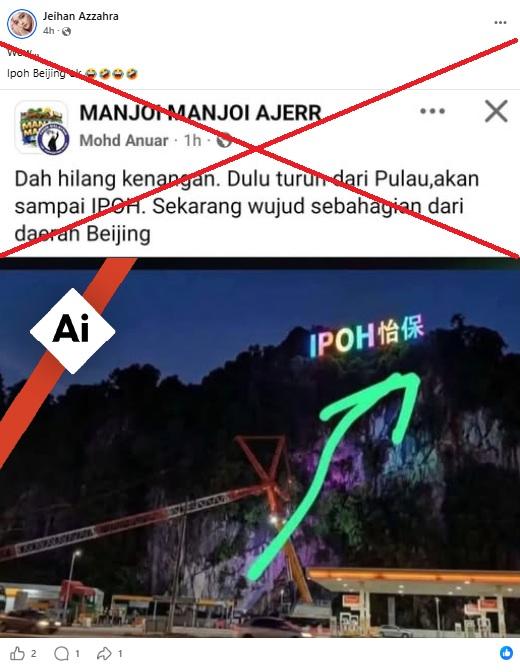
"Wow...Ipoh Beijing ok," reads a Facebook post shared on July 24.
It features a screenshot of another Malay-language post that reads: "The memories are gone. In the past, coming down from the (Penang) island meant arriving in Ipoh. Now, it has become part of the Beijing region."
An attached image shows a large, illuminated sign of the city's name in Malay and in Chinese perched high on a forested limestone cliff at night with a construction crane near a petrol station.
The sign in the image resembles an actual sign that features only the city's name in Malay installed since 2009.
The claim surfaced after the Ipoh city council said in a statement on July 15 that the iconic landmark had been taken down for inspection and will be put back up in August, along with several pictures of cranes taking down the sign (archived link).
Malaysia is a predominantly Malay Muslim country, where ethnic Chinese make up about a fifth of the nation's 34 million people. Racial tensions in the country have heightened of late, with the Southeast Asian nation having held one state election and preparing for another, all while gearing up for a general election, which must be held by 2028 at the latest (archived link).
According to the Ipoh District and Land Office, the population of the city consists of a Chinese majority (archived link).
Some users appear to believe the circulating image is genuine, with one saying: "The Chinese language is not even mentioned in the country's constitution," while another lamented: "Slowly, they are colonising."
The image also spread elsewhere on Facebook and TikTok, but it was in fact manipulated.
OpenAI's detection tool has flagged it was created using the tech giant's model (archived link).

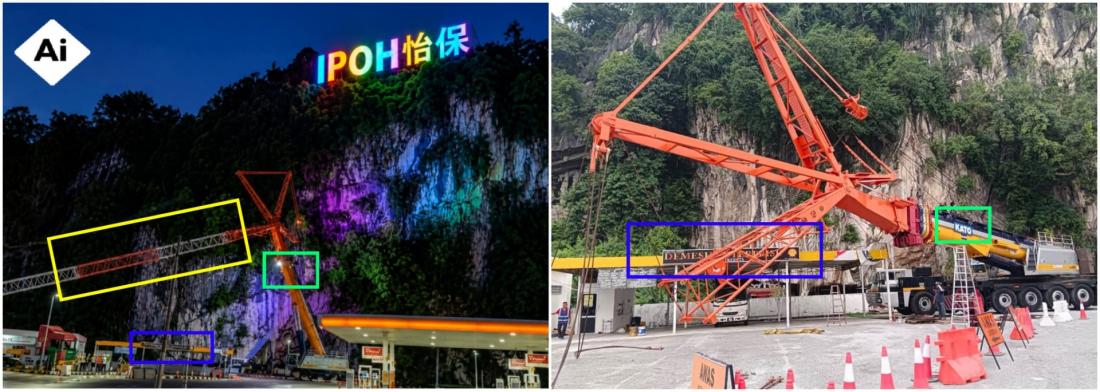
The crane in the image is also different from the one seen in a picture that the Ipoh city council published on its website -- an indication that it had been manipulated. The word on the crane is missing and the vehicle's appearance is different from the original photo. Some of the letters on the signboard are also distorted.
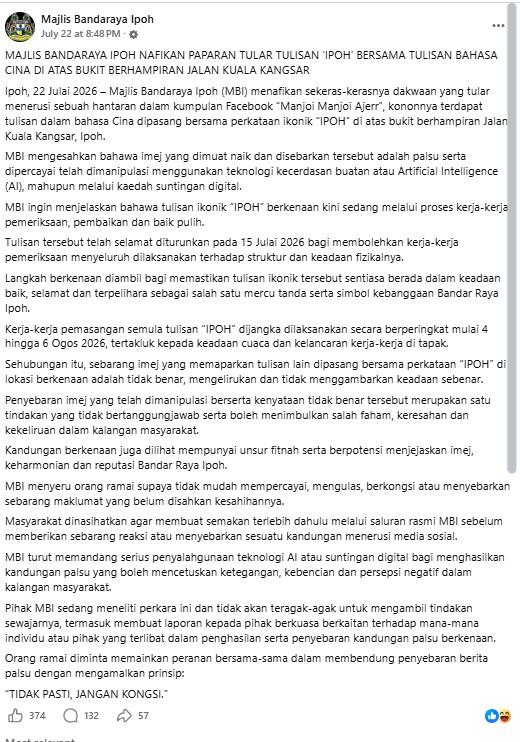
A keyword search on Google found a statement by the Ipoh City Council, posted on its official Facebook page on July 22, which rejected the claim (archived link).
"The Ipoh City Council strongly denies the allegation that went viral through a post in the Facebook group 'Manjoi Manjoi Ajerr', claiming that a Chinese-language sign was installed alongside the iconic word 'IPOH' on the hill near Jalan Kuala Kangsar, Ipoh," it says.
It adds the circulated image is believed to have been manipulated using artificial intelligence or digital editing and stresses it will not hesitate to take appropriate action, including reporting to the authorities.
AFP has previously debunked other false posts related to anti-Chinese sentiment in Malaysia.
Copyright © AFP 2017-2026. Any commercial use of this content requires a subscription. Click here to find out more.
Is there content that you would like AFP to fact-check? Get in touch.
Contact us