Ivermectin is not a recommended treatment for cyclosporiasis
- Published on July 14, 2026 at 23:03
- 3 min read
- By Marisha GOLDHAMER, AFP USA
Health officials in the United States are reporting a record number of cases of cyclosporiasis -- an intestinal illness caused by a microscopic parasite in contaminated produce. But while social media posts from current and former members of the House of Representatives recommend ivermectin to treat infections, experts say the anti-parasitic medication is not effective against the disease and instead recommend a combination of antibiotics.
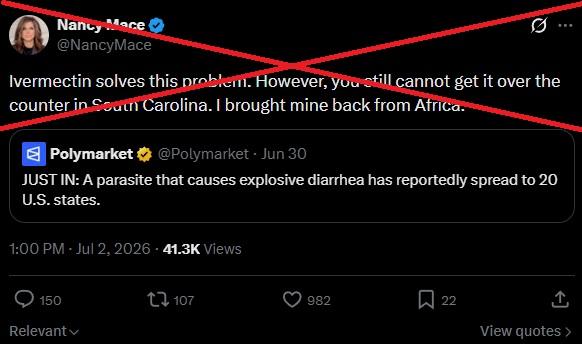
"Ivermectin solves this problem," said a July 2, 2026 post on X from South Carolina Congresswoman Nancy Mace, who lamented that the drug is not available without a prescription in her state.
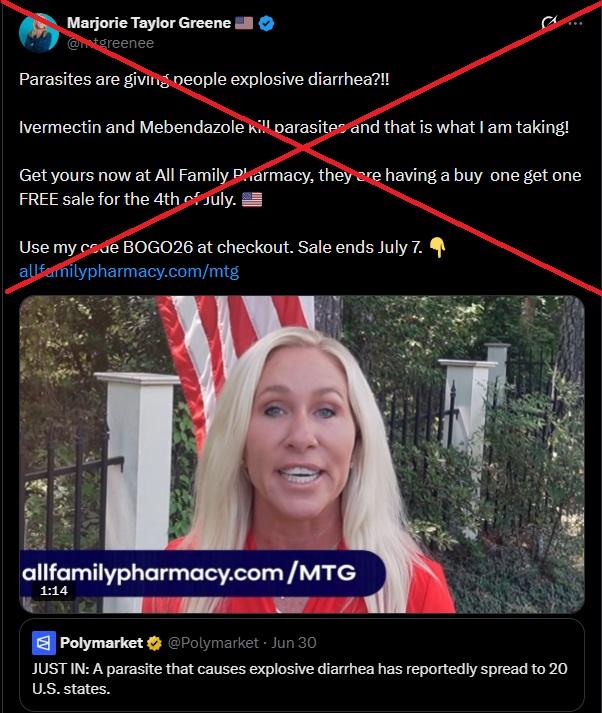
In another post pushing a discount code for an online pharmacy, former Georgia congresswoman Marjorie Taylor Greene added: "Parasites are giving people explosive diarrhea?!! Ivermectin and Mebendazole kill parasites and that is what I am taking!"
The two Republicans were resharing a post from the prediction market Polymarket calling attention to the growing number of states reporting outbreaks.
Similar posts circulated on Facebook as the US Centers for Disease Control and Prevention (CDC) reported domestically acquired cases in 34 states as of July 14, with many suffering severe diarrhea (archived here and here).
Gwen Biggerstaff, deputy director of CDC's Division of Foodborne, Waterborne, and Environmental Diseases, told a July 14 briefing that the agency had confirmed 1,645 cases. She said the true number was "almost certainly higher," with undercounting occurring as people recover without seeking treatment or getting tested for the specific parasite (archived here).
Misinformation about ivermectin has spread regularly since the Covid-19 pandemic, despite clinical trial data failing to demonstrate its effectiveness against the virus (archived here). Greene also previously touted the drug, without evidence, as a treatment for other illnesses including the hantavirus.
The latest claims about its use to treat cyclosporiasis are similarly unfounded.
The US Food and Drug Administration has approved ivermectin to treat parasites and worm diseases. But the drug works by disrupting a parasite's nervous system, and cyclospora cayetanensis are single-celled organisms that lack the cellular structure for ivermectin to be effective (archived here and here).
Kalmia Kniel, a food safety specialist and professor at the University of Delaware (archived here), told AFP in a July 13 email that physicians can prescribe the combination of two types of antibiotics: sulfamethoxazole and trimethoprim. Often abbreviated as TMP-SMX or co-trimoxazole, the combination drugs are sold under the names Bactrim or Septra (archived here, here and here).
Kniel said hydration is also key and that in most cases, cyclosporiasis resolves on its own and individuals recover without treatment.
The CDC did not respond to AFP's request for an updated protocol, but a 2024 article on the agency's website affirms that TMP-SMX is the "treatment of choice for cyclosporiasis" (archived here).
Open investigation
The parasite typically enters the food supply when traces of infected human feces end up in a water source used to grow or clean produce.
"Preventing cyclospora infections requires attention throughout the entire food production system -- from irrigation water quality and agricultural practices to harvesting, processing, transportation and retail distribution," Rodney Rohde, a public health microbiologist and professor at Texas State University, wrote on the university's website (archived here and here).
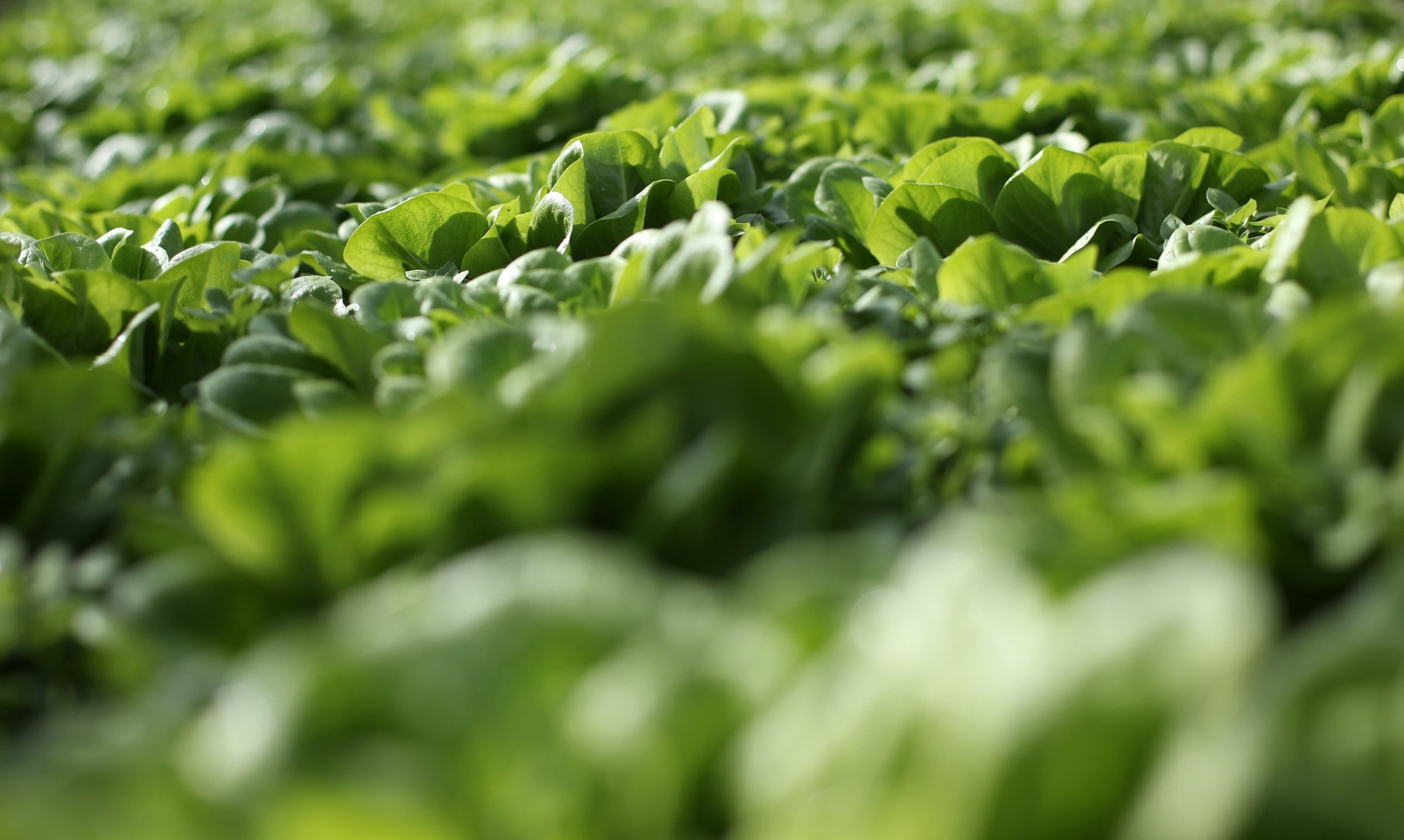
Authorities have not yet identified the specific produce responsible for the outbreak. Health officials in the hard-hit state of Michigan said "available information indicates that lettuce or salad greens may be a potential source of this outbreak," while not ruling out other food items (archived here).
The Washington Post also reported on July 14 that restaurant chain Taco Bell is under investigation for a possible role.
The CDC's Biggerstaff recommended following safe food-handling practices: "Wash your hands and any fresh produce thoroughly under running water before eating, cutting, or cooking."
Cooking produce at a heat higher than 158F (70C) also kills the parasite.
Read more of AFP's reporting on health misinformation here.
Copyright © AFP 2017-2026. Any commercial use of this content requires a subscription. Click here to find out more.
Is there content that you would like AFP to fact-check? Get in touch.
Contact us