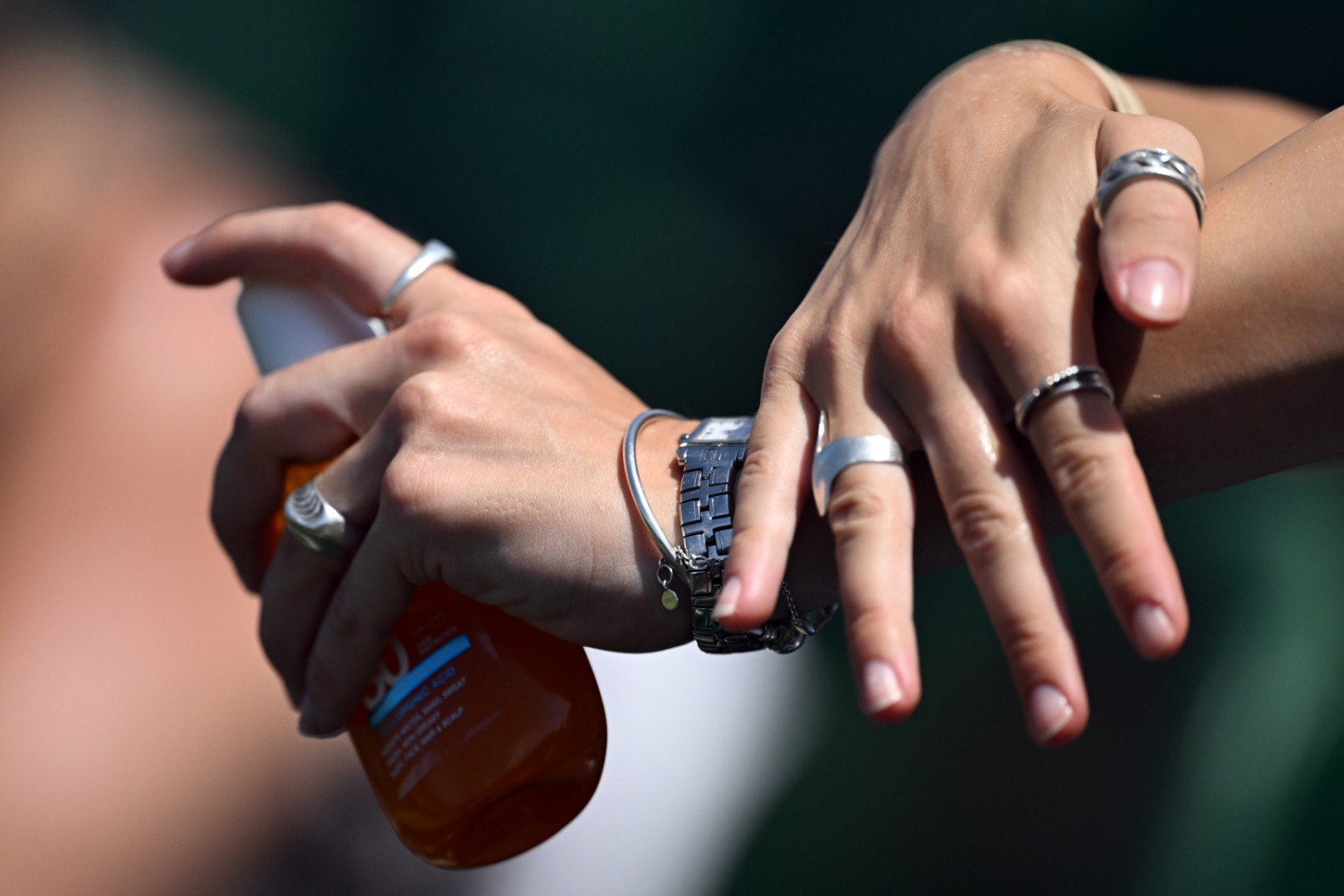
Influencers misinterpret research to claim sunscreen causes cancer
- Published on July 20, 2026 at 22:03
- 3 min read
- By Stevie ROSENFELD, AFP Canada
Dermatologists recommend sunscreen as a top way to prevent skin cancer, but summer 2026 heatwaves have led some social media users pushing homemade alternatives to falsely claim commercial sunblocks can actually trigger the disease. Doctors say that such claims misinterpret dermatological studies, and that homemade concoctions do not provide adequate protection.
"You use sunscreen, you're at a higher risk of skin cancer," said epidemiologist Nicolas Hulscher, who has been repeatedly fact-checked for spreading disinformation about Covid-19 and other health topics, in a July 4, 2026 video on Facebook.
In comments under the post, Hulscher links to several studies related to skin cancer (archived here and here).
Other widespread posts on Facebook, TikTok and Instagram offered instructions for making "homemade sunscreen" as an alternative, often by using ingredients such beef tallow and olive oil.


The claims surfaced in July as record heat scorched Europe and North America. But AFP has previously fact-checked similar narratives about do-it-yourself sunblock formulations.
Unlike commercial products, homemade sunscreens are not evaluated for safety or effectiveness, a representative of Health Canada said in a July 13 email.
The representative told AFP that all sunscreens authorized in Canada are safe when used as instructed, stressing that sun exposure is the leading cause of skin cancer.
Experts attributed the claimed correlation between skin cancer and sunscreen use to increased sun exposure and misuse of the products -- not to sunblock itself.
'Sunscreen paradox'
Several of the posts warning against commercial sunscreen options cited studies that said people who use more sunscreen tend to have higher rates of skin cancer.
Experts, however, said the correlation is easily explained: people who are in the sun more often tend to use more sunscreen and do not always take other precautions or properly reapply.
Dermatologist Ivan Litvinov, the author of one of the studies Hulscher and others referenced -- a 2024 study on the correlation between behavior and skin cancer -- referred to this phenomenon as the "sunscreen paradox" (archived here and here).
While social media influencers have interpreted the research's finding of a correlation between sunscreen use and skin cancer as proof that sunblock causes skin cancer, Litvinov himself attributed to the correlation to the sunscreen paradox and other external factors, such as genetic predisposition to skin cancer.
“Unfortunately, sunscreen is used as permission to tan,” Litvinov told AFP on July 9. “Looking for a safe tan is like looking for a safe cigarette; it doesn’t exist.”
Failure to reapply sunscreen and misapplication can reduce its effectiveness, which may increase cancer risk in users who are in the sun often, Litvinov said.
Cheryl Rosen, a dermatologist at Toronto Western Hospital who studies skin cancer prevention, agreed with Litvinov's assessment of the study and cautioned that correlation does not necessarily equal causation (archived here).
Other research that once pinpointed a correlation between melanoma and sunscreen usage is no longer considered statistically relevant, a 2018 meta-analysis also said (archived here).
Risks of homemade alternatives
Experts and agencies like Health Canada warn against using homemade sunscreens.
Even when self-made creams contain zinc oxide, users cannot accurately determine the sun protection factor (SPF) of the cream and therefore cannot control if it will actually block or dispel ultraviolet (UV) rays. Laboratory tests are required to determine SPF for commercial products.
Rosen said a thick layer of zinc oxide paste can reflect UV rays and prevent sunburns, but other common ingredients like coconut and olive oil dilute the mineral and have no SPF value.
She also noted that, when sunscreen is made at home, users cannot ensure the product's shelf-stable safety.
In a July 14 email to AFP, Falyn Katz, CEO of skin cancer prevention group Melanoma Canada, warned that the online misinformation about sunscreen could increase cases of preventable melanomas and skin cancer (archived here and here).
She recommended combining physical protectants such as tight-woven clothing and wide-brimmed hats with authorized sunscreens to best prevent harm.
Benzene
Some posts also referred to benzene, an industrial chemical linked to leukemia that has surfaced in multiple body products including sunscreen, according to independent scientific testing.
But benzene is not an ingredient purposefully included in sunblock. Rather, it is a common contaminant that can develop in aerosols when certain active ingredients react with each other under specific conditions.
Valisure, a healthcare quality assurance company, tested several sunscreens and after-sun products in 2021 and reported that 27 percent of samples contained benzene, though its methodology was questioned by critics (archived here).
The company filed a citizen petition with the US Food and Drug Administration asking for greater independent testing requirements, and recalls were conducted by several brands following the publication of the results.
Despite the recalls, doctors do not recommend that people get rid of store-bought products, which remain a top method to protect from sun exposure (archived here and here).
Read more of AFP's reporting on health misinformation here.
Copyright © AFP 2017-2026. Any commercial use of this content requires a subscription. Click here to find out more.
Is there content that you would like AFP to fact-check? Get in touch.
Contact us