Malaysia's Rohingya refugees targeted with false 2 million babies claim
- Published on June 24, 2026 at 04:55
- 3 min read
- By AFP Malaysia
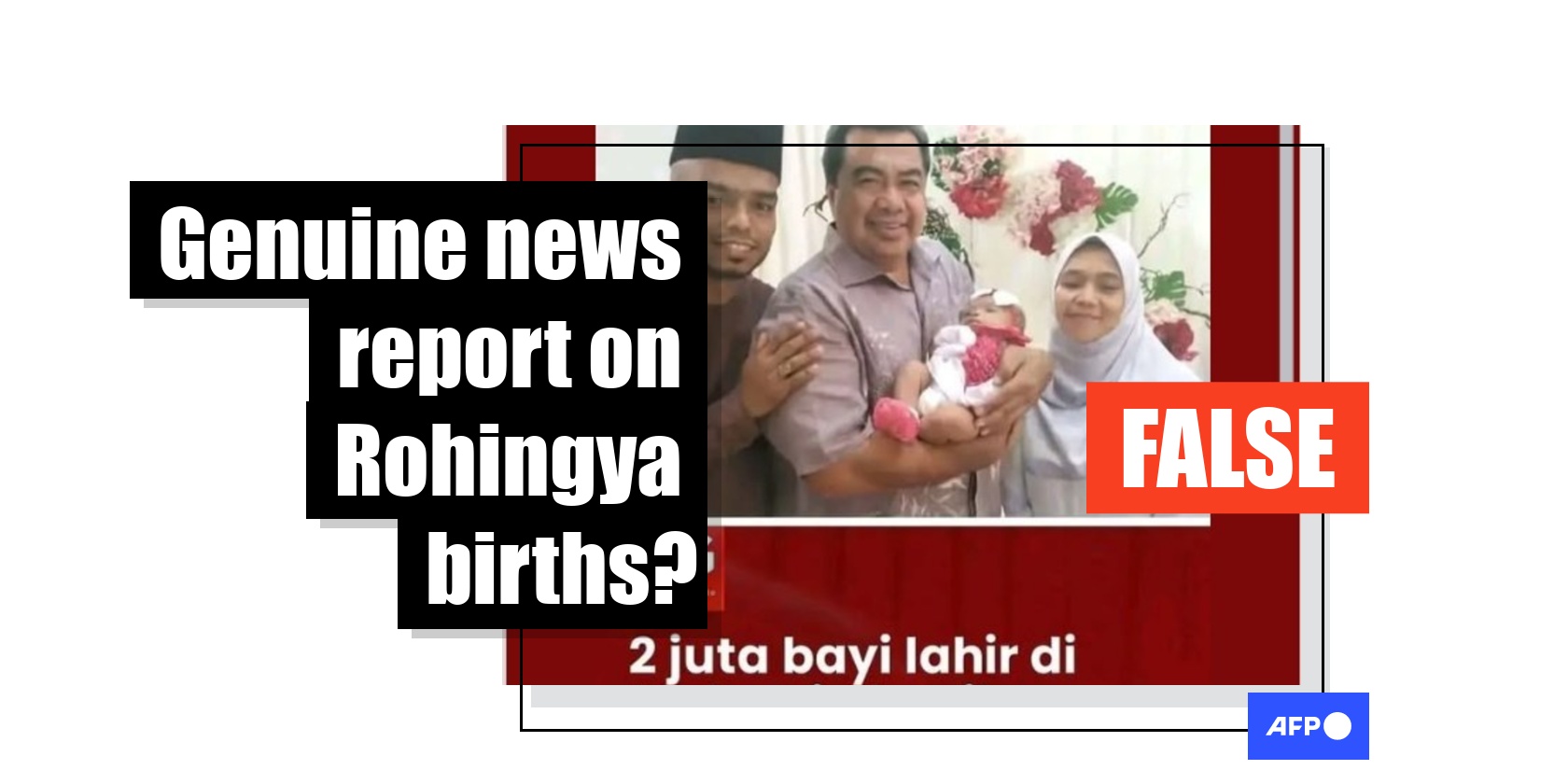
Rohingyas make up the largest refugee population in Malaysia, with the group becoming frequent targets of disinformation, including recent online claims that two million babies were born from Malay-Rohingya marriages. The false posts -- which accused Rohingyas of exploiting government resources -- share a fabricated news report citing made-up population figures that an expert told AFP were "impossible".
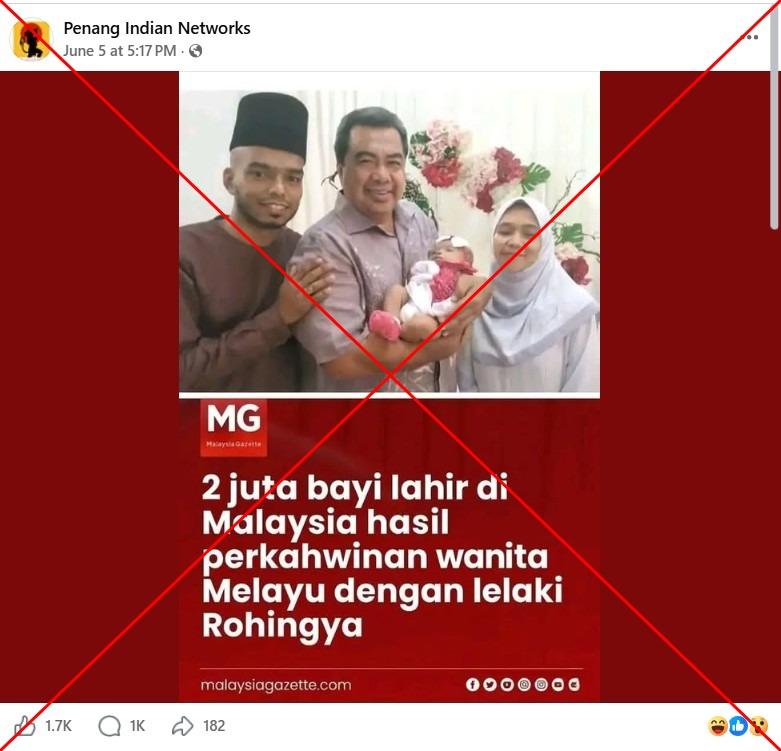
The purported graphic from news outlet Malaysia Gazette was shared on Facebook on June 5, 2026.
It shows a man holding a baby flanked by a woman and another man. The Malay-language headline reads: "Two million babies born in Malaysia from Malay-Rohingya marriages".
Citizenship in Malaysia can be passed down if one parent is a citizen, with the post appearing to suggest Rohingya refugees are seeking citizenship by marrying Malaysians.
The Southeast Asian nation hosts more than 215,000 refugees and asylum seekers registered with the United Nations refugee agency UNHCR (archived link).
More than 126,000 are Rohingya, making them the country's largest refugee population.
Hundreds of thousands of Rohingya Muslims fled violence by the Myanmar army and Buddhist militias, escaping to neighbouring Bangladesh and other countries.
Renewed anti-Rohingya sentiment in Malaysia emerged following a controversy over cattle slaughter during Eid al-Adha celebrations, in which the community was accused of discarding animal waste in nearby drains (archived link).
This sparked a petition calling for the removal of Rohingya refugees from Malaysia, amid what rights groups say is a wider disinformation campaign in which they were accused of demanding land and special rights (archived here and here).
Similar false posts repeating the two million babies claim spread on Facebook, Instagram and TikTok but the supposed news report they include is fabricated.
A Google keyword search found a June 5, 2026 Facebook post by Malaysia Gazette denying that it published the graphic (archived link).
"Malaysia Gazette has never published news like the one shown in the graphic," said the portal.
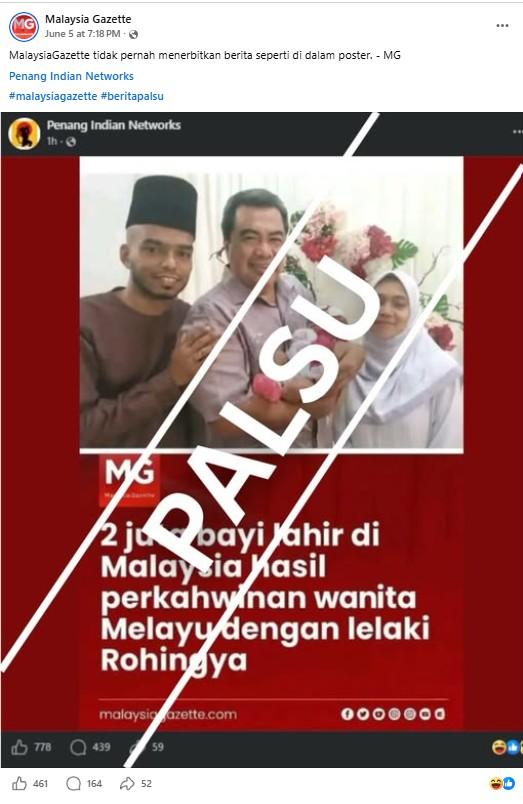
A reverse image search on Yandex found a blog post with a picture of a man resembling one of the persons in the fabricated graphic (archived link).
He is identified as Abdul Hamim Ab Hamid, an ethnic Rohingya who according to reports is currently serving a 12‑year jail sentence for the rape of a married woman (archived link).
AFP is not able to identify the other people in the circulating graphic.
'Impossible number'
Moreover, the two million figure is not supported by official government data.
Department of Statistics Malaysia directed AFP to its latest demographic data, which show around 94,800 total births in the country for the first quarter of 2026 (archived link).
The number covers births for all Malaysians and non-citizens -- and represents a 3.1 percent decline compared to the same period in 2025.
The birth rate has historically been on a downward trend for several decades, according to the document.
A separate publication by the ministry indicates live births stood at around 414,900 in 2024, a drop of nine percent from 455,700 the year before (archived link).
Furthermore, UNHCR data show that only some 64,680 children under the age of 18 are registered with the agency as refugees and asylum seekers in Malaysia (archived link).
Stuart Gietel-Basten, a professor of social science and public policy at the Hong Kong University of Science and Technology, also dismissed the two million babies claim (archived link).
Assuming the scenario did happen over a few years, Gietel-Basten calculated it would mean each Rohingya man "would have an impossible number of children, probably more than 40".
"Of course, the impact on public services would be impossible not to notice, especially if they were concentrated in the areas where Rohingya are more likely to live," he told AFP on June 23.
More of our reporting on misinformation around Rohingya refugees can be found here.
Copyright © AFP 2017-2026. Any commercial use of this content requires a subscription. Click here to find out more.
Is there content that you would like AFP to fact-check? Get in touch.
Contact us