Sri Lankan posts repeat suspect news article's claims north banned Buddhist festivities
- Published on May 30, 2026 at 06:37
- 2 min read
- By Harshana SILVA, AFP Sri Lanka
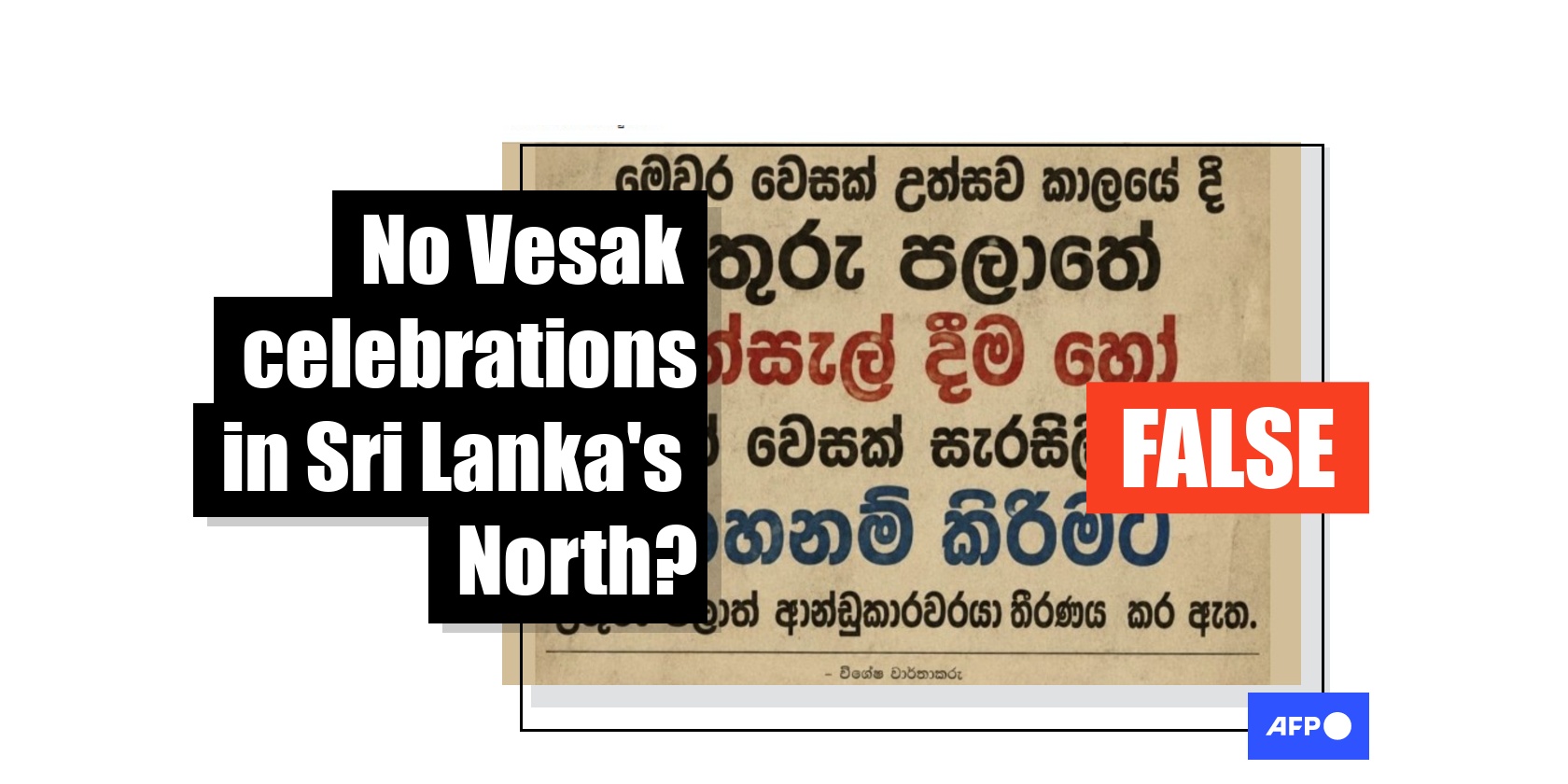
Ahead of a major Buddhist festival in Sri Lanka, a purported newspaper clipping was shared in posts falsely claiming celebrations had been banned in the country's north. Both the Northern Province's governor and a government spokesperson called the claims false, while the image circulating online bears signs of being AI-generated.
The purported news clipping was shared more than 850 times after being posted on Facebook on May 24, 2026.
According to the clipping's Sinhala-language headline, the governor of Sri Lanka's Northern Province has banned "the giving of dansal or other Vesak decorations in the province during this festive season".
Dansal are stalls that offer free food and drink to strangers that often appear during holidays such as Vesak -- one of the Buddhist-majority country's foremost religious festivals, commemorating the birth, enlightenment and death of the Buddha (archived link).
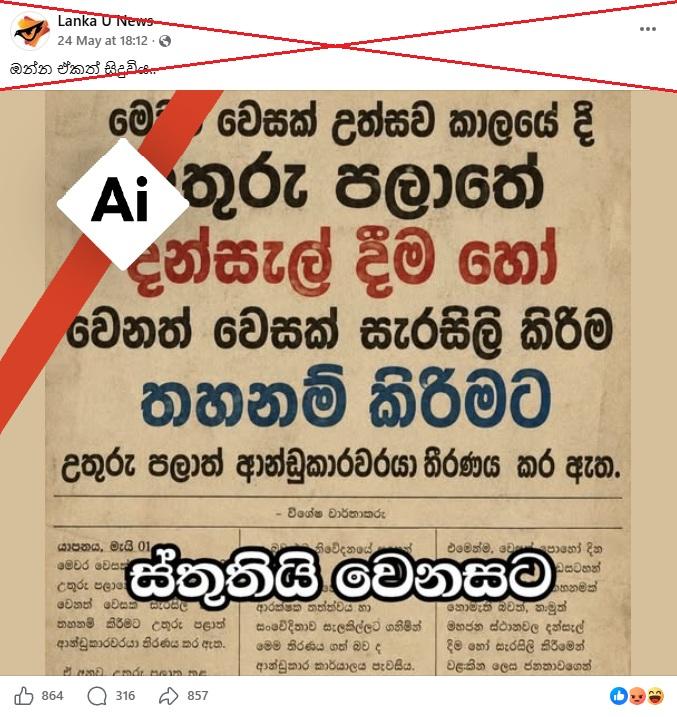
The image was also shared in similar Facebook posts and a group with more than 33,000 members in the days leading up to the State Vesak festival, which runs from May 27 to June 2 (archived link).
It was rescheduled from May 1, following requests from senior Buddhist monks (archived here, here and here).
"Vesak is celebrated abroad, but Sri Lanka is divided into two," reads a comment on one of the circulating posts.
Another says, "Now, does that mean it has become a separate country?"
The posts appear to be referencing Sri Lanka's nearly four-decade civil war between the government and the Tamil Tigers separatist group, which fought a no-holds-barred battle to establish an ethnic minority homeland in the north of the island (archived link). Sri Lanka's predominantly Tamil north bore the brunt of the conflict, which was brought to a bloody conclusion in May 2009.
According to a report from the US-based Center for the Study of Organized Hate think tank, the Tamil minority still faces intimidation and digital threats years after the war ended (archived link).
"Tamil voices online face persistent surveillance, shrinking civic space, and growing Sinhala nationalist pressure," it says.
But there have been no official reports of authorities in the island's north banning celebrations or decorations related to the Buddhist festival.
Moreover, Northern Province Governor Nagalingam Vethanayahan refuted the claims in a statement published by the Department of Government Information (archived link).
"This claim is entirely false and completely without foundation," he said. "I wish to state with full responsibility that no such decision has been taken by the Governor's Secretariat, and that no discussions have taken place in this regard."
Cabinet Spokesperson Nalinda Jayatissa also called the claims "completely false" during a weekly press briefing on May 25 (archived link).
"The Governor has already made a complaint to the Criminal Investigation Department of Police," he said.
The purported news clipping circulating on social media contains spelling and grammatical errors, which are often seen in AI-generated images.
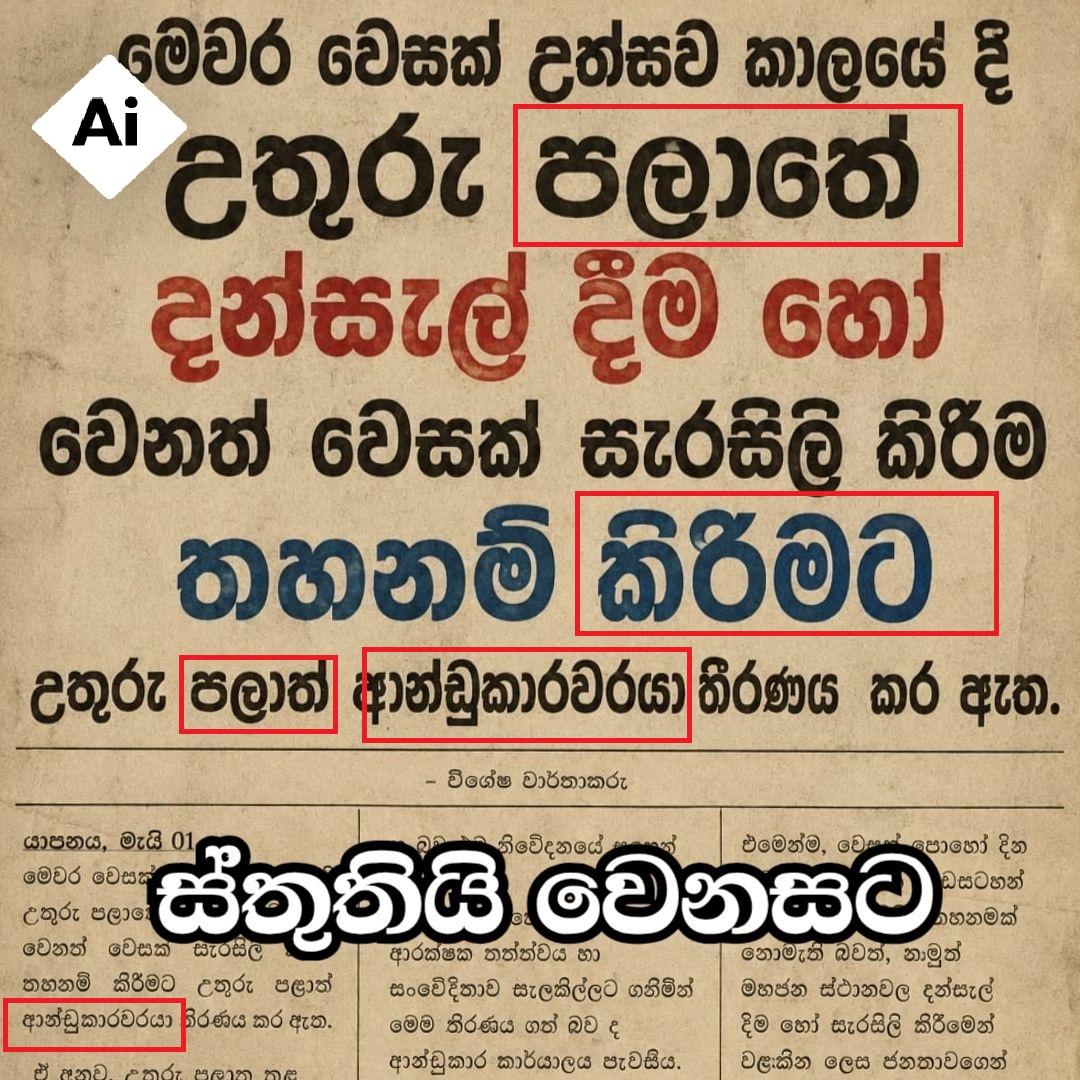
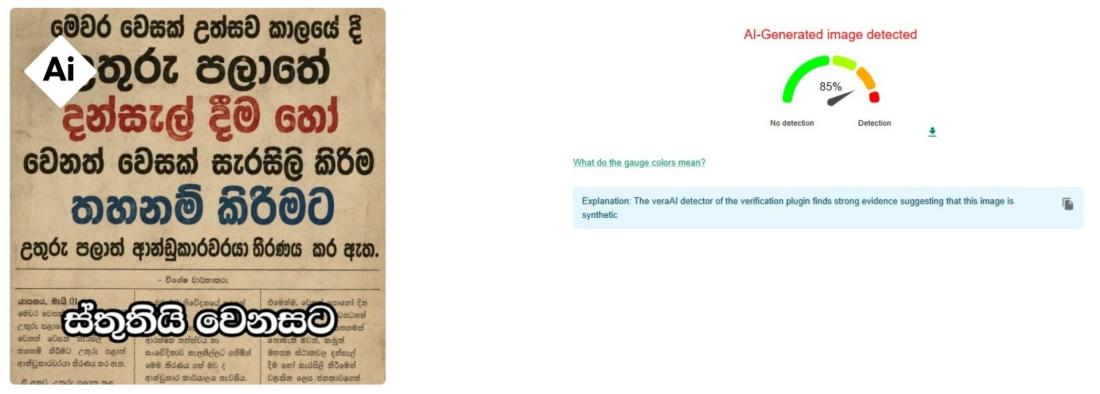
According to an analysis conducted by the Vera AI detection tool, available within the Verification Plugin, the image contains "strong evidence" suggesting it is synthetic.
AFP has previously debunked other misinformation based on AI-generated content.
Copyright © AFP 2017-2026. Any commercial use of this content requires a subscription. Click here to find out more.
Is there content that you would like AFP to fact-check? Get in touch.
Contact us