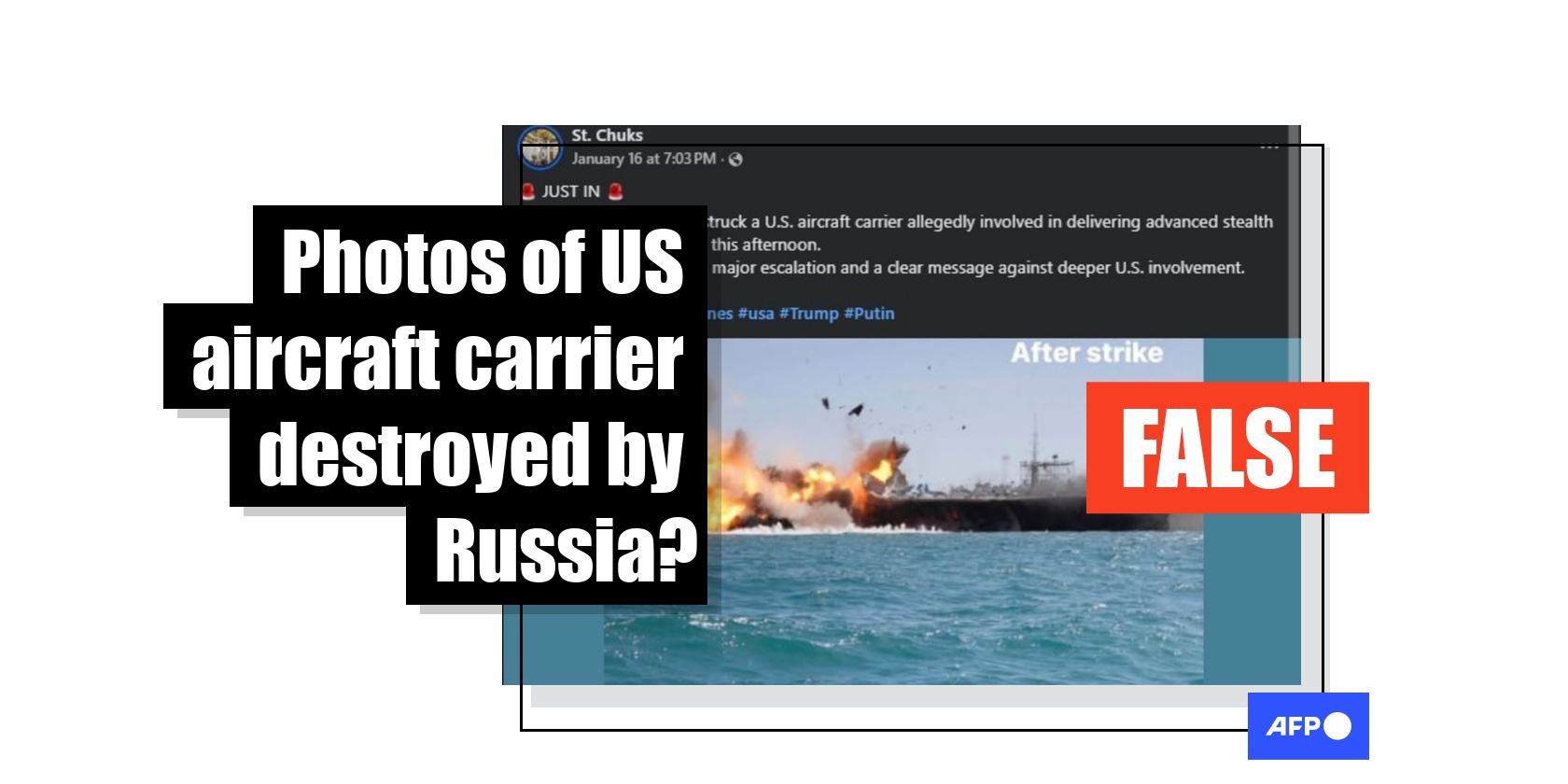
Images of scuttled Iranian ship do not show US aircraft carrier destroyed by Russia
- Published on January 29, 2026 at 16:57
- 3 min read
- By Samad UTHMAN, AFP Nigeria
US-Russia relations have remained strained amid Washington’s continued military support for Ukraine and Moscow’s repeated warnings against Western arms deliveries. Photos shared online purport to show a US aircraft carrier destroyed by Russia while delivering fighter jets to Ukraine. But the claim is false; the images are old and unrelated to the war in Ukraine.
“Reports claim Russia struck a U.S. aircraft carrier allegedly involved in delivering advanced stealth fighter jets to Ukraine this afternoon. If confirmed, this marks a major escalation and a clear message against deeper U.S. involvement,” reads the caption of a Facebook post shared on January 16, 2026.
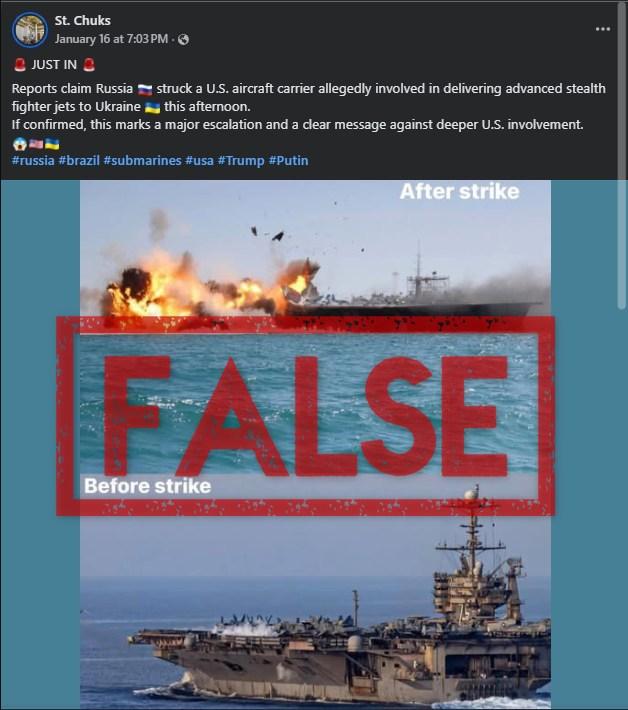
Attached to the post are two images: the top one shows an aircraft carrier engulfed in flames at sea, labelled “after strike”, while the bottom one shows a similar vessel sailing in open waters, labelled “before strike”.
The claim was shared by an account called “St. Chuks”, which predominantly posts pro-Russian content, including AI-generated material.
Similar claims were published by other Facebook users here and here.
US-Russia tensions
The United States and Russia have endured a fraught relationship since the full-scale invasion of Ukraine in February 2022 (archived here).
Russia has repeatedly criticised several countries, including the United States, for their continued supply of Western arms to Ukraine (archived here).
Since his return to the White House, US President Donald Trump has scheduled separate bilateral meetings with the heads of both warring nations. Envoys from Moscow and Washington also met in Switzerland while attending the World Economic Forum, including a trilateral meeting involving Ukraine, the first of its kind in the four years of the war (archived here, here, and here).
However, the photos do not show a recent Russian strike on a US vessel heading to Ukraine.
Unrelated images
AFP Fact Check conducted reverse image searches with Google Lens, beginning with the picture of the exploding ship.
The results led to a Daily Mail news report published in February 2015, attributing the photo to AFP (archived here).
The headline reads: “Iran makes a huge show of blowing up 'US aircraft carrier' in explosive TV spectacle.”
According to the article, a dozen Iranian speedboats attacked a replica of a US aircraft carrier during a drill dubbed “The Great Prophet 9” in the Strait of Hormuz, near a vital entrance to the Persian Gulf.
Searches in the AFP archives confirmed the photo was a handout from the Iran-backed state news agency Fars, during its coverage of the military drill.
“Iran's elite Revolutionary Guard troops attacks a naval vessel during a military drill in the Strait of Hormuz in southern Iran on February 25, 2015. Iran's Revolutionary Guards began naval exercises in the Strait of Hormuz, just a few hundred kilometres away from western vessels engaged in the fight against the Islamic State group,” the caption reads.
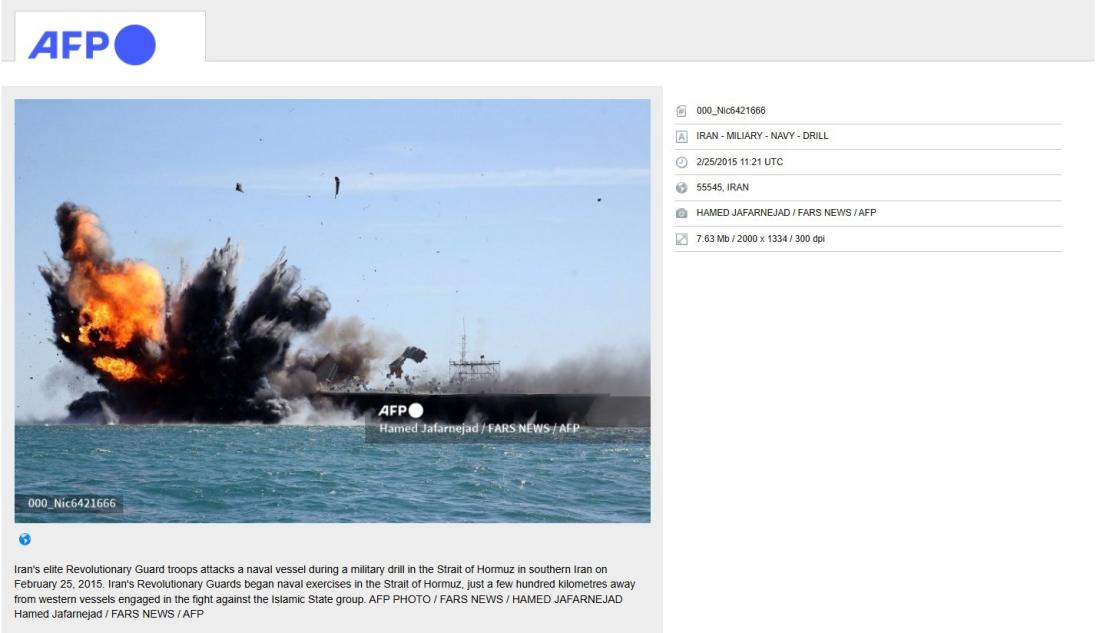
AFP Fact Check previously debunked the same photo after it was used to claim Yemen had blown up a US warship in 2024.
The second image of a warship at sea was published in a news article by Business Insider on April 1, 2025 (archived here).
“US aircraft carriers are on the move. More firepower is going to the Middle East,” the headline reads.
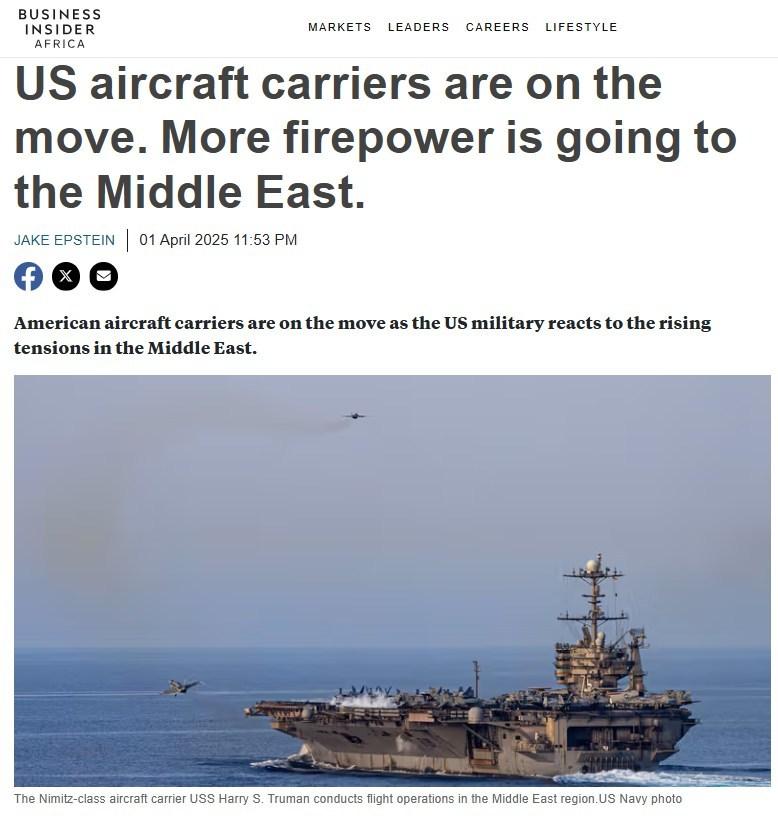
The vessel is identified as the Nimitz-class aircraft carrier USS Harry S. Truman, with the photo attributed to the US Navy.
The US Navy later published the photo on its official Instagram and X accounts alongside others referencing regional security operations in the Middle East (archived here and here).
We found no credible reports to substantiate the claim of a Russian strike on a US ship.
AFP Fact Check has debunked other claims related to the war in Ukraine here.
Copyright © AFP 2017-2026. Any commercial use of this content requires a subscription. Click here to find out more.
Is there content that you would like AFP to fact-check? Get in touch.
Contact us