AI-generated videos use fake characters with Down syndrome to make sales
- Published on June 18, 2026 at 23:17
- 4 min read
- By Gwen Roley, Stevie ROSENFELD, AFP Canada, AFP USA
Videos that appear to show people with Down syndrome entreating users to buy products from their businesses are pulling in millions of views online. But many of them are fakes generated with artificial intelligence, part of a growing trend advocates and researchers say perpetuates negative stereotypes and harms real people with the genetic condition.
The clips -- shared across platforms including TikTok, YouTube and Instagram -- portray people with Down syndrome, or family members, claiming they are being bullied for selling crafts.
Some depict people trying to sell their wares at farmers' markets or streetside and facing harassment from passersby who hurl insults or food at them.
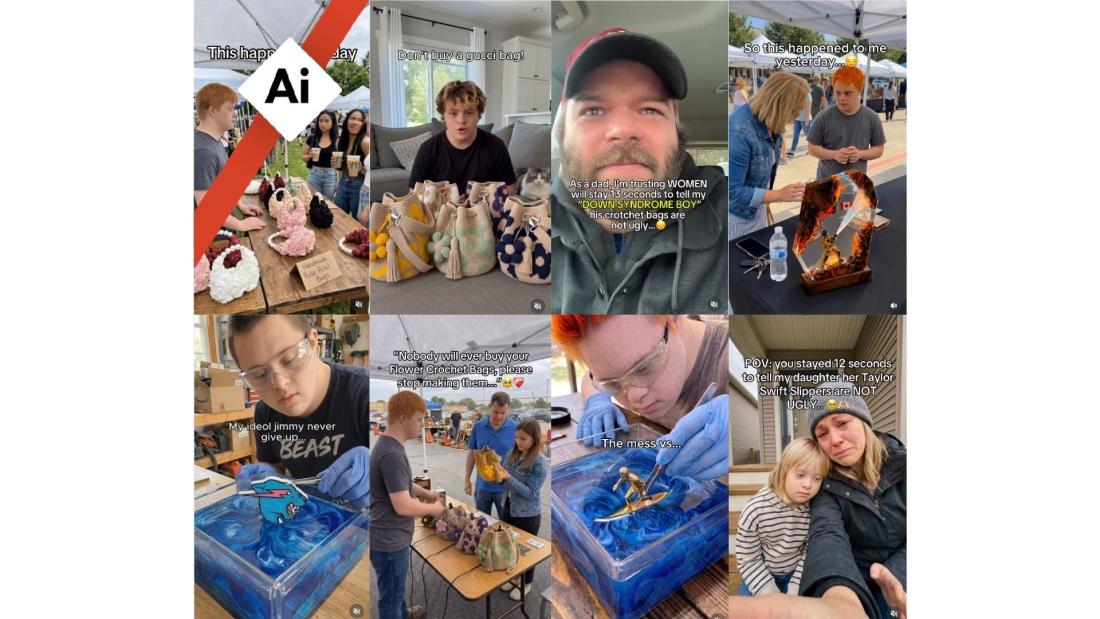
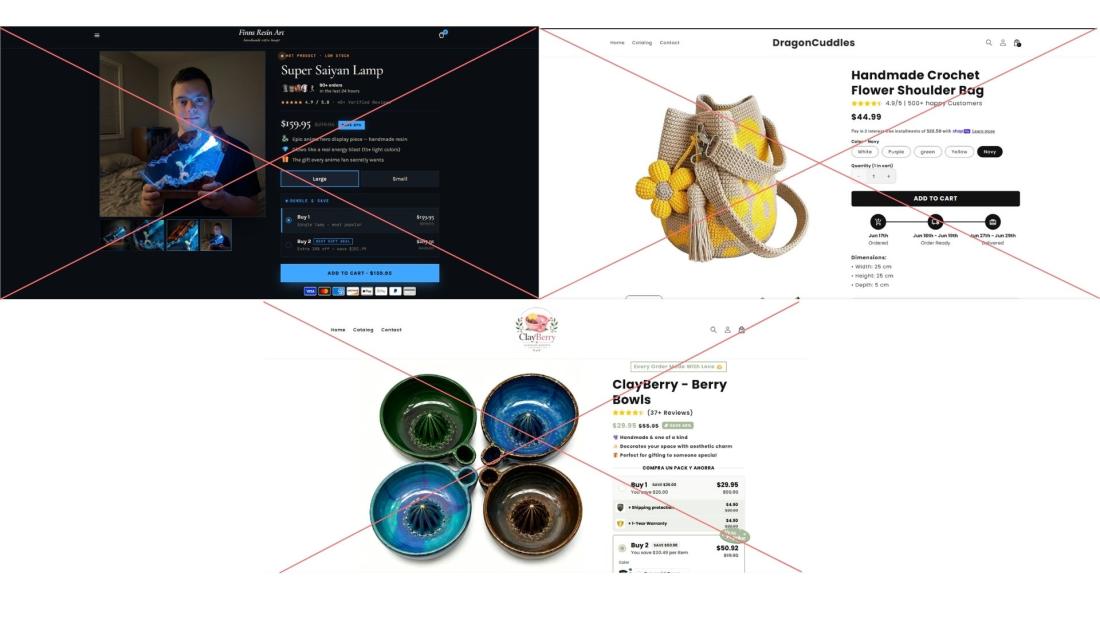
The videos come with a backdrop of products sold in linked stores, including resin lamps, crochet handbags, and "berry bowls" designed to wash fruits. AFP also identified numerous similar videos in Spanish.
However, the clips are synthetic, and the characters featured in them are not real. The accounts link to suspicious online storefronts, including one touting multiple "five-star reviews" that all repeat the same filler text.
Nathan Rowe, program director at Down Syndrome International, told AFP the videos play into the stereotype that people with Down syndrome need to be pitied (archived here).
"They're preying on people who have, maybe a bit sympathetic, slightly paternalistic view of Down syndrome," he said June 15.
Fake videos, suspicious storefronts
An AFP analysis of the clips using the Hive Moderation AI-detection tool revealed that the depictions of people with Down syndrome likely contain AI-generated content.
Some videos also reuse similar backgrounds, including two clips that portray different figures surrounded by the exact same flag and shelves.
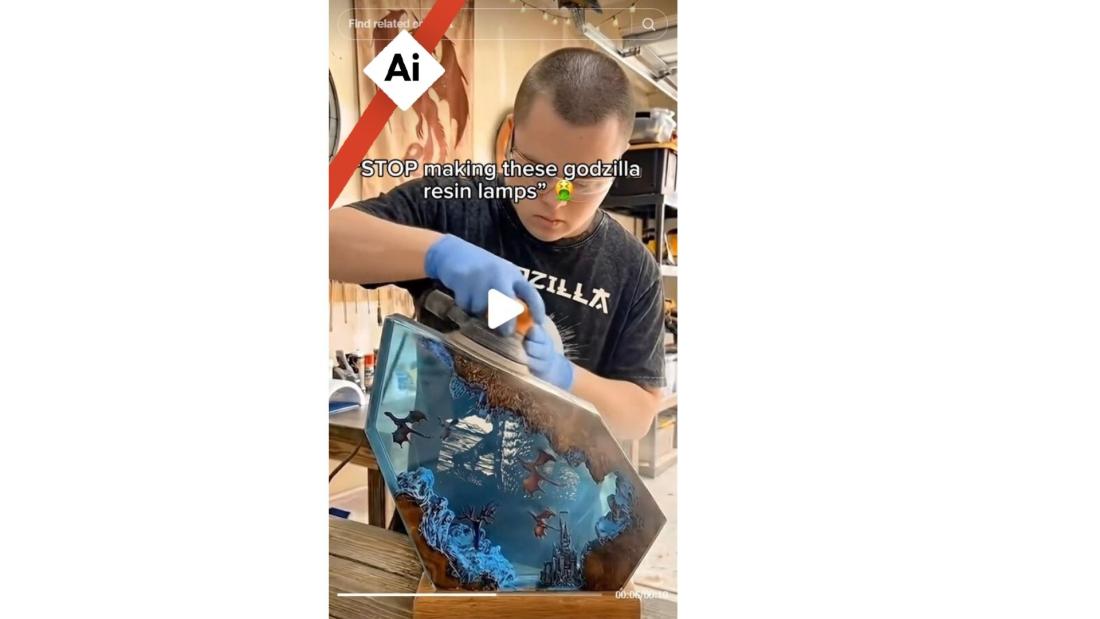
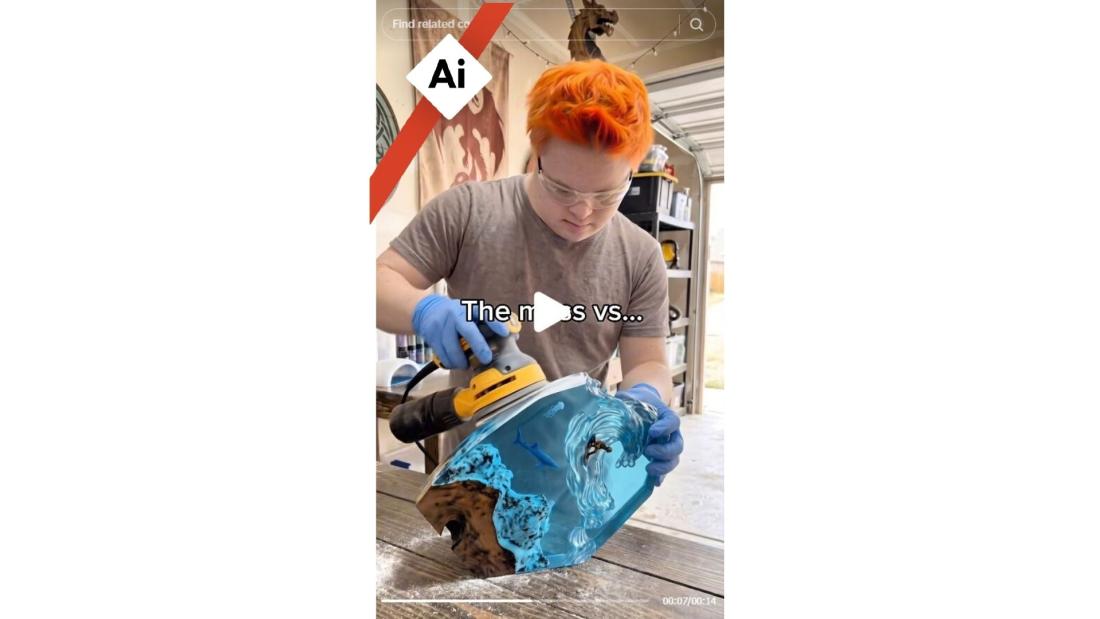
Some of the content showcasing products for sale, meanwhile, appears to be lifted from real creators and legitimate storefronts.
Reverse image searches indicated that certain cuts in the clips were taken from real pottery content creators selling identical berry bowls (archived here and here).
Some of the linked stores also appear to have scraped content from other websites. For example, a crochet bag design featured in several of the videos is also for sale on Shein, a popular resource for drop shippers (archived here). Other clips hawked resin lamps containing preserved flowers or figurines from popular media that resembled similar products seen on Etsy shops (archived here and here).
The videos "crowd-out" posts from actual entrepreneurs with Down syndrome, potentially siphoning business, Rowe said.
"There's lots of really talented people with Down syndrome out there who are making things, but it kind of reinforces the narrative that people with Down syndrome can't and it must be AI."
An ongoing trend
This is not the first trend appropriating the identity of marginalized people for attention or profit online.
Down Syndrome International previously complained to Meta about sexualized deepfakes of people with Down syndrome, leading to the removal of many videos, but Rowe said social media companies should be more proactive in preventing this kind of content from spreading.
AFP reached out to Meta about the new product-promoting trend but did not receive a response. The company's policies say its platforms do not allow inauthentic identity fraud or spam (archived here).
TikTok pointed to its community guidelines, which say the platform bans accounts posting deceptive or manipulative activity or engaging in discrimination (archived here). YouTube has similar policies about misleading spam (archived here).
While many of the videos AFP examined are no longer live, other accounts are still sharing the AI-generated clips redirecting users to products.
"The people behind the scenes are probably motivated by profit and have no regard for the damage they do in the process," Rowe said.
Jeremy Carrasco, co-founder of the AI research firm Riddance, said the number of accounts pushing this type of content indicates that the videos are working as a profit-making scheme (archived here).
"There's a lot of system-wide failures that are compounding to make this worse," he said, pointing out that the videos are exceedingly easy to create and difficult to keep track of.
"It's why these have exploded to the degree that they have."
He said he had identified countless videos featuring the AI-generated figures with Down syndrome, and that the same accounts had been trying to sell identical products using synthetic elderly characters (archived here).
AFP previously investigated a multilingual trend of videos stealing seniors' identities to bait users into sympathetic purchases of slippers and dog collars.
"It feels like we're hitting kind of the bottom of what is permissible, and if they keep going further, I think something's going to happen," Carrasco said.
Read more of AFP's reporting on misinformation and artificial intelligence here.
Copyright © AFP 2017-2026. Any commercial use of this content requires a subscription. Click here to find out more.
Is there content that you would like AFP to fact-check? Get in touch.
Contact us