Influencers falsely claim Pap smear swab poses cancer danger
- Published on June 16, 2026 at 18:29
- 3 min read
- By Marisha GOLDHAMER, AFP USA
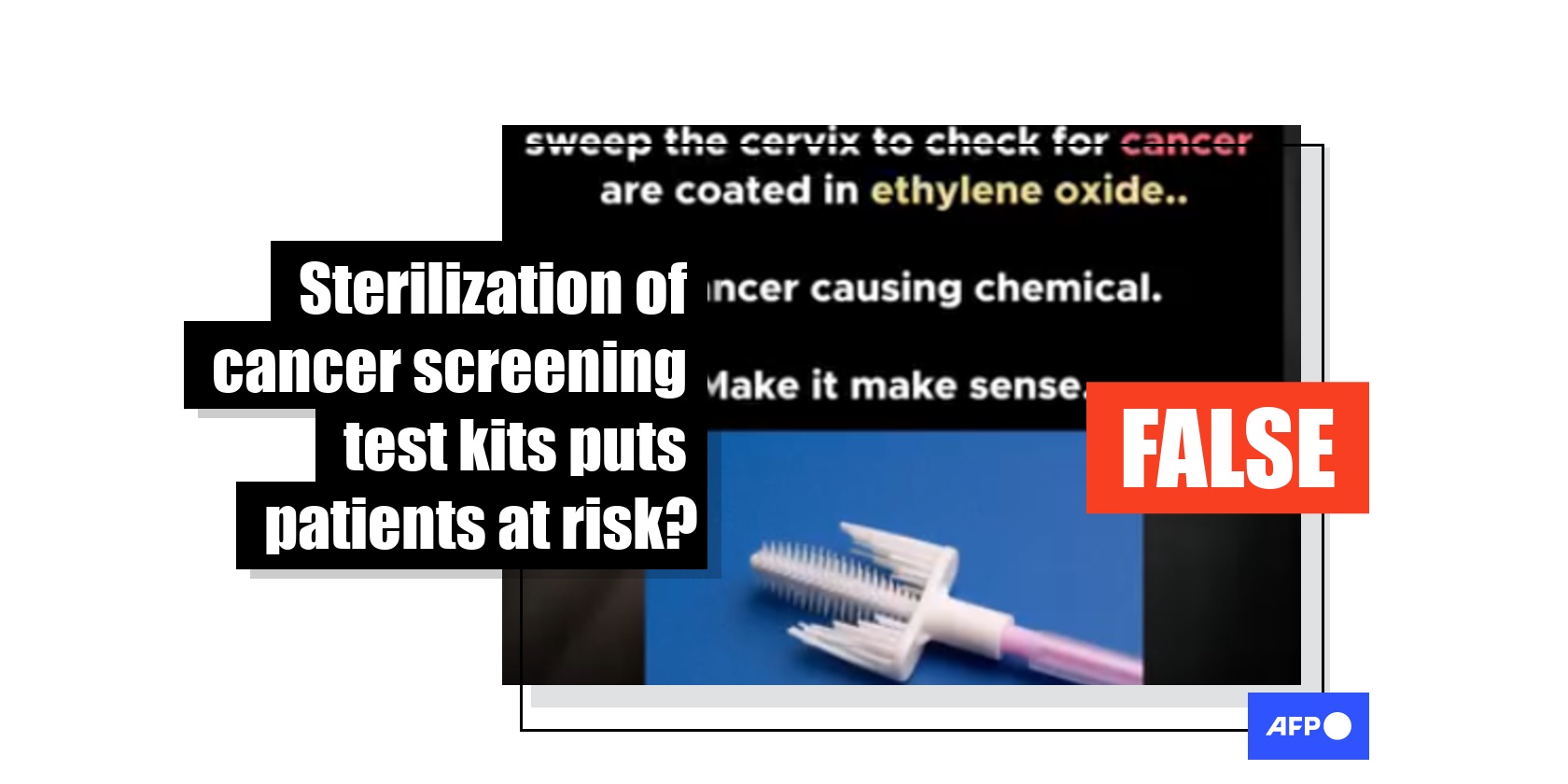
Pap smear testing has been safely used for decades to screen for cervical cancer. But across social media, health influencers are claiming the brush used in the test exposes individuals to dangerous amounts of a chemical routinely used to sterilize medical equipment, an assertion experts told AFP is false.
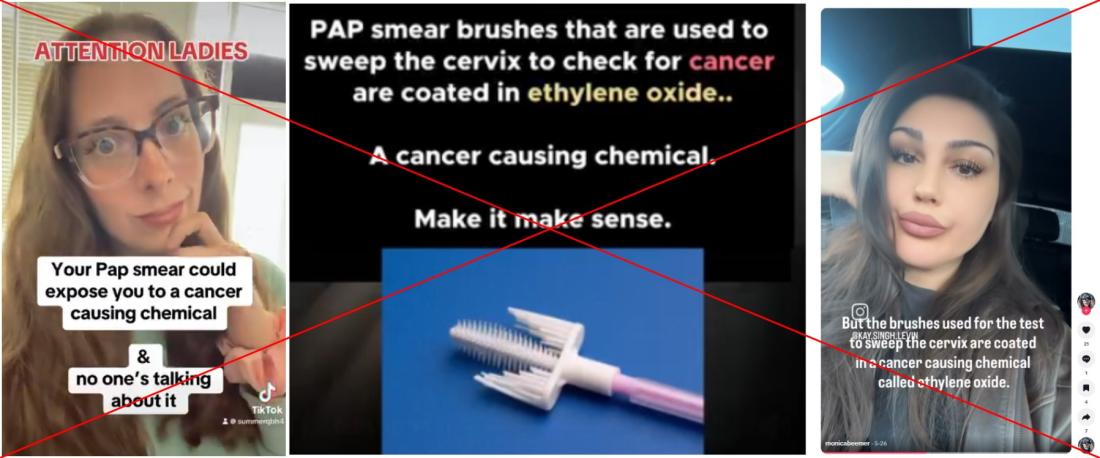
"Young women are told they should get a pap smear test every three years to 'prevent cervical cancer,'" begins text over a TikTok posted May 27, 2026. "But the brushes used for the test to sweep the cervix are coated in a cancer causing chemical called ethylene oxide."
Posts making nearly identical claims can be found across Facebook, X, Instagram and Threads.
It is estimated that some 13,490 Americans will be diagnosed with cervical cancer in 2026 and some 4,200 will die from the disease (archived here).
The Papanicolaou smear or Pap smear test was recognized as a way to screen for cervical cancer in the late 1940s and 1950s, and more widely adopted in the mid-1970s (archived here). The test uses a swab or brush to collect cells from the cervix for analysis (archived here).
"It is complete misinformation to think that there are chemicals on these devices or these HPV specimen collection tools that cause cancer," said Deanna Kepka, professor in the College of Nursing at the University of Utah (archived here).
"It's definitely one of the safest tools that we have for women's health, and the success of it has been demonstrated by the incredible decline in cervical cancer in the US over the last 50-60 years," she told AFP on June 12, 2026.
In the United States, mortality rates from cervical cancer fell by more than 50 percent as testing became routine, according to the American Cancer Society (archived here).
Sterilization standards
Ethylene oxide (EtO) is routinely used to sterilize medical equipment, particularly devices that cannot be exposed to high heat or steam (archived here). But it is incorrect to say the swab is "coated" in the substance.
Lucy Fraiser, a board-certified toxicologist (archived here), told AFP manufacturers that use EtO to sterilize medical devices are held to an international standard that defines the residual amount of the chemical that can remain on a device (archived here).
The calculation used to set the limit "assumes that the device contacts tissues for up to 24 hours" -- significantly longer than a Pap test, which collects a sample in seconds, making the standard "highly protective," Fraiser said in a June 2 email.
On its website, the US Food and Drug Administration says it "inspects industrial facilities that sterilize medical devices and medical device manufacturing facilities to make sure that they have validated sterilization processes that meet FDA-recognized standards" (archived here).
The US Environmental Protection Agency considers EtO "carcinogenic to humans" when exposed via inhalation (archived here). Available studies that show EtO exposure increases the risk of cancer "have almost exclusively involved inhalation exposure," Fraiser said (archived here).
But she said that any lingering EtO that escapes from the Pap smear brush is "far too limited to result in air concentrations potentially capable of causing cancer."
Experts in the United Kingdom told fact-checkers at Reuters the same.
Screening recommendations
Nearly all cervical cancers are caused by a long-lasting infection with human papillomavirus (HPV) and the US National Cancer Institute says HPV 16 and HPV 18, are the most high-risk types (archived here, here and here).
To prevent cervical cancer, the American Cancer Society recommends women and other individuals with a cervix start screening at age 25 with guidance now focused more on testing for HPV infection than the Pap test (archived here and here).
Kepka, who is also a population scientist at Huntsman Cancer Institute, said many providers are moving away from the Pap test because it is "not as sophisticated as a primary HPV test, which is looking for oncogenic HPV types that cause cervical cancer and other genital cancers."
Although some self-collection methods are coming to market, the American Cancer Society says it prefers "testing only for HPV infection on a cervical sample collected by your health care provider." When normal results are returned, the test only needs to be conducted once every five years through age 65, while the Pap test needs to be repeated every three years.
Similar recommendations were put forth by the US Preventive Services Task Force in 2018, with Pap testing encouraged to start at age 21 (archived here).
Kepka said screening remains essential but also pointed to the growing importance of HPV vaccination to fight cervical cancer (archived here). "The nanovalent vaccine, which protects against nine HPV types -- seven cause cancer, two cause genital warts -- is the most effective tool we have for primary prevention of cervical cancer."
AFP previously debunked claims about EtO used to sterilize the swabs provided to conduct Covid-19 testing.
Copyright © AFP 2017-2026. Any commercial use of this content requires a subscription. Click here to find out more.
Is there content that you would like AFP to fact-check? Get in touch.
Contact us