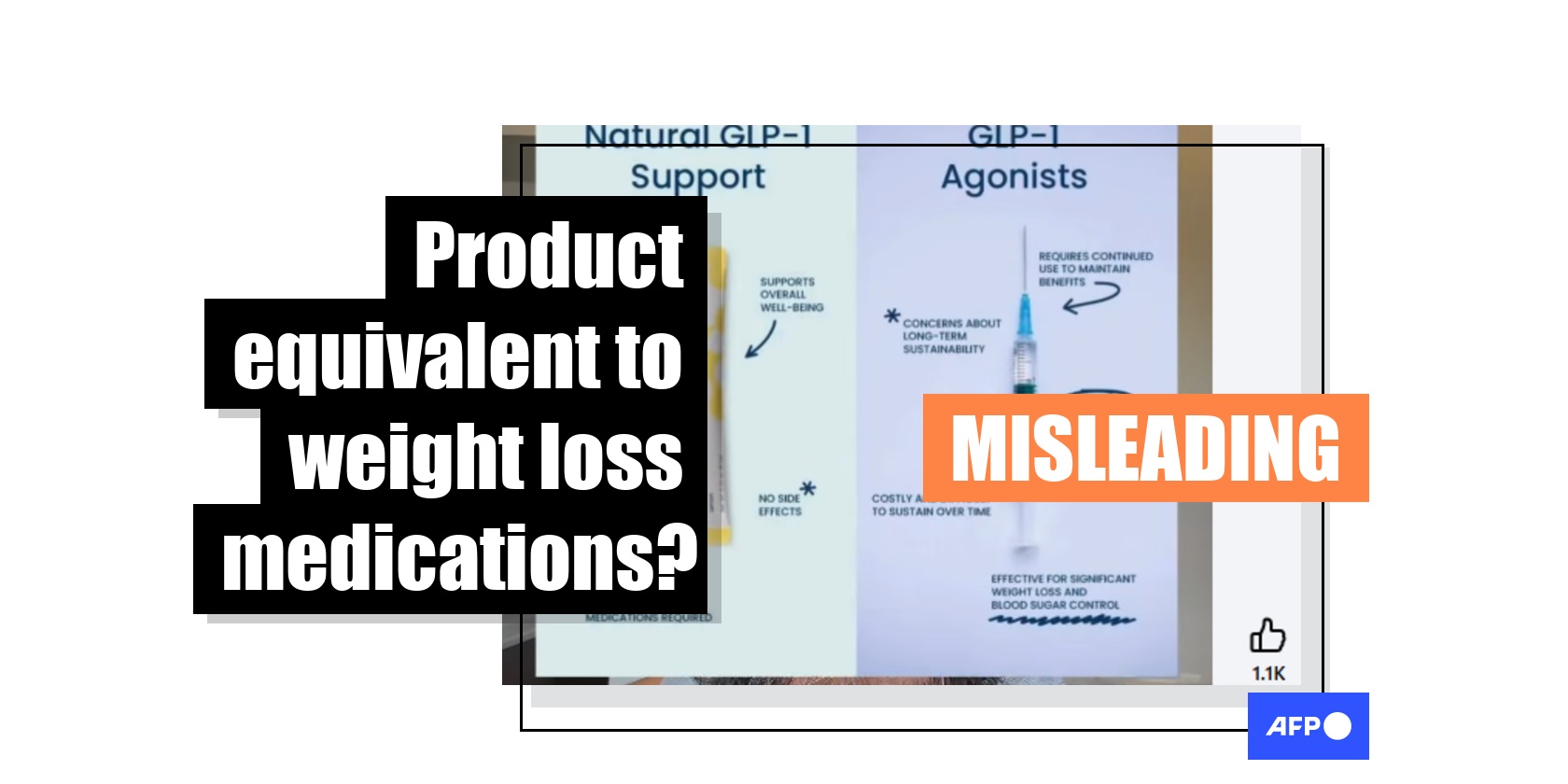
Yerba mate supplements cannot replicate effects of GLP-1 agonists
- Published on April 22, 2026 at 22:52
- 3 min read
- By Gwen Roley, AFP Canada
Online personalities and individual social media users have for years hawked yerba mate and fiber products as methods to quickly lose weight, sometimes comparing them to popular injectable medications such as Ozempic and Wegovy. However, experts said that while these supplements could show moderate results, their impact is not to the scale possible with such prescription drugs.
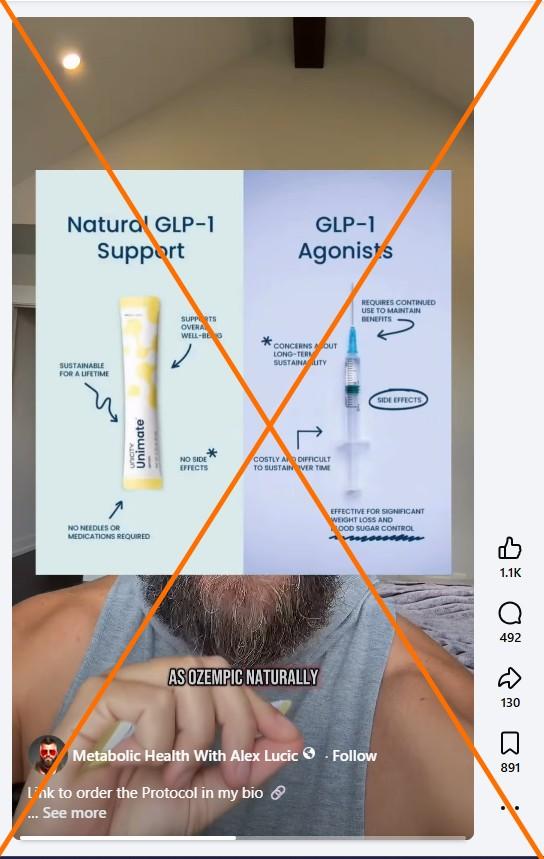
"This does the exact same thing as Ozempic, naturally, with no side effects and no interactions," says the speaker in a March 27, 2026 Facebook reel.
The person encourages viewers to consider a supplement containing yerba mate -- a traditional herbal tea commonly made in Latin and South America -- claiming the mixture can help with insulin resistance, weight loss and energy levels (archived here).
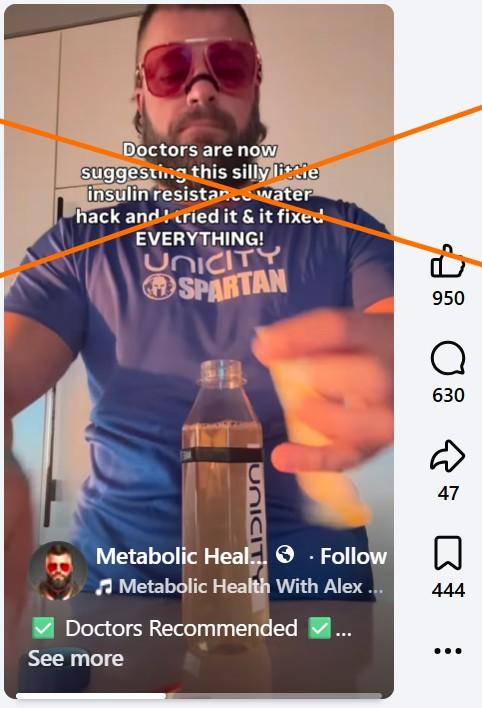
Other TikTok, Facebook and Instagram users selling the same product via affiliate links in their profiles similarly promoted the supplement as an "insulin resistance water hack," claiming it came recommended by doctors and comparing it to injectable glucagon-like-peptide-1, or GLP-1, treatments.
Some posts from as early as 2025 have advertised a different yerba mate product for weight loss under the name "Nature Zempic."
Many of the posts referenced a 2024 episode of "The Joe Rogan Experience" Spotify podcast in which Stanford University professor Andrew Huberman discussed how humans naturally produce the GLP-1 hormone stimulated by nutrients found in yerba mate tea (archived here and here).
GLP-1 agonist drugs such as Ozempic, which are designed to mimic the hormone and regulate blood sugar and appetite, have transformed the treatment of diabetes and obesity in recent years.
But as the medications have risen in popularity, dubious supplements invoking the drugs' effects have also begun to crop up on people's social media feeds.
Experts who spoke to AFP cautioned that the yerba mate supplements promoted online would not produce the same effects as GLP-1 injections.
C. Michael White, the chair of pharmacy practice at the University of Connecticut School of Pharmacy, said medications like Ozempic work by replicating the effects of the GLP-1 hormone (archived here and here). This creates a feeling of being full and initiates insulin secretion, which can promote weight loss and help with diabetes treatment.
However, White said that while some studies have shown yerba mate and other foods may stimulate the natural release of GLP-1, the mixture's impact on weight loss would be negligible compared to Ozempic or Wegovy (archived here and here).
"Think about it this way: if you go out for a run and you run long enough, you can give yourself a runner's high," he told AFP on March 25. "But a runner's high is never gonna be the same as if you gave yourself heroin."
Insulin resistance
Christoph Buettner, chief of the division of endocrinology at Rutgers Health Robert Wood Johnson Medical School, also questioned the posts' claims about insulin resistance, which occurs when the body stops responding normally to insulin. (archived here and here).
"Overall, while lifestyle factors remain the primary drivers of insulin resistance, supplements are a wild card," he told AFP in a March 25 email. "They are often useless, and in some cases clearly detrimental."
After reviewing the supplement's ingredient list, he said the inclusion of fiber and caffeine could lead to a greater feeling of being full and moderate weight loss.
"That is nutritionally reasonable, but it is a long way from a GLP-1 receptor agonist," he said.
Patricia Brubaker, a professor emerita of physiology and medicine at the University of Toronto, pushed back on the idea of a "hack" for insulin resistance (archived here).
She said March 27 that the supplements could reduce insulin because the "high dose of fiber in combination with intermittent fasting" could lead to moderate weight loss.
Read more of AFP's fact checks on health claims here.
Copyright © AFP 2017-2026. Any commercial use of this content requires a subscription. Click here to find out more.
Is there content that you would like AFP to fact-check? Get in touch.
Contact us