False posts about Nipah virus prey on fear of spread in Philippines
- Published on February 11, 2026 at 06:31
- 3 min read
- By Ara EUGENIO, AFP Philippines
Philippine health officials say there is no active Nipah virus threat in the country and they are monitoring the situation after cases were contained in India in early 2026, rejecting social media claims the virus has reached the archipelago or triggered school suspensions. The Department of Health says the country has remained Nipah-free since 2014, and the Department of Education says it has not issued any school closure orders as a result of an outbreak.
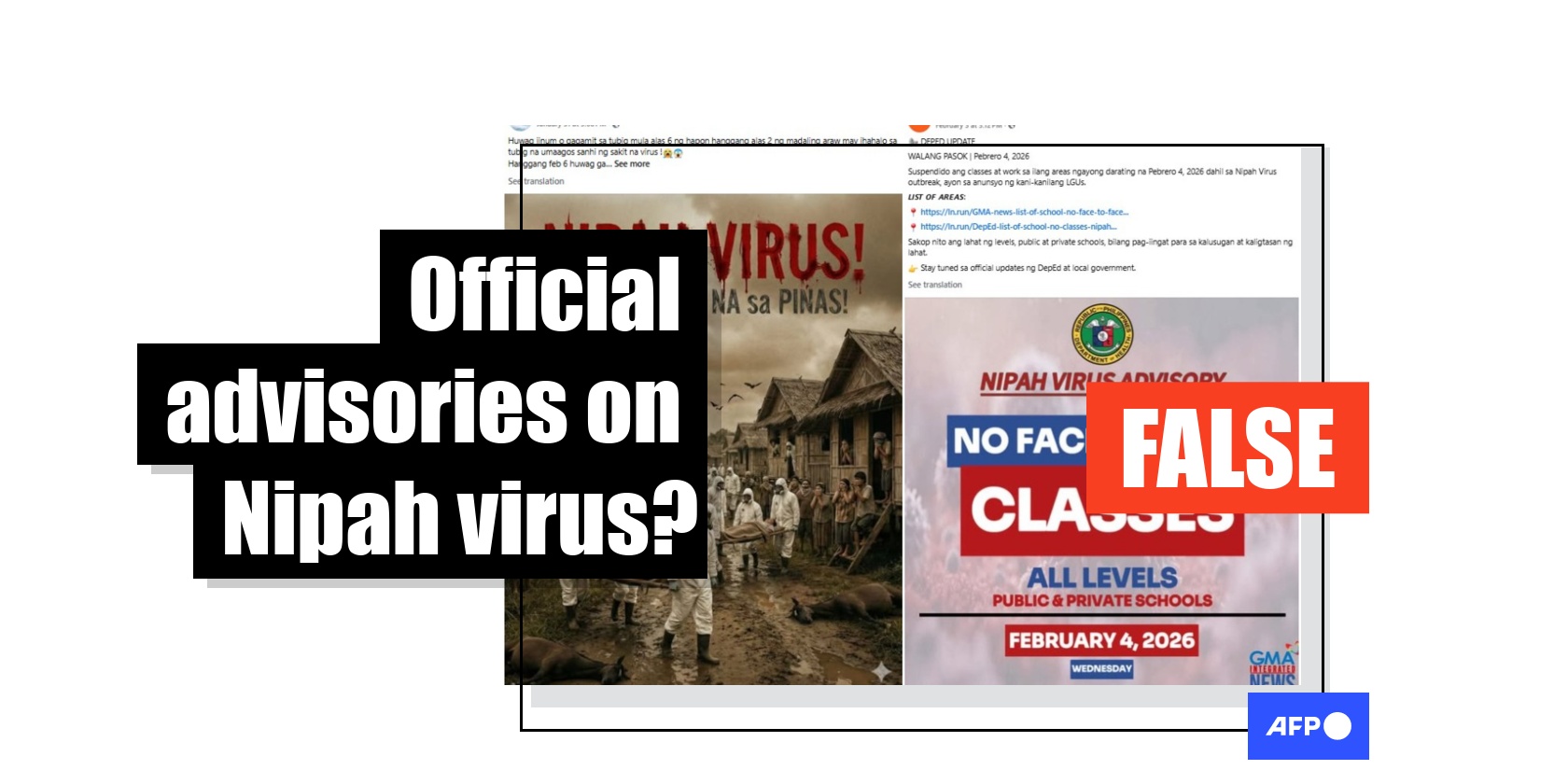
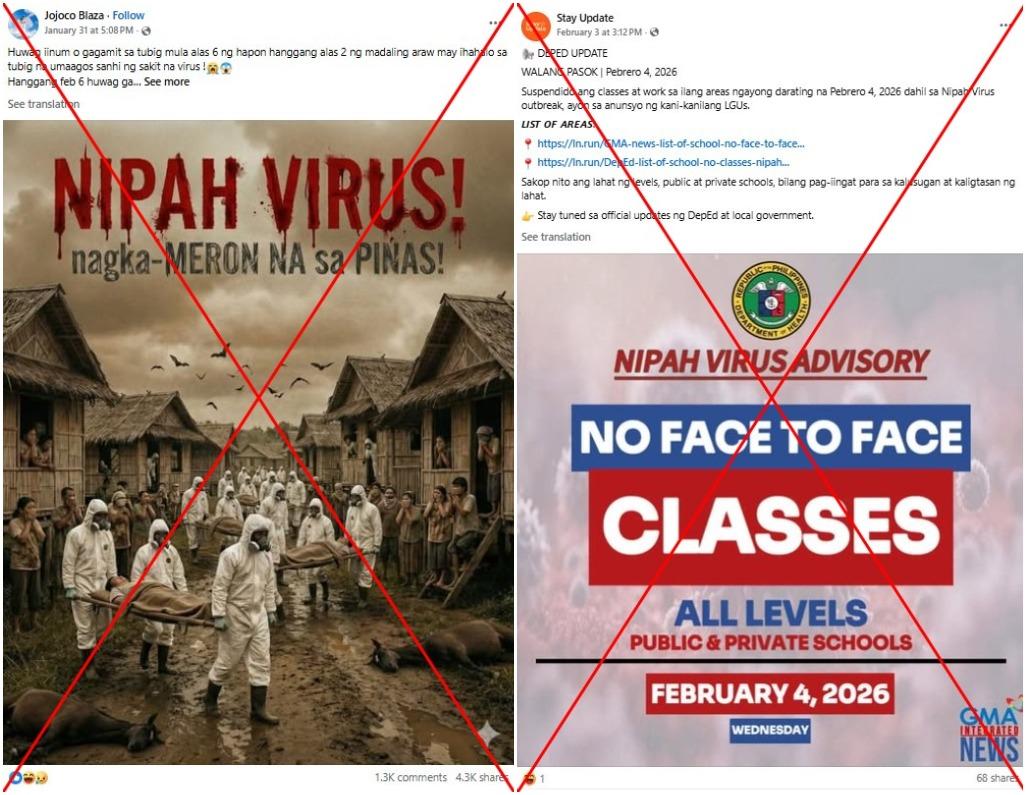
"Nipah virus! Already in the Philippines!" reads Tagalog-language text on a Facebook graphic that has racked up more than 2,600 shares since it was posted on January 31, 2026.
Its caption states the public must avoid using or drinking running water between 6 pm and 2 am because "something that causes the virus is being mixed into the water supply".
"Until February 6, do not use water during these hours. Those who follow this will be safe; those who won't will not," the caption says.
Another Facebook graphic shared on February 3, purportedly created by Philippine news organisation GMA News, says classes have been suspended due to an outbreak of the Nipah virus.
The supposed advisory, bearing the logo of the Department of Health (DOH), reads: "No face to face classes. All levels, public and private schools. February 4, 2026."
The claims surfaced following reports from Indian authorities regarding the "timely containment" of a Nipah virus outbreak in West Bengal state, where at least two cases have been confirmed since December 2025 (archived link).
Nipah, which is naturally carried by fruit bats and can spread from animals to humans, causes severe symptoms including respiratory illness, seizures, and brain inflammation that can lead to a coma.
The virus has no vaccine and a fatality rate ranging from 40 to 75 percent, according to the World Health Organization (WHO).
The graphics also circulated widely elsewhere on Facebook amid online chatter and rumors of impending lockdowns to curb the spread of the Nipah virus.
"So to be sure, we do not drink water from the tap?" asked a commenter on one of the posts.
Another said: "It's okay to drink as long as it's from a refilling station, but water straight from the faucet is not allowed."
As of February 11, however, there have been no official reports of confirmed Nipah virus cases in the Philippines.
'Nipah-free'
The DOH said in a February 6 post on its official Facebook page that there was "no active case of Nipah virus in the Philippines" (archived link).
"The country remains open to arriving passengers at all airports and seaports, but the Bureau of Quarantine is maintaining strict surveillance of all arrival areas as part of its border monitoring protocols," reads an attached graphic.
When contacted by AFP on February 9 regarding the circulating social media posts, a Department of Health representative reiterated previously issued statements that the country is Nipah-free.
"Since 2014, the Nipah virus has not been detected in the Philippines, and the DOH continues to monitor the situation through the Epidemiology Bureau," said a statement issued to journalists on January 28.
The health department noted that during the country's only recorded Nipah outbreak in 2014, human cases were acquired through the consumption of infected horse meat and close contact with sick individuals.
Official WHO guidelines on the prevention and detection of Nipah also do not mention any risks of transmission through the water supply (archived link).
"Nipah virus is a zoonotic virus, usually transmitted from animals to humans, but can also be transmitted through contaminated food or directly between people," the guidelines said.
The falsely shared graphic also does not appear on the official online platforms of either the DOH or GMA News (archived here and here).
Nationwide class suspensions are overseen by the Department of Education, which refuted the claims in a February 9 Facebook post (archived link). It said the rumours of class suspensions following an alleged outbreak of the virus were "fake news".
AFP has previously debunked other misinformation about the Nipah virus.
Copyright © AFP 2017-2026. Any commercial use of this content requires a subscription. Click here to find out more.
Is there content that you would like AFP to fact-check? Get in touch.
Contact us