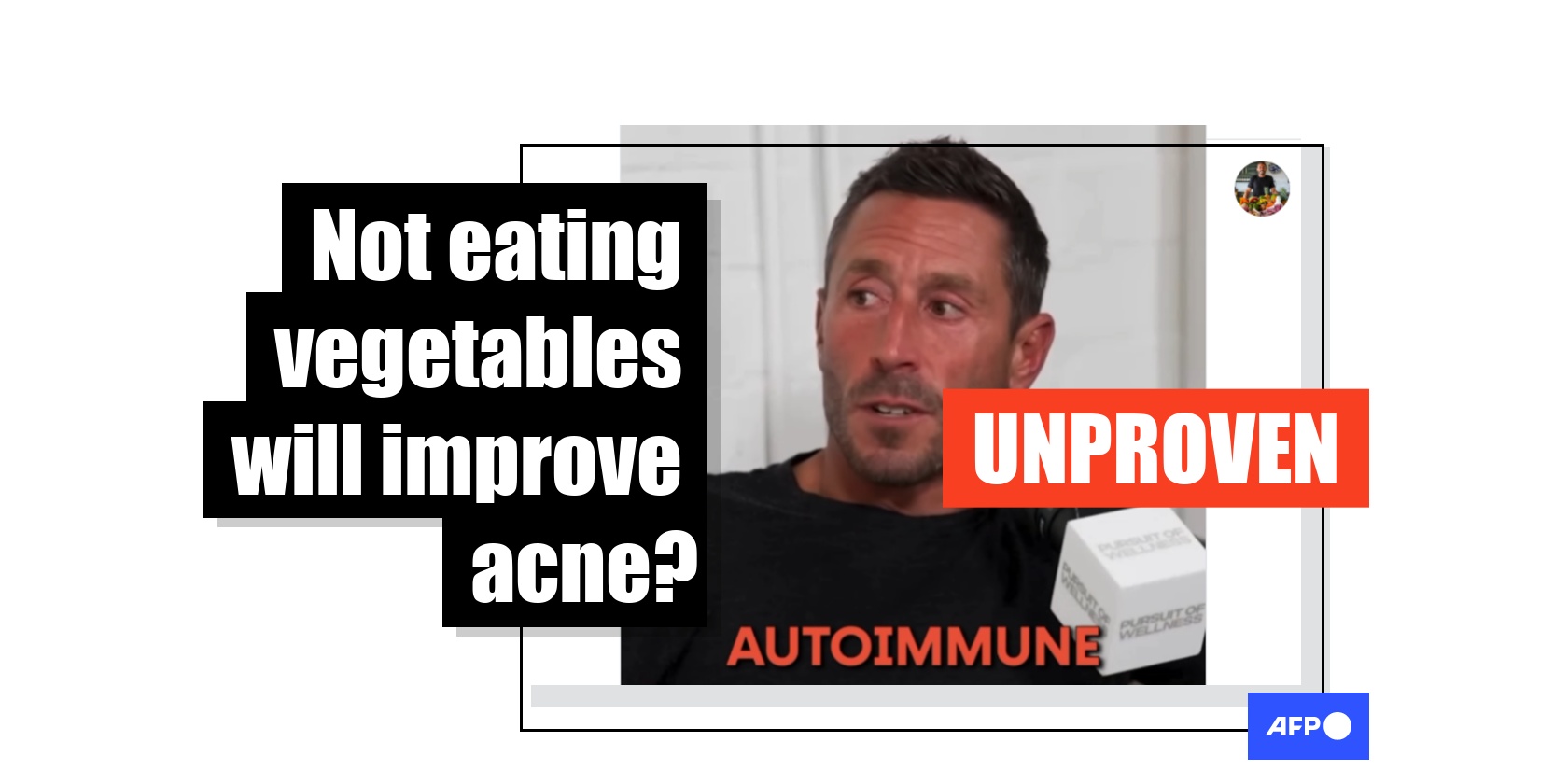
Influencer touts unproven diet changes to treat acne
- Published on February 18, 2026 at 20:18
- 2 min read
- By Marisha GOLDHAMER, AFP USA
Acne is a common skin condition that can be impacted by what a person eats. But contrary to unproven claims from a wellness influencer, the condition is not an autoimmune response that can be treated by cutting out vegetables from your diet; dermatologists recommend eating vegetables, whole grains and foods high in fiber while avoiding excess sugar and processed foods to help tame breakouts.
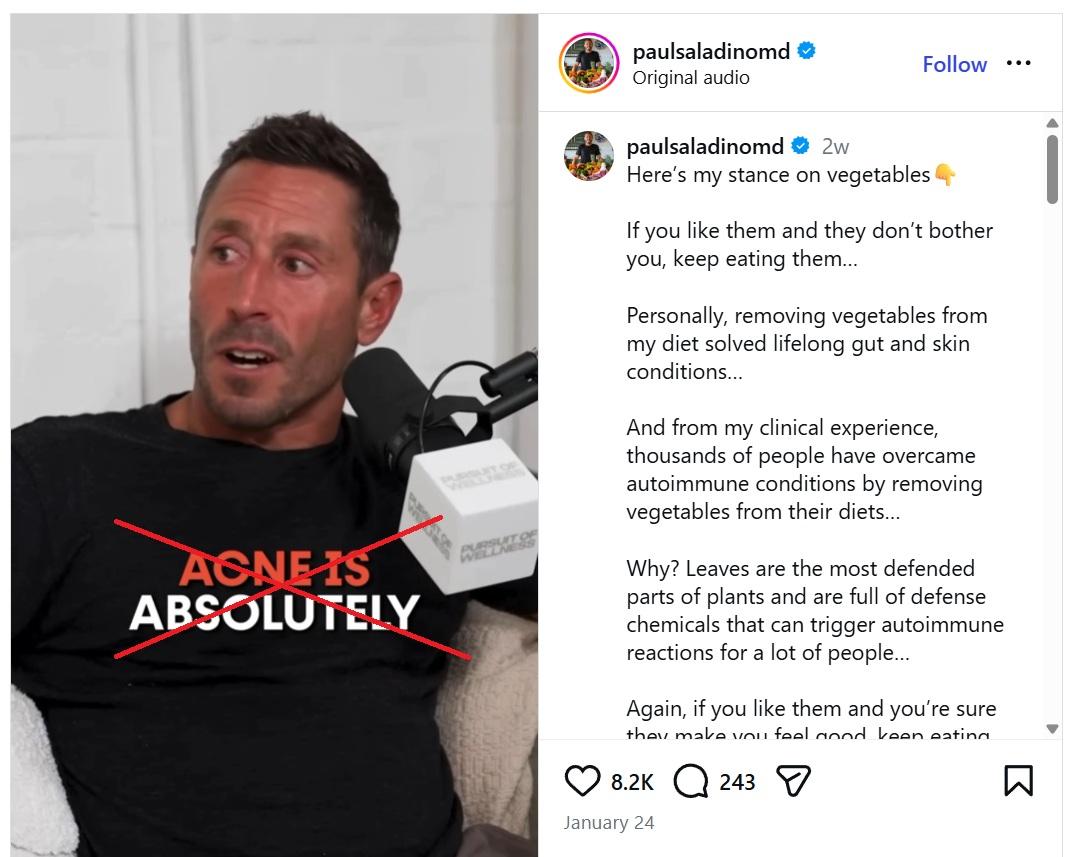
"Acne is absolutely autoimmune," says Paul Saladino, a doctor who helped popularize the "carnivore diet," in a January 24, 2026 Instagram reel.
"From my clinical experience, thousands of people have overcame [SIC] autoimmune conditions by removing vegetables from their diets...," the caption for the clip, which was also shared to Facebook and TikTok, goes on to claim.
The clip comes from an August 2023 appearance with Mari Llewellyn on the Pursuit of Wellness -- a podcast with 259,000 subscribers on YouTube.

Saladino is heavily associated with a movement that tells people to center meat in their diets and forego carbohydrates, including fruits and vegetables.
But the diet carries risks of excess saturated fat consumption, vitamin deficiency and lacks fiber. Many nutritionists and cardiologists caution against strict elimination regimens -- and even Saladino says he now eats fruit.
Acne, meanwhile, is not an autoimmune disease, a condition when the immune system mistakenly attacks the body rather than defending it. Rather, it is a skin condition often occurring when hair follicles become clogged by oil, dead skin cells or bacteria.
"It is largely genetic and caused by the body's own hormones," said Bruce Brod, clinical professor of dermatology at Penn Medicine (archived here).
This is particularly true during puberty, menstruation, pregnancy or for those who suffer from polycystic ovary syndrome (archived here, here, here and here).
Acne is different from allergic reactions that manifest on the skin. Acne develops over time, while allergic reactions tend to appear suddenly and are often more itchy (archived here).
Impact of diet
Most patients can improve mild acne with topical treatments (archived here). Antibiotics may also be prescribed (archived here).
Studies from around the world have shown the negative impact of a high-glycemic diet that is filled with foods such as bagels, white rice, fries or soda on acne (archived here, here and here). Many fruits and vegetables are low on the glycemic index.
"Scientists believe that following a low-glycemic diet may reduce acne because this diet eliminates spikes in your blood sugar," the American Academy of Dermatology says in a report on its website (archived here).
"When your blood sugar spikes, it causes inflammation throughout your body. These spikes also cause your body to make more sebum, an oily substance in your skin. Both inflammation and excess sebum can lead to acne."
Penn Medicine's Brod said additional research has shown that whey protein taken to gain muscle mass can make acne worse (archived here).
He said limited evidence points to vitamin D deficiency playing a role in the development of acne, as well (archived here).
Brod added there is limited evidence that "dairy, such as drinking a lot of milk, can worsen acne," but that he does not routinely recommend patients reduce their dairy consumption because it contains other important nutrients (archived here).
Finally, he pointed to the role of vitamin B5 and zinc in treatments, but said that the "level of improvement is typically small compared to a prescribed acne regimen" (archived here and here).
Find more of AFP's reporting on health misinformation here.
Copyright © AFP 2017-2026. Any commercial use of this content requires a subscription. Click here to find out more.
Is there content that you would like AFP to fact-check? Get in touch.
Contact us