
UN heritage body rejects false claim it denied funding for Cambodian temple repairs
- Published on January 30, 2026 at 10:51
- 2 min read
- By Chayanit ITTHIPONGMAETEE, AFP Thailand
UNESCO has not ruled out paying for repairs of the World Heritage-listed Preah Vihear Temple located along the Thai-Cambodian border after deciding it had been used for military purposes, contrary to a false claim circulating on social media. It surfaced almost a month after a December 2025 truce ended the latest round of deadly fighting between the two neighbours. A UNESCO spokesperson told AFP that the UN body has yet to reach a conclusion on funding for the temple.
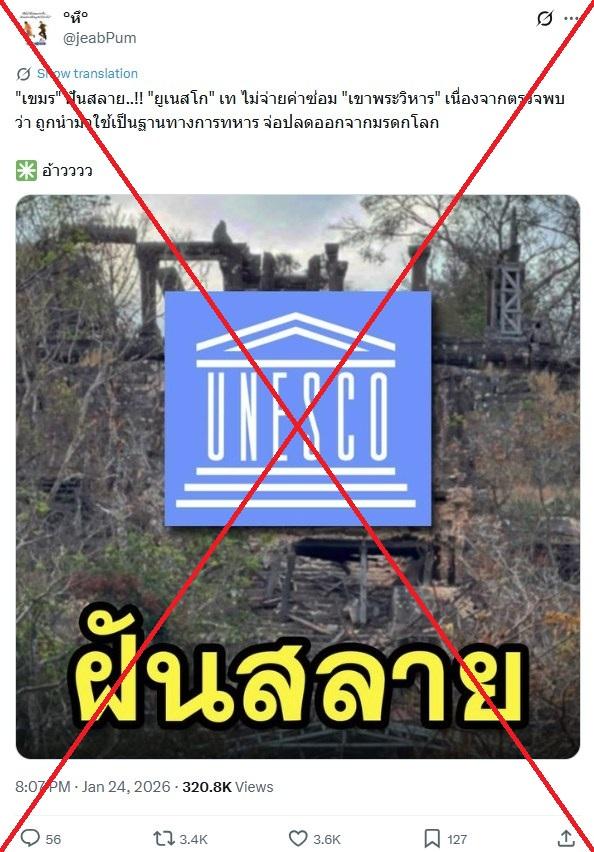
An X post on January 24, 2026 shares an image showing a UNESCO logo and a damaged site in the background with overlaid text in Thai saying, "Shattered dreams for Cambodia."
"UNESCO has refused to pay for reparations at Preah Vihear because it found the temple was used as a military base. It aims to delist it from the World Heritage List," the image's caption reads.
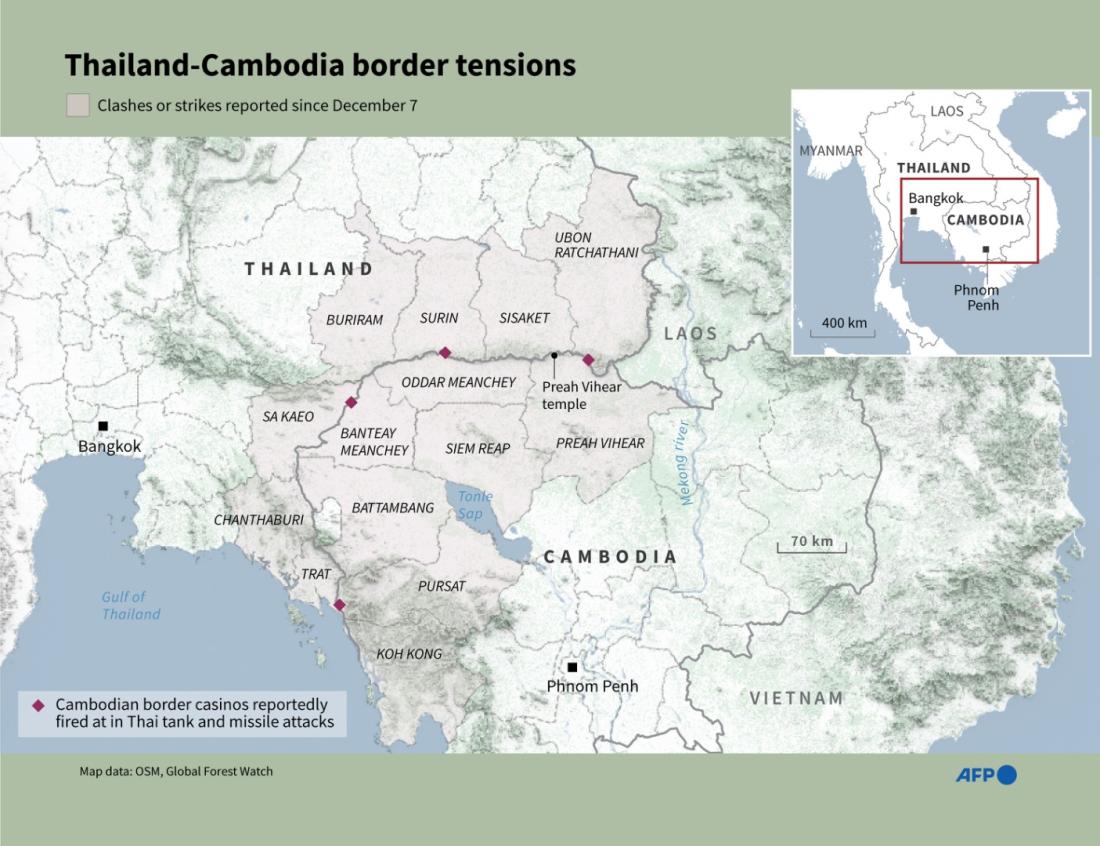
The post emerged after renewed fighting broke out along the Thai-Cambodian border in December, when artillery exchanges killed dozens of people and forced over half a million others to evacuate (archived link).
UNESCO issued a statement on December 10 expressing concern over the clashes and calling for urgent protection of the Preah Vihear Temple (archived link).
Both sides agreed to a truce on December 27, which ended the latest round of fighting (archived link).
Preah Vihear, an 11th-century Hindu temple situated along the Thai-Cambodian border, has long been contested by both countries.
The International Court of Justice ruled in 2013 that the surrounding area belongs to Cambodia. UNESCO also lists the temple under Cambodia on its website (archived here and here).
The Thai military has claimed, with photographic and video evidence, that Cambodian troops used the site for military purposes during the December border fighting (archived here and here).
In turn, Cambodia has submitted a report to UNESCO detailing the damage to the temple that it said was caused by repeated shelling and aerial bombardment "directly targeting" the site during the clash, according to the Khmer Times (archived link).
The claim was repeated in a news report published on YouTube on January 26, and has spread elsewhere on X and other platforms, including Facebook and TikTok.
But UNESCO told AFP it has not penalised Cambodia or reached conclusions on whether the site had been used for military purposes.
In a written response to AFP on January 26, a UNESCO spokesperson said "no decision has been made regarding funding, repair or technical assistance for the site's conservation at this time."
The statement went on to say the UN body will conduct an assessment of the Preah Vihear Temple at the request of Cambodian authorities once conditions allow.
"Delisting is a last resort, as this case has not been brought before the Committee at this time."
UNESCO's operational guidelines state that a site can only be delisted after a formal review and a majority approval from the World Heritage Committee (archived link).
In a follow-up response on January 27, a spokesperson for the UN body said a world heritage site is delisted when its "outstanding universal value" has been irretrievably lost.
UNESCO has completely removed only three sites from its World Heritage List -- with its most recent case in 2021 -- when the UNESCO committee delisted Liverpool after new construction projects devalued the city's historic waterfront (archived link).
AFP has debunked other misinformation related to the Thai-Cambodian conflict.
Copyright © AFP 2017-2026. Any commercial use of this content requires a subscription. Click here to find out more.
Is there content that you would like AFP to fact-check? Get in touch.
Contact us