Raw milk supporters dismiss risks as Trump pushes full-fat dairy
- Published on January 22, 2026 at 23:12
- 4 min read
- By Manon JACOB, AFP USA
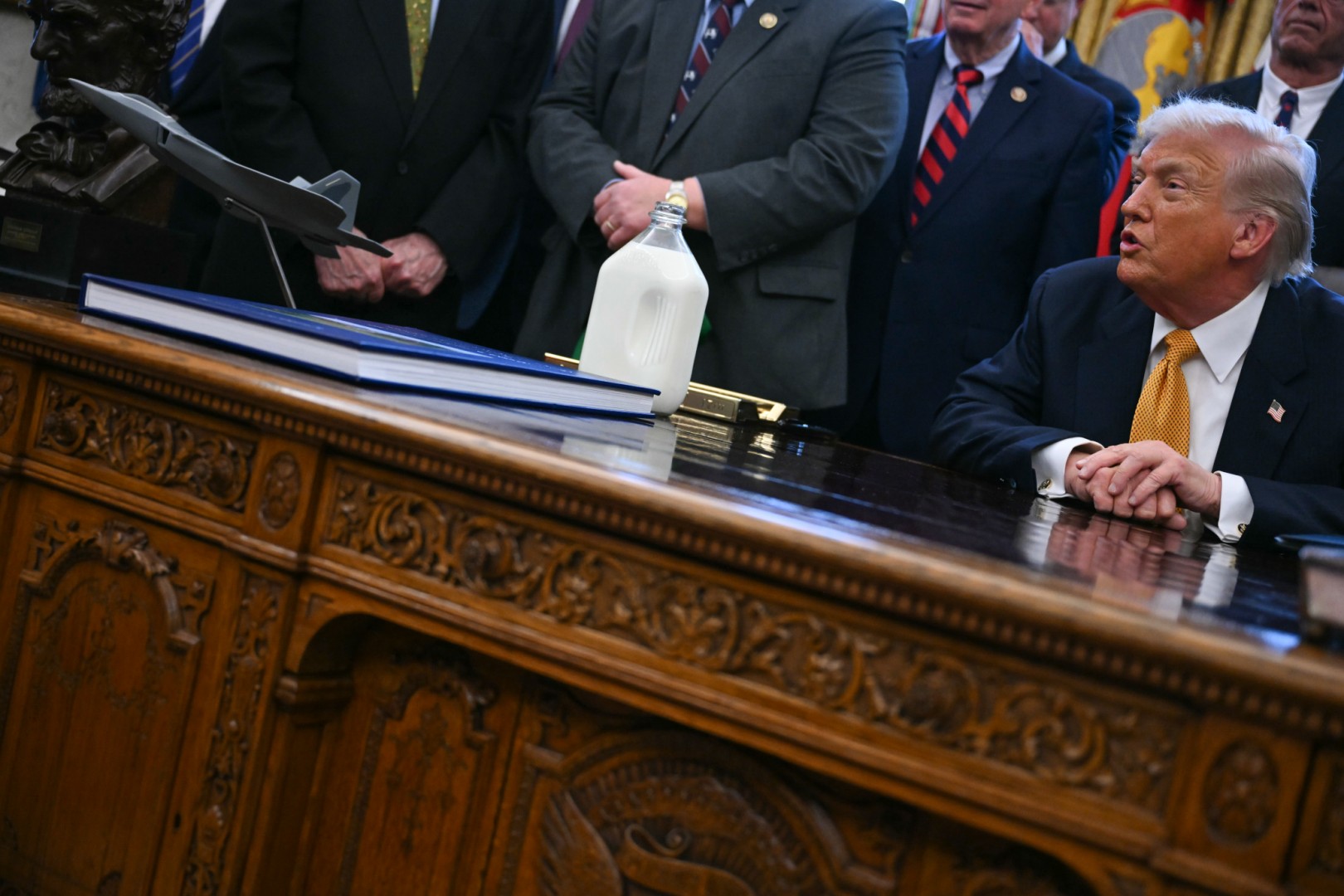
Calls to consume raw milk regained traction on social media in January 2026 following the release of the US government's new dietary guidelines highlighting dairy and meat products. President Donald Trump's administration recently campaigned to center whole milk -- which is pasteurized -- in American diets. But a loud fringe of social media users called to go even further by legalizing unpasteurized milk nationwide, despite serious health risks backed by over a century of research on the topic.
"Trump just said what our cells already knew: Chug Raw Whole Milk = life force," a social media user said January 12, 2026 on X following the Trump administration's release of new guidance for healthy eating (archived here).

Trump's White House and the US Department of Agriculture (USDA) recently launched a campaign centered around drinking whole milk after the release of an updated food pyramid on January 7. But this has prompted some online to call for further action on raw -- or unpasteurized -- milk, claiming it is safe for consumption and contains healthy vitamins.

Pasteurization (archived here) is the technique of heating milk to a certain temperature for a set period of time, followed by rapid cooling and packaging in sanitary conditions to kill its harmful bacteria.
Experts warn that unpasteurized milk may carry dangerous bacteria which can potentially lead to serious health complications (archived here).
"Raw (unpasteurized) milk can contain many pathogens that cause severe illnesses, and even death," Amy Lee, an assistant professor of molecular biology and biochemistry at Simon Fraser University (archived here), told AFP on January 8, 2026.
The evidence behind raw milk's alleged additional nutritional value is also lacking (archived here).
There is no nationwide ban on raw milk distribution in the United States (archived here). As of September 2025, about half of US states allowed farmers to sell unpasteurized dairy products, but federal law since 1987 prohibits interstate sale of raw milk for direct human consumption (archived here).
Despite a recent increase in raw milk consumption, Jerold Mande, an adjunct professor of nutrition at Harvard University (archived here), said it is still "probably less than 5 percent of the population."
Support for raw milk has also recently grown in Canada, which does prohibit the distribution of unpasteurized dairy for human consumption due to health concerns (archived here and here).
Growing risks
"Raw milk is not safe. Period," Mande said in a January 8 email, pointing to risks of "life-threatening microbial contamination."
Centers for Disease Control and Prevention (CDC) research shows that most dairy-associated disease outbreaks -- 60 percent -- studied between 1993 and 2006 in the United States stemmed from consuming unpasteurized products (archived here). Outbreaks associated with pasteurized products were also reported but could be attributed to post-pasteurization mishandling.
The number and severity of harmful pathogens in unpasteurized milk has been increasing in recent years, experts say. This is partially due to the growing threat of bird flu cases in cows (archived here).
Studies have shown H5N1 avian influenza can remain infectious in raw dairy products such as milk for more than a day at room temperature and over a week when refrigerated (archived here). For cheese, the infectious virus can persist for months (archived here).
On its website, the CDC "recommends against consuming raw milk contaminated with live A(H5N1) virus as a way to develop antibodies against A(H5N1) virus to protect against future disease" (archived here).
Raw milk is also one of the most common environments for the transmission of listeria monocytogenes, leading to a bacterial infection that can be fatal to unborn babies, infants and people with weakened immune systems (archived here).
"Those considering drinking raw milk should know the pathogens today through mutations are deadlier than in the past. I ran food safety at USDA and oversaw it at FDA, raw milk is on my top five list of foods too risky for me to consume," Mande said.
The risk for outbreaks stemming from unpasteurized dairy consumption may also be higher for particular population groups such as pregnant and immunocompromised people, children and teenagers, and people consuming more queso fresco and cotija cheese (archived here, here and here).
As of January 2026, the CDC still ties raw milk consumption to foodborne illnesses and exposure to harmful germs such as listeria, E. coli, and salmonella, with more severe cases "potentially leading to paralysis, kidney failure, stroke, or even death" (archived here).
Lobbying ties?
Recurring online claims about a historical push towards pasteurization not because it improved safety, but because it was serving corporate interests are similarly misconstrued.
Commercial pasteurization of milk is not a new process. It goes as far back as the mid-1880s (archived here) in countries such as Denmark and Sweden due in part to the early recognition by Danish butter makers of its benefits.
Raw milk regulations in the United States rolled out progressively as a public health response to documented disease risk as of the 1890s.
Research had already identified milk as a major vector for illnesses including tuberculosis, diphtheria, typhoid fever, scarlet fever, anthrax, cholera, and foot and mouth disease and the advantages of heating the milk, before the introduction of commercial pasteurization (archived here and here).
Leonard Polzin, dairy markets and policy outreach specialist at University of Wisconsin-Madison (archived here), told AFP that while philanthropic organizations, including Rockefeller-affiliated institutions (archived here), funded public health research and nutrition initiatives in the early twentieth century, "the regulatory outcomes emerged through decentralized municipal, state, and federal processes responding to documented disease risk."
"Public discourse increasingly asserts that pasteurization was imposed to suppress farming or that public health concerns were secondary," Polzin said on January 15. But "historical evidence does not support these claims."
AFP has debunked other public health claims about the dairy and agriculture sectors, including here, here and here.
Copyright © AFP 2017-2026. Any commercial use of this content requires a subscription. Click here to find out more.
Is there content that you would like AFP to fact-check? Get in touch.
Contact us