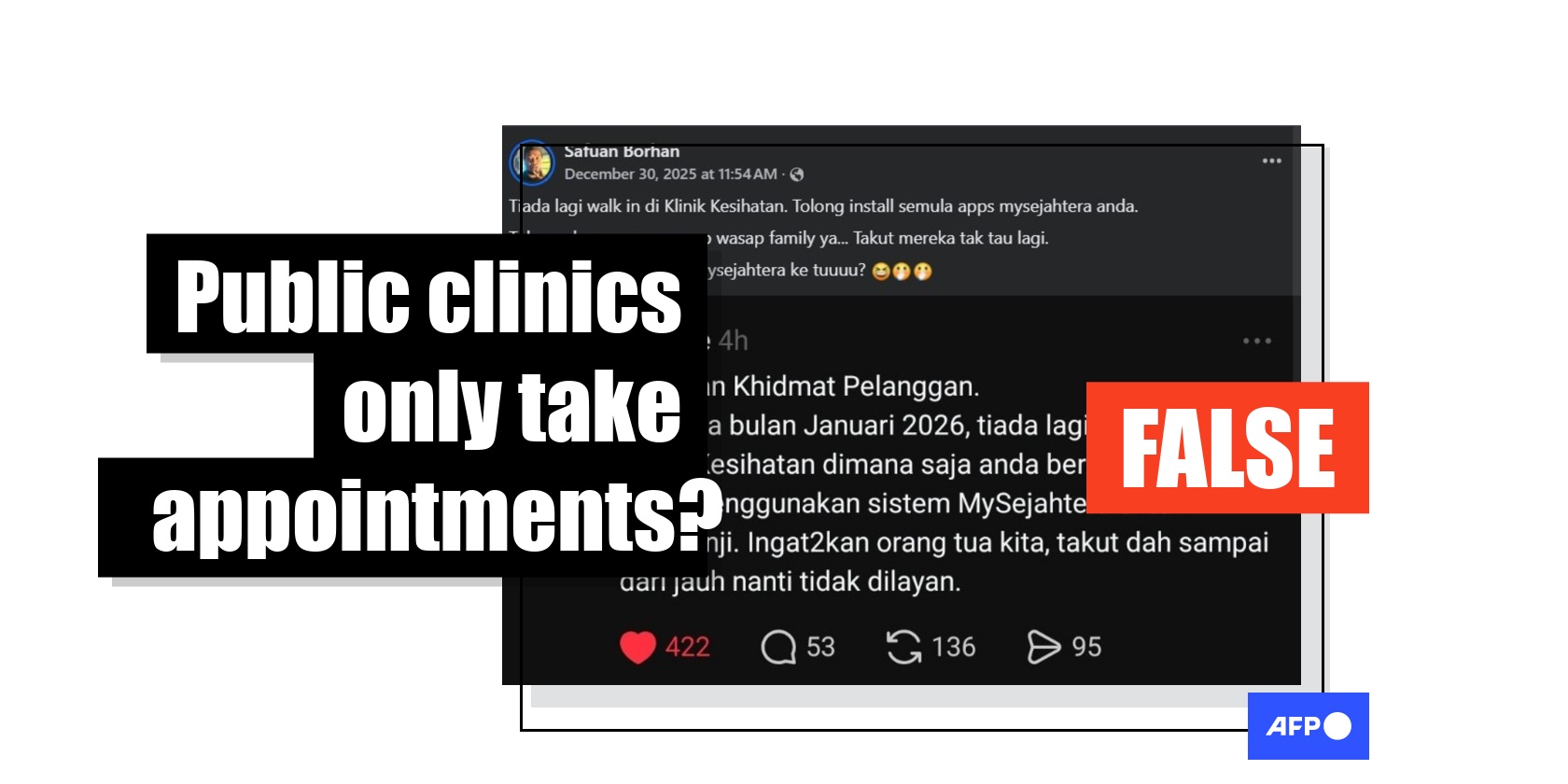
Malaysia's government-run clinics still accept walk-in patients: health ministry
- Published on January 6, 2026 at 05:27
- 1 min read
- By Raevathi SUPRAMANIAM, AFP Malaysia
Malaysia's health ministry encourages the public to make appointments before visiting government-run clinics to reduce overcrowding, but social media posts claiming the clinics no longer accept walk-in patients are false. Authorities have denied the claim and a government-run clinic told AFP walk-ins are still accepted.
"No more walk-ins at government clinics," reads part of a Malay-language Facebook post shared on December 30, 2025.
It includes a screenshot of another post spreading the same claim and saying the policy would begin in January 2026.
Malaysia's highly subsidised public healthcare sector -- where citizens pay a nominal amount of RM1 (US$0.25) to see a doctor and RM5 to see a specialist at a clinic -- has struggled with overcrowding and manpower shortages (archived here, here and here).
The public are encouraged to make an appointment before visiting a government-run clinic, with the health ministry saying in a post on its official Facebook page that this helps to "improve patient management and reduce congestion at health facilities" (archived link).
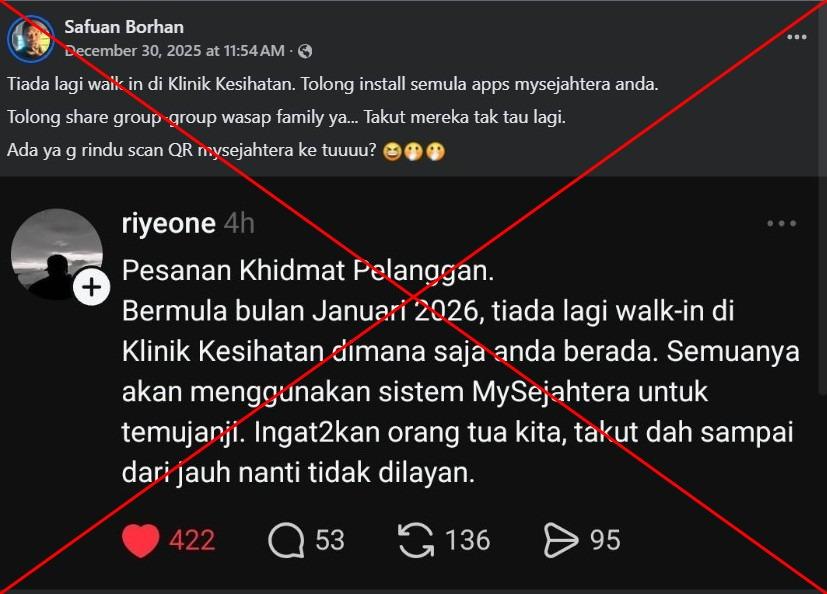
The same claim was shared elsewhere on Facebook and Instagram.
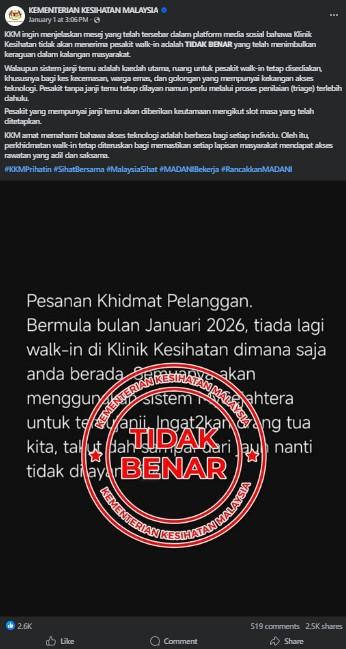
But a keyword search on Google led to a post denying the claim shared by the health ministry on its official Facebook page on January 1 (archived link).
"Although the appointment system is the main method, space for walk-in patients is still provided, especially for emergency cases, senior citizens and groups with limited access to technology," the ministry said.
"Patients without appointments will still be attended to but must first go through an assessment process."
AFP's fact check journalist in Malaysia called a government run clinic on January 5 and was told "appointments are preferred but walk-ins are still accepted".
AFP has debunked other false claims about purported policies implemented by the Malaysian government.
Copyright © AFP 2017-2026. Any commercial use of this content requires a subscription. Click here to find out more.
Is there content that you would like AFP to fact-check? Get in touch.
Contact us