Philippine legal scholars refute false presidential succession claims
- Published on December 4, 2025 at 08:31
- 3 min read
- By Lucille SODIPE, AFP Philippines
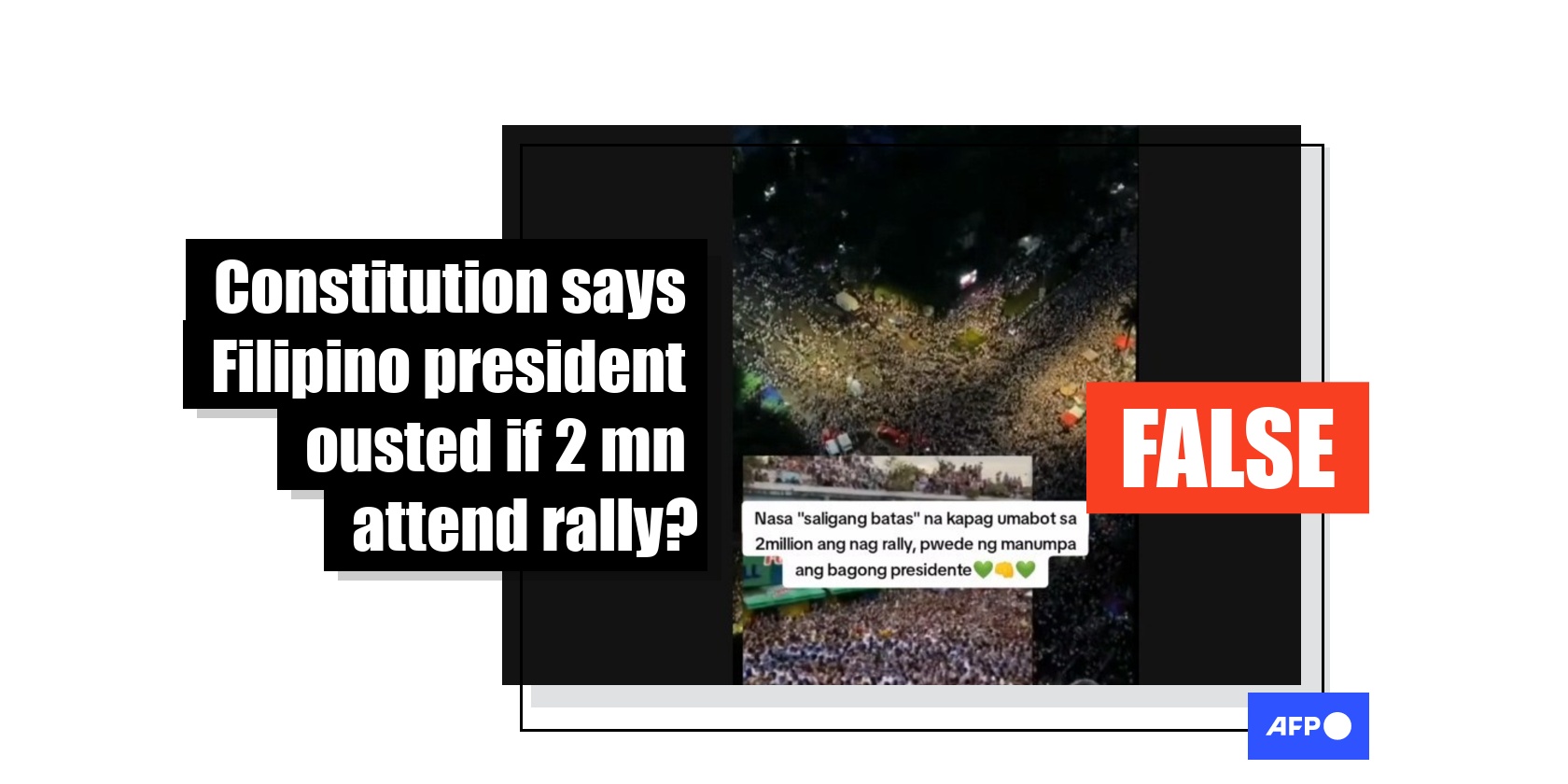
As huge crowds descended on the Philippine capital Manila to protest a sweeping corruption scandal, posts falsely claimed the nation's constitution states the president can be removed from office if a demonstration amasses two million participants. There are no such provisions in the charter, which says a sitting leader may only be replaced in the event of death, permanent disability, resignation, or impeachment and conviction of specific crimes.
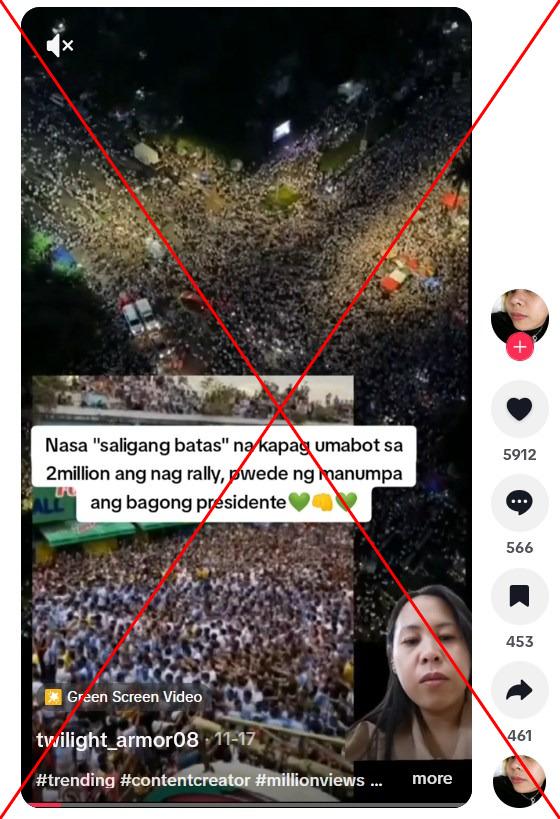
A TikTok clip showing a bird's-eye view of a massive gathering featured superimposed Tagalog-language text that reads: "It is written in the Philippine Constitution that if a rally amasses two million protesters, a new president can be sworn in."
The video was shared on November 17, 2025, the second day of a rally called by the powerful Iglesia ni Cristo (INC) church to demand accountability over a spiralling flood control scandal (archived link).
Scores of construction firm owners, government officials and parliament members -- including President Ferdinand Marcos's congressman cousin -- have been accused of pocketing funds for substandard or so-called ghost infrastructure projects.
Police estimated hundreds of thousands attended the rally, while a concurrent rally led by supporters of the Duterte family that explicitly called for Marcos's resignation drew an estimated 2,000 people.
The INC has historically been a powerful voting bloc with ties to the Duterte political dynasty, and helped Marcos and his then-running mate Sara Duterte win the 2022 elections before their spectacular falling out.
The vice president has told local media she is ready to succeed the president, should Marcos resign (archived link).
Similar posts elsewhere on TikTok and Facebook made the same claims about the rules of succession, which local fact-checking organisation Vera Files earlier debunked (archived link).
"Go Sara Duterte, take over for president," read a comment on one of the posts.
Another said: "This is right. And it's high time Marcos is replaced."
While the Philippines has replaced a sitting president after mass demonstrations in the past, legal experts told AFP there is nothing in the country's constitution to support the claim made in the circulating posts.
No such provision
Gwen Grecia-de Vera, dean of the University of the Philippines College of Law, told AFP on November 25: "The 1987 Constitution does not provide in any provision that reaching a certain number of demonstrators is valid ground to declare the position of president vacant."
Michael Tiu, assistant professor at the University of the Philippines College of Law, separately said on November 25 that the claim circulating online is incorrect, pointing to Article VII, Section 8 of the Philippine Constitution (archived link).
It states: "In case of death, permanent disability, removal from office, or resignation of the President, the Vice-President shall become the President to serve the unexpired term."
Article XI, Section 2 of the constitution deals with accountability of public officers and how the president may be removed for impeachment and conviction of certain crimes.
"The President, the Vice-President, the Members of the Supreme Court, the Members of the Constitutional Commissions, and the Ombudsman may be removed from office, on impeachment for, and conviction of, culpable violation of the Constitution, treason, bribery, graft and corruption, other high crimes, or betrayal of public trust," it says.
"The House of Representatives shall have the exclusive power to initiate all cases of impeachment," adds Article XI, Section 3.
'Extra constitutional'
The 1987 Constitution replaced the 1973 Constitution after late dictator Ferdinand Marcos -- father and namesake of the current president -- was toppled following mass demonstrations along EDSA highway in February 1986 (archived link).
The "People Power" revolution forced the Marcos family into exile and installed Corazon Aquino as president.
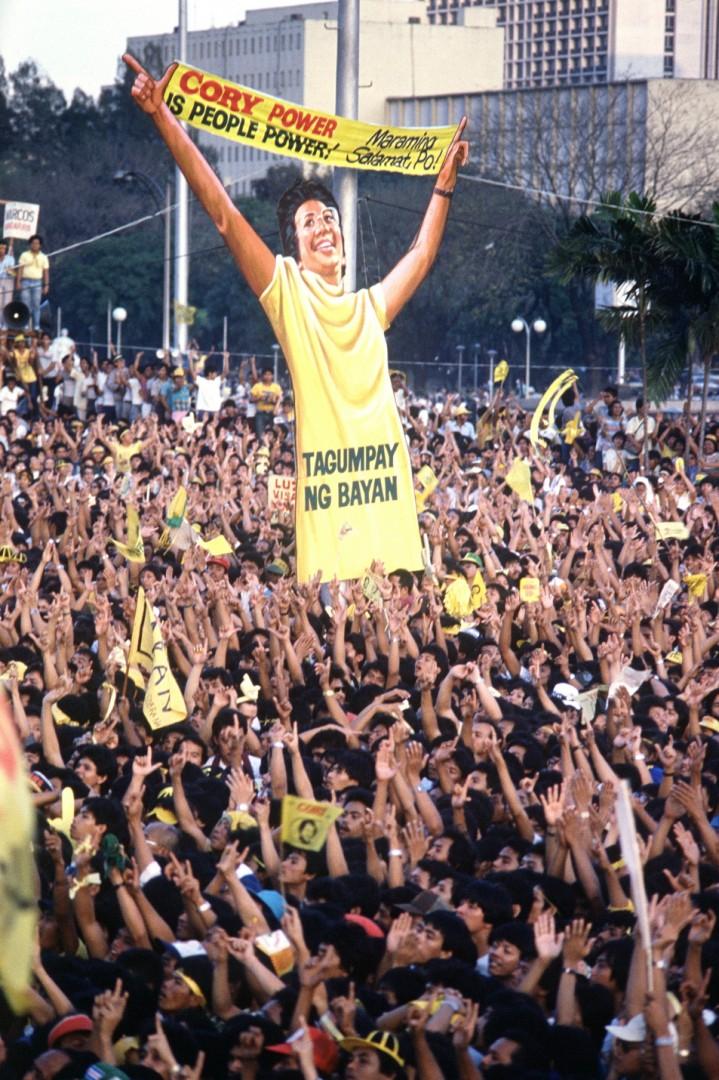
The Supreme Court has since described these events as "extra constitutional", and the legitimacy of Aquino's government is "not a justiciable matter (archived link).
"It belongs to the realm of politics where only the people of the Philippines are the judge."
Grecia-de Vera explained it was a "direct action of the people resulting in the abrogation of the 1973 Constitution and a new government or administration".
And Tiu said that since "it was done in defiance of the 1973 constitution, so it does not make sense to review EDSA under constitutional standards that it had defied".
AFP has debunked other false claims related to the flood-control scandal in the Philippines.
Copyright © AFP 2017-2026. Any commercial use of this content requires a subscription. Click here to find out more.
Is there content that you would like AFP to fact-check? Get in touch.
Contact us